Blog
how to improve reading comprehension: Proven strategies
Learn how to improve reading comprehension with proven strategies to boost understanding, retention, and confidence in every text.
Long before a child ever sounds out their first word, the real work of reading comprehension has already begun. It doesn't start with letters on a page. It starts with a rich world of spoken language, the ability to hear the tiny sounds inside words, and a knack for listening closely. These pieces form the invisible foundation that makes reading feel like magic instead of a chore.
Laying the Groundwork for Strong Comprehension
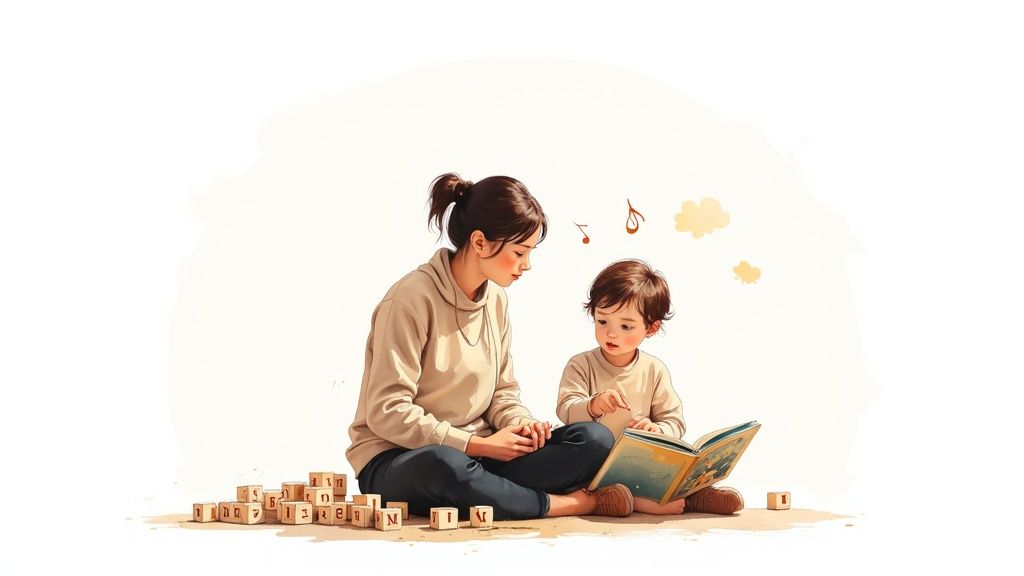
Think of reading comprehension as the peak of a pyramid. What holds it up? A wide, sturdy base built from these early, pre-reading skills. Without that solid support, everything that comes later can feel a bit wobbly.
The most important blocks in this foundation are oral language and what experts call phonological awareness. Long before a kid can read the word "cat," they need to have heard it spoken a thousand times, know what it means, and eventually, begin to hear its individual sounds: /c/, /a/, /t/. This isn’t about drilling flashcards; it’s about creating a home filled with chatter, stories, and connection.
This early stage is so critical that its absence is being felt worldwide. A 2023 World Bank review revealed a staggering literacy crisis, finding that 70% of children in low- and middle-income countries can't understand simple written text. The report’s main takeaway? Core skills like oral language are the very first step to fixing this.
Cultivating Strong Listening and Oral Language Skills
Listening is the unsung hero of reading. A child who learns to be an active listener can follow a story, guess what might happen next, and pick up on feelings and tone. These are the exact skills they’ll need when they start reading stories for themselves.
You can build these skills through simple, everyday moments that feel more like play than practice. For example, when you’re telling a story or reading aloud, just pause and ask, "What do you think that silly bear is going to do now?" This one little question shifts them from being a passive audience to an active participant.
Here are a few other easy ways to build these essential skills:
Practice "Serve and Return" Conversations: When your toddler babbles or your preschooler asks "why?" for the tenth time, respond with genuine enthusiasm. This back-and-forth exchange is what builds a strong conversational foundation and grows their vocabulary naturally.
Narrate Your Day: Talk about what you're doing, even the boring stuff. "I'm chopping these bright orange carrots for our soup. Listen to the crunchy sound they make!" This connects words to real-life objects, senses, and actions.
Play Listening Games: Simple games are fantastic for this. Think "I Spy" with sounds ("I hear something that goes 'tick-tock'") or giving two-step directions ("Can you please get your blue shoes and bring them to the door?").
The goal is to make language a fun, interactive tool for exploring the world. When a child sees words as a way to connect and discover, reading becomes an exciting next adventure, not a frustrating task.
The Power of Phonological Awareness
This sounds technical, but it’s actually quite simple and playful. Phonological awareness is just the ability to hear and play with the sound structure of words. It’s about noticing rhymes, clapping out the syllables in a name (Li-am, two claps!), or recognizing that "sun" and "sock" start with the same sound.
Notice there's no mention of letters here—it’s purely about sounds.
The best activities for this are often musical. Singing nursery rhymes is one of the most powerful ways to tune a child’s ear to the rhymes and rhythms of language. When a child can hear that "star" and "car" sound alike, they are sharpening a key pre-reading skill. You can learn more about the amazing benefits of reading aloud to children and how it supports these early skills in our detailed guide.
Boosting Vocabulary and Reading Fluency

True reading comprehension really boils down to two things: knowing the words on the page and reading them smoothly enough to think about what they mean.
If a reader is constantly stumbling over words or drawing a blank on their meaning, their brain has no space left to build the bigger picture. This is where focusing on vocabulary and fluency can be a total game-changer.
Build Vocabulary the Natural Way
Forget tedious drills and flashcards that pull words out of thin air. The best way for words to stick is to find them in the wild—wrapped in the context of a good story or a lively conversation. It feels less like work and more like a discovery.
Kids are language sponges. When you’re reading together and come across a new word like "enormous," don't just give a definition. Connect it to something they already know.
You could say, "Whoa, enormous! That means it's super, super big. Remember that huge truck we saw yesterday? That was an enormous truck." Suddenly, the new word is attached to a vivid memory, making it far more memorable.
As kids get older, you can also explore word families and roots. Helping them see that "port" often has to do with carrying can unlock words like "transport," "portable," or "import." It turns vocabulary into a fun little detective game.
Instead of asking, “Do you know what that word means?” try a gentler approach. "That's an interesting word. What do you think it might mean, looking at the rest of the sentence?" This encourages them to solve the puzzle themselves and builds so much confidence.
Go for True Reading Fluency
Reading fluency isn't just about speed. It’s a mix of accuracy, pace, and prosody—that’s the fancy word for reading with expression and feeling. A fluent reader sounds natural, almost like they're just talking. That smoothness is what frees up their brain to focus on the story's meaning.
One of the most powerful ways to build fluency is through repeated reading. It sounds simple, but the impact is huge. Just have a child read a short, interesting passage a few times until they can read it smoothly and with expression.
Here's a simple way to structure it:
Pick the Right Text: Find a short passage, maybe 100-200 words, that’s a little challenging but not frustrating.
You Go First: Read the passage aloud yourself, modeling what expressive reading sounds like. Show them how you pause for commas and change your tone for different characters.
Read Together: Next, try reading it aloud at the same time (this is often called choral reading). It’s a great way to offer support and help them match your rhythm.
Let Them Practice: Finally, have them read it on their own a few times. The goal is smoothness and confidence, not just speed.
This isn’t about memorizing lines. It’s about building the muscle memory to read words and phrases in meaningful chunks. Mastering a small passage gives them the courage to tackle brand-new texts.
Let Audiobooks Do the Modeling
Audiobooks are another fantastic tool in your toolkit. Listening to a skilled narrator brings a story to life and provides a perfect model of what fluent reading sounds like—the pacing, the emotion, the pronunciation—all without the pressure of decoding.
Pairing an audiobook with a physical copy of the book is an especially great strategy. Having a child follow along in their book while listening helps connect the dots between spoken and written language. It’s a huge help for kids who struggle with the mechanics of reading but have strong listening skills.
By weaving these vocabulary and fluency activities into your routine, you’re not just teaching a child how to read words; you're giving them the keys to understand entire worlds.
Using Active Reading Strategies That Actually Work

We've all seen it: a child’s eyes moving across a page, but the story isn’t sinking in. That’s because simply decoding words is only half the battle. Real, lasting understanding comes from turning reading into an active investigation.
Proficient readers don’t just absorb text; they have a conversation with it. They question it, poke at it, and connect it to their own lives. This mental dialogue is the heart of active reading—a conscious effort to engage with a story before, during, and after reading. It’s what turns a passive passenger into a curious, confident driver.
Engage Before You Even Start Reading
What you do before reading the first sentence can make a huge difference. By setting a purpose, you’re priming the brain for learning and creating little mental hooks to hang new information on. It’s like glancing at a map before a road trip—you get a feel for where you’re going.
Start by previewing the material. Look at the title, any subheadings, and pictures or charts. This quick scan provides crucial context. From there, help your child form a few simple questions to guide them:
For a story: "Who do you think the main characters are? What problem might they run into?"
For a textbook chapter: "What are the big ideas this section will cover? How does this connect to what we learned last week?"
This tiny shift creates a mission. Suddenly, they aren't just reading; they're hunting for answers.
Interact with the Text While You Read
This is where the real work—and fun—begins. As you read, you’re essentially having a conversation with the author, marking up the text (if you can!), pausing to reflect, and making sure the story is truly making sense.
A powerful strategy here is visualization. Encourage your child to create a mental movie of what’s happening in the story. If they’re reading about the water cycle, help them picture rain falling, forming a river, and evaporating back into the clouds. This makes abstract ideas feel concrete and sticky. Our guide on interactive storytelling ideas for toddlers has some great tips for building these foundational visualization skills early on.
Another key tactic is making connections. This just means linking what’s happening in the book to three different areas:
Text-to-Self: How does this relate to my own life or feelings? ("This character’s first day of school reminds me of how nervous I was!")
Text-to-Text: Does this remind me of another book or movie? ("The hero in this story is brave, just like the one in the last book we read.")
Text-to-World: How does this connect to real-world events or things I know? ("This book about rainforests makes me think about protecting our planet.")
The goal isn't just to find any connection, but to use these links to deepen understanding. By tethering new information to existing knowledge, readers build a stronger web of understanding that’s much harder to forget.
Solidify Understanding After You Finish
The work isn't over when you read the last word. What you do right after finishing helps cement the information in long-term memory. The simplest and most effective post-reading strategy is summarization.
Can your child retell the main points in their own words? For younger kids, this could be as simple as verbally sharing the story's beginning, middle, and end. For older readers, it might mean writing a one-paragraph summary. If they struggle with this, it’s a clear sign that a specific part of the text needs another look.
To see how these strategies can be adapted as a child grows, here's a quick breakdown by age group.
Active Reading Strategy Implementation by Age Group
This table provides practical examples of how to apply key active reading strategies across different developmental stages.
Strategy | Early Readers (Ages 5-7) | Developing Readers (Ages 8-12) | Proficient Readers (Ages 13+) |
|---|---|---|---|
Previewing & Predicting | Look at the cover and pictures. "What do you think this story is about?" | Skim headings, bold words, and the first and last paragraphs. Formulate specific questions. | Analyze the table of contents, introduction, and conclusion to identify the author's argument. |
Visualizing | Draw a picture of a favorite scene or character. | Close their eyes and describe a setting or action sequence in detail. | Create mental flowcharts or diagrams to map out complex concepts or plot structures. |
Connecting | Make simple Text-to-Self connections. "Have you ever felt sad like the bear?" | Link the text to other books by the same author or on the same topic (Text-to-Text). | Analyze Text-to-World connections, relating themes to historical events or social issues. |
Summarizing | Verbally retell the story's beginning, middle, and end using simple sentences. | Write a 3-5 sentence summary identifying the main problem and solution. | Write a concise paragraph that synthesizes the main idea and key supporting details. |
Applying these strategies consistently is what helps readers move beyond basic understanding. Data from the OECD shows that while 74% of students can read at a basic level, only about 7% reach the highest levels needed for abstract reasoning and critical thinking. Active reading strategies are the bridge to that deeper understanding. You can dive deeper into the latest findings on global reading literacy to see how these skills are measured worldwide.
By equipping readers with this toolkit, you empower them to do more than just read words—you teach them how to think critically and build lasting knowledge from any text they encounter.
Creating Reading Routines That Stick
All the reading strategies in the world are just theory until you make them a habit. The real secret to turning a good reader into a great one isn't about complex tactics; it's about building a simple, enjoyable routine that sticks. This isn't about setting a timer and forcing it. It’s about creating a predictable, cozy space where reading feels like a treat, not a chore.
When reading becomes a dependable part of the daily rhythm—just like brushing teeth or dinner—it loses its friction. Kids know what to expect, which eases resistance and helps them see reading as just a natural part of the day. That consistency is what builds momentum and makes skills stick for the long haul.
The Magic of Shared Reading
One of the best ways I’ve found to build a routine is through shared reading. This is as simple as it sounds: you and your child read a book together. Maybe you read a page, then they read a page. Or maybe you read the whole story out loud while they follow along, pointing to the words.
This is so much more than just getting through a book. It’s your chance to model what fluent, expressive reading sounds like. You can show them how your voice gets quiet for a whisper or speeds up during an exciting part. They get a live, dynamic example to imitate, which does wonders for their own fluency.
You Set the Pace: For a child who rushes or stumbles, reading together helps them find a natural, comfortable rhythm.
It's a Team Effort: Reading with a partner takes the pressure off. It becomes a supportive, low-stakes activity instead of a solo performance.
Discussion Happens Naturally: You can pause and say, "Wow, I wonder why she did that?" This models what active readers do, but in a totally conversational way.
Shared reading transforms reading from a solitary test of skill into a moment of connection. It teaches kids that books are a source of conversation and shared fun—a powerful motivator for any developing reader.
Designing a Daily Reading Session That Works
A great reading routine is about quality, not just quantity. Instead of just aiming for 20 minutes, try structuring that time with a clear beginning, middle, and end. That predictability makes the whole session feel manageable and purposeful for a child.
Here’s a simple template you can adapt for your family:
The Warm-Up (2-3 Minutes): Start with something quick, easy, and fun. Reread a favorite short poem or just a single page from a beloved book. This builds confidence right from the start.
The Main Read (10-15 Minutes): Now, you can tackle a new or ongoing book. This is the perfect spot for the shared reading approach—taking turns and chatting about what's happening as you go.
The Cool-Down (2-3 Minutes): End the session by cementing what you just read. Ask your child to retell their favorite part in their own words or predict what might happen in the next chapter.
This simple structure gives the session a familiar arc, helping kids stay engaged from start to finish.
Fueling a Routine with High-Interest Materials
The absolute fastest way to kill a reading routine? Forcing a child to read something they find boring. If you want a habit to stick, you have to link it to genuine pleasure. When a child sees that books are a gateway to their passions—dinosaurs, space, ballet, you name it—their motivation just soars.
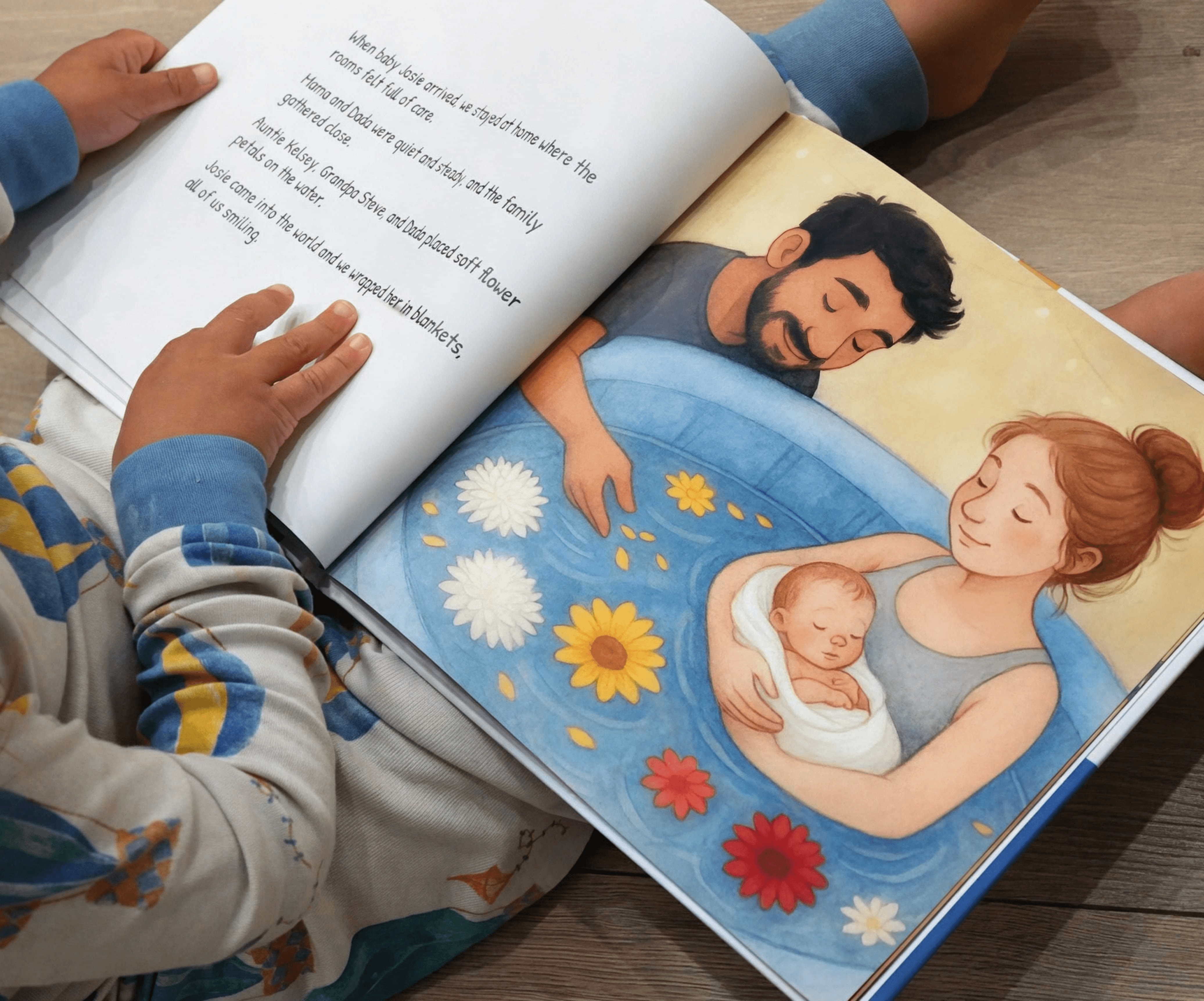
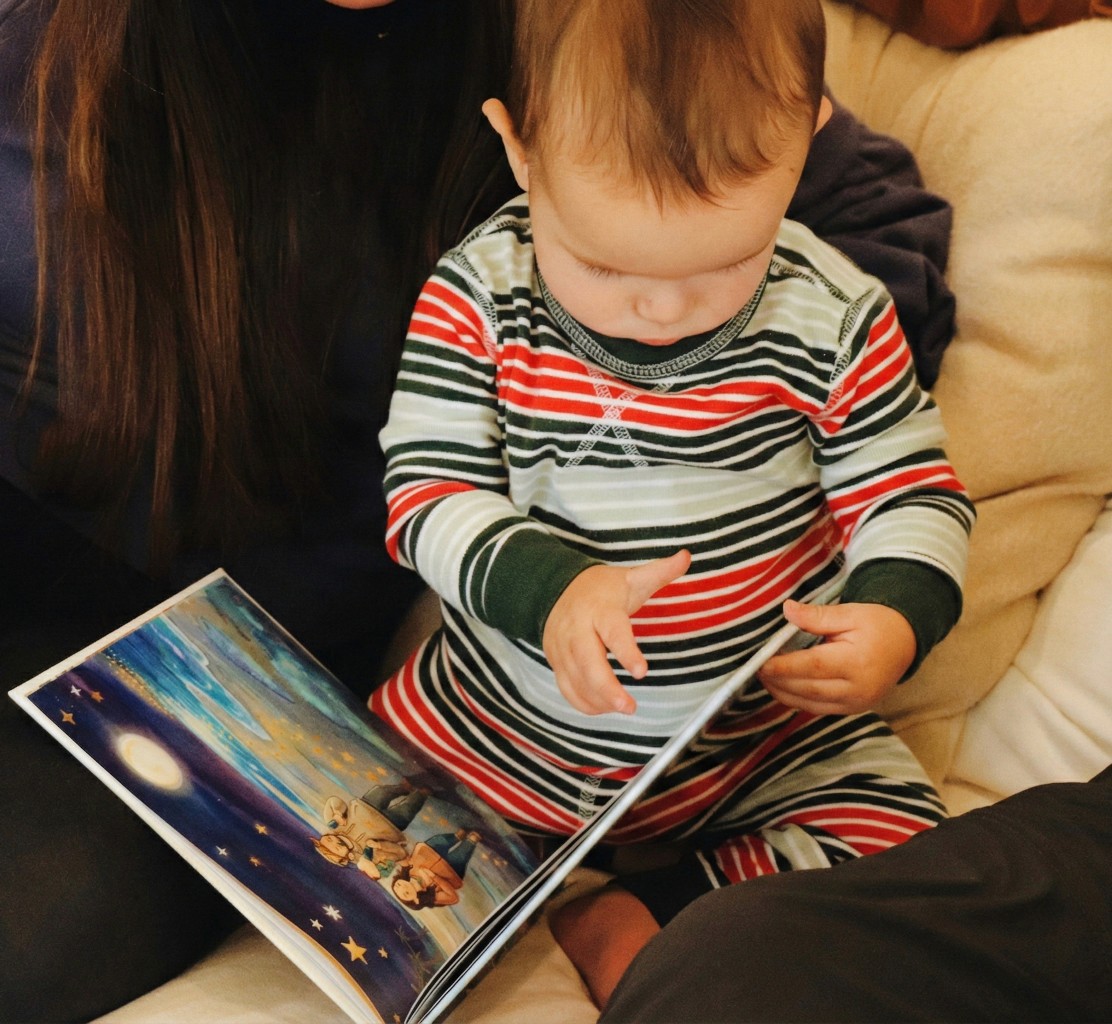
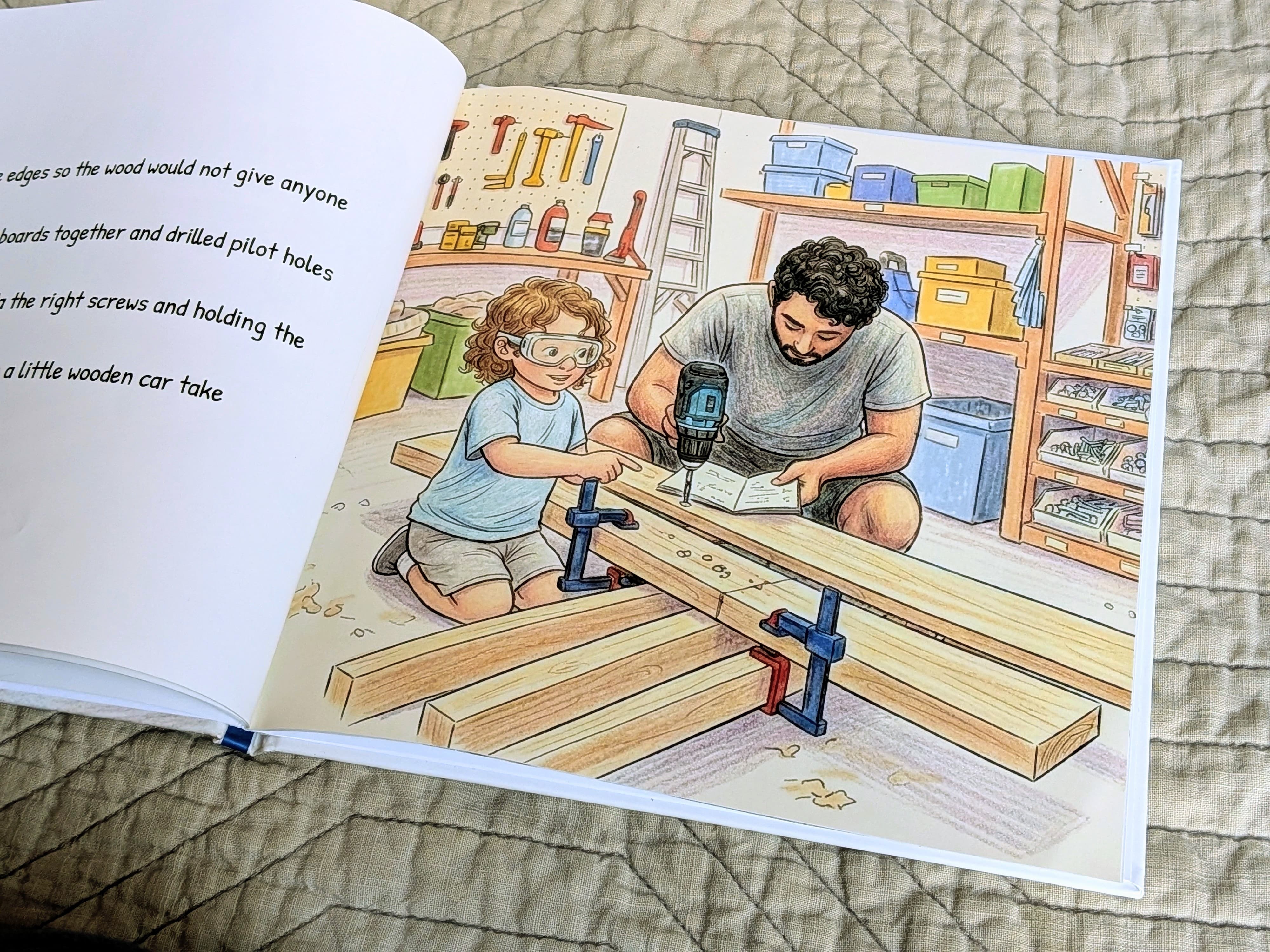
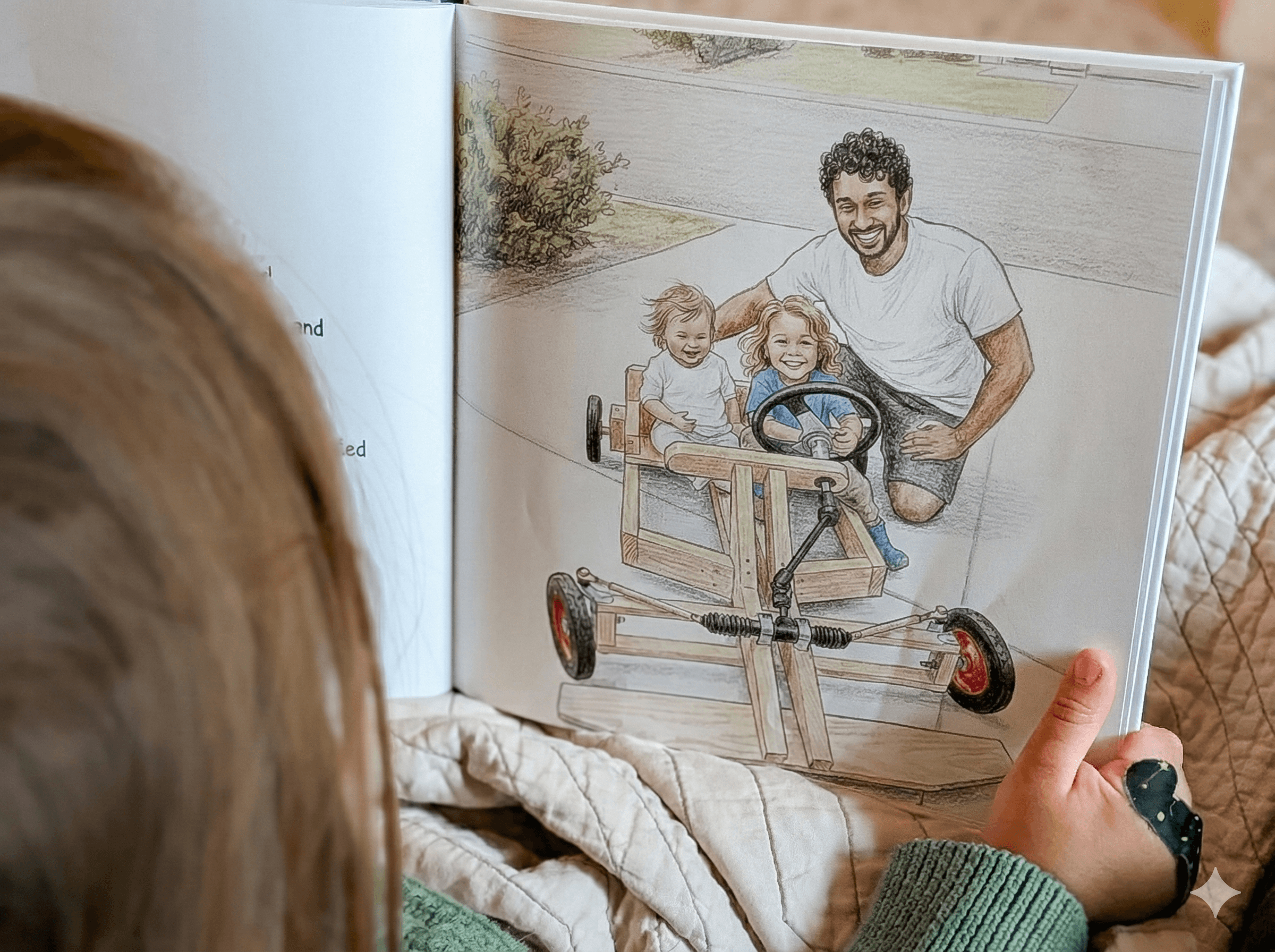
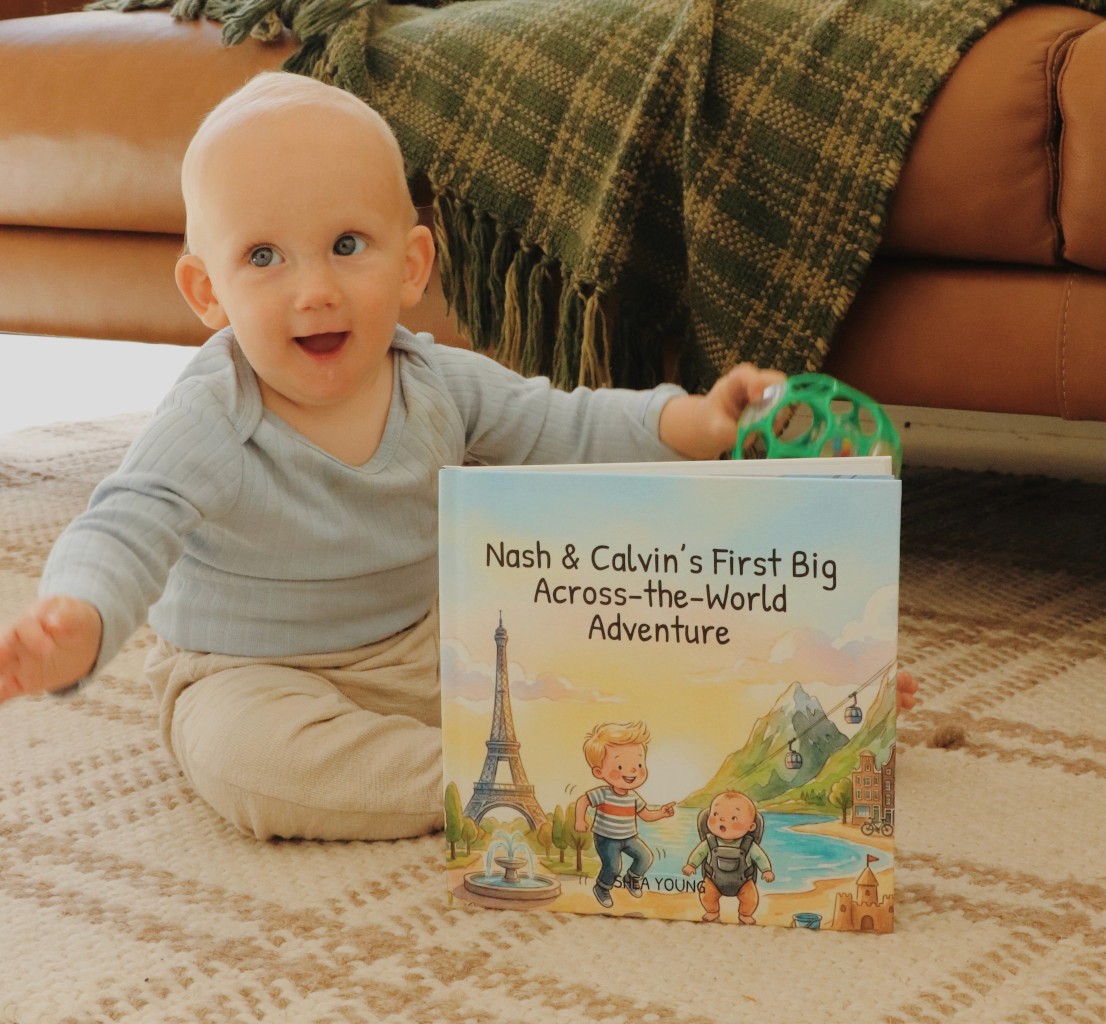
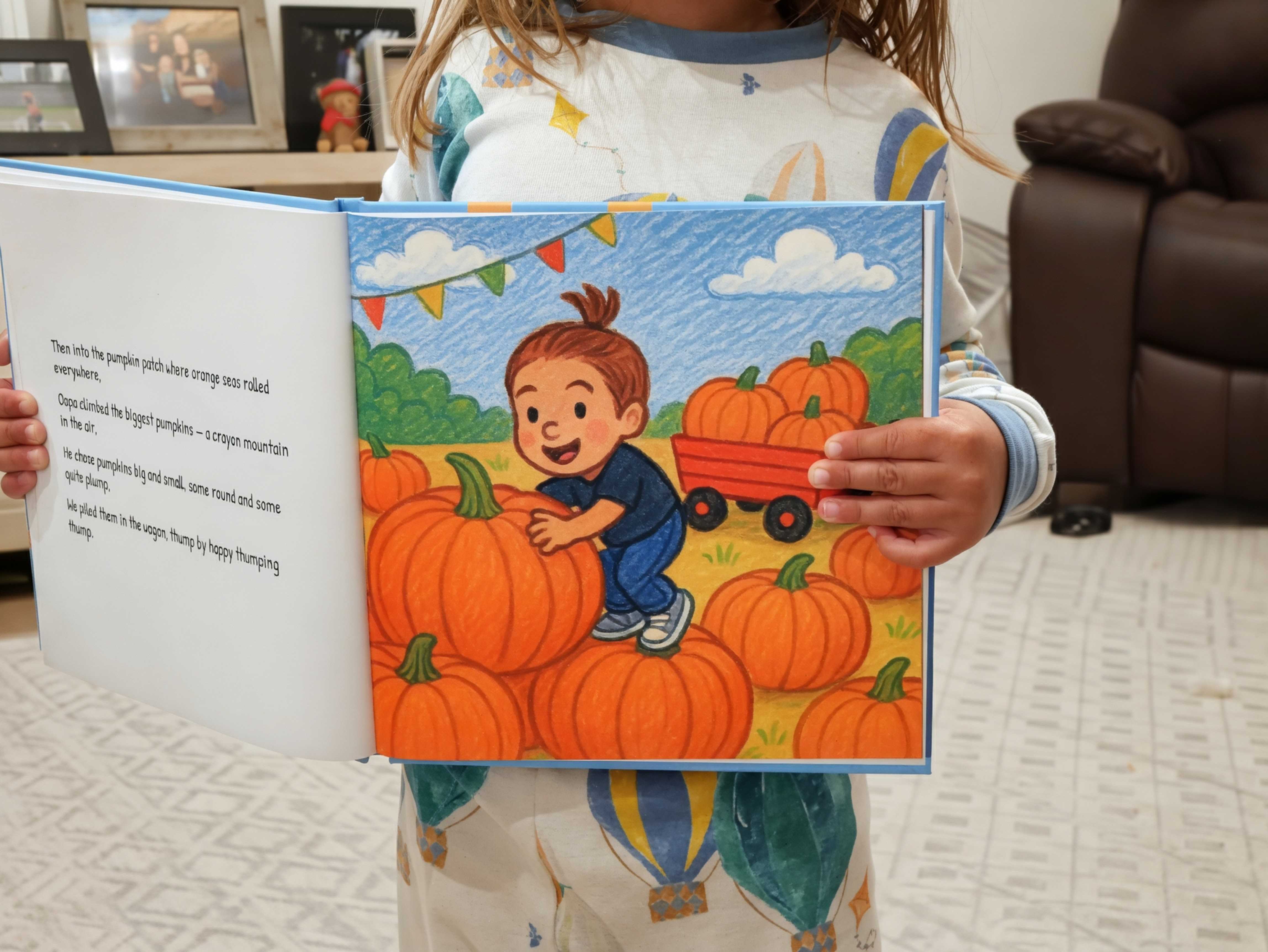
This is where personalized books can be a game-changer. A story where your child is the hero, exploring a world filled with their favorite things, is practically irresistible. It validates what they love and shows them that reading is a direct path to exploring it. For more ideas, check out our guide on how to raise a reader by encouraging a love of books.
Never underestimate the power of enjoyment. The Progress in International Reading Literacy Study (PIRLS) 2021 report found a direct link: students who enjoy reading and have strong home support simply achieve higher scores. The study also highlighted how much global events impacted reading outcomes, which underscores just how critical consistent, positive routines at home really are. You can discover more about these global reading trends and see for yourself.
By making reading a joyful and steady part of life, you’re not just teaching a skill—you’re building a foundation for a lifetime of learning.
How to Support a Struggling Reader
It’s tough watching your child struggle with something that seems to come so easily to others. When it comes to reading, your first instinct might be to jump in and fix it, but the best approach is a patient one, turning frustration into a chance for connection and growth.
The first step isn't a quiz or a formal test; it's simply watching. The most valuable clues show up during your regular, cozy read-aloud time.
Does your child have a hard time remembering what happened just a page ago? Can they tell you what the story was about, but all the events are jumbled? These are common red flags that comprehension isn’t quite clicking.
Another thing I see often is a snag with inference—the art of reading between the lines. For instance, if a story says, "Liam shivered and pulled his coat tighter," a confident reader instantly gets that it must be cold. A struggling reader might just see the words without grasping the implied meaning behind them.
Spotting the Gaps Without the Pressure
The key is to observe your child in a low-stakes, comfortable environment. You want to identify the friction points without making them feel like they're being tested or judged. Reading should feel like a hug, not a pop quiz.
Next time you're reading together, gently pay attention to a few things:
Jumbled-Up Sequencing: When you ask them to retell the story, do they mix up the beginning, middle, and end?
Missing the Big Picture: Can they remember tiny details (like the color of the character's shoes) but miss the main problem in the story?
A Lack of Connections: Do they have trouble linking the story to their own life or to other books you've read together?
Ignoring the Punctuation: Do they read straight through periods and commas? This can make the text sound flat and rob it of its rhythm and meaning.
These observations aren’t a diagnosis. Think of them as a roadmap, helping you pinpoint where the comprehension chain might be breaking down so you know just how to help.
A Tiered Approach to Providing Support
Once you have a better feel for the specific challenge, you can start introducing support in stages. I like to think of it as a tiered system, starting with the simplest tweaks and only moving to more focused strategies if you need to.
Tier 1: Gentle Adjustments
This first level is all about small changes to your current reading routine. The goal is to lower the cognitive load and boost engagement without making it feel like "work."
Go Back to Shared Reading. Take turns reading pages or even sentences. This models fluency and gives them a supportive safety net.
Preview the Book First. Before diving in, look at the cover and flip through the pages together. "What do you think this one is going to be about?"
Keep Reading Sessions Short. If focus is an issue, try two 10-minute sessions instead of one 20-minute slog. Quality over quantity is always the rule here.
Tier 2: Targeted Strategies
If those gentle shifts aren't quite enough, it's time to get a little more direct by targeting the specific skill gaps you noticed.
For Sequencing Issues: Grab a piece of paper and draw a simple "Beginning-Middle-End" chart. After reading, you can work together to draw or write down the most important thing that happened in each part.
For Inference Trouble: Try thinking aloud while you read. Pause and say something like, "Hmm, the character is frowning and crossing his arms. I wonder if that means he's feeling angry. What do you think?"
This flowchart is a great little guide for deciding how to adjust your approach based on your child's attitude toward reading—a huge piece of the puzzle.
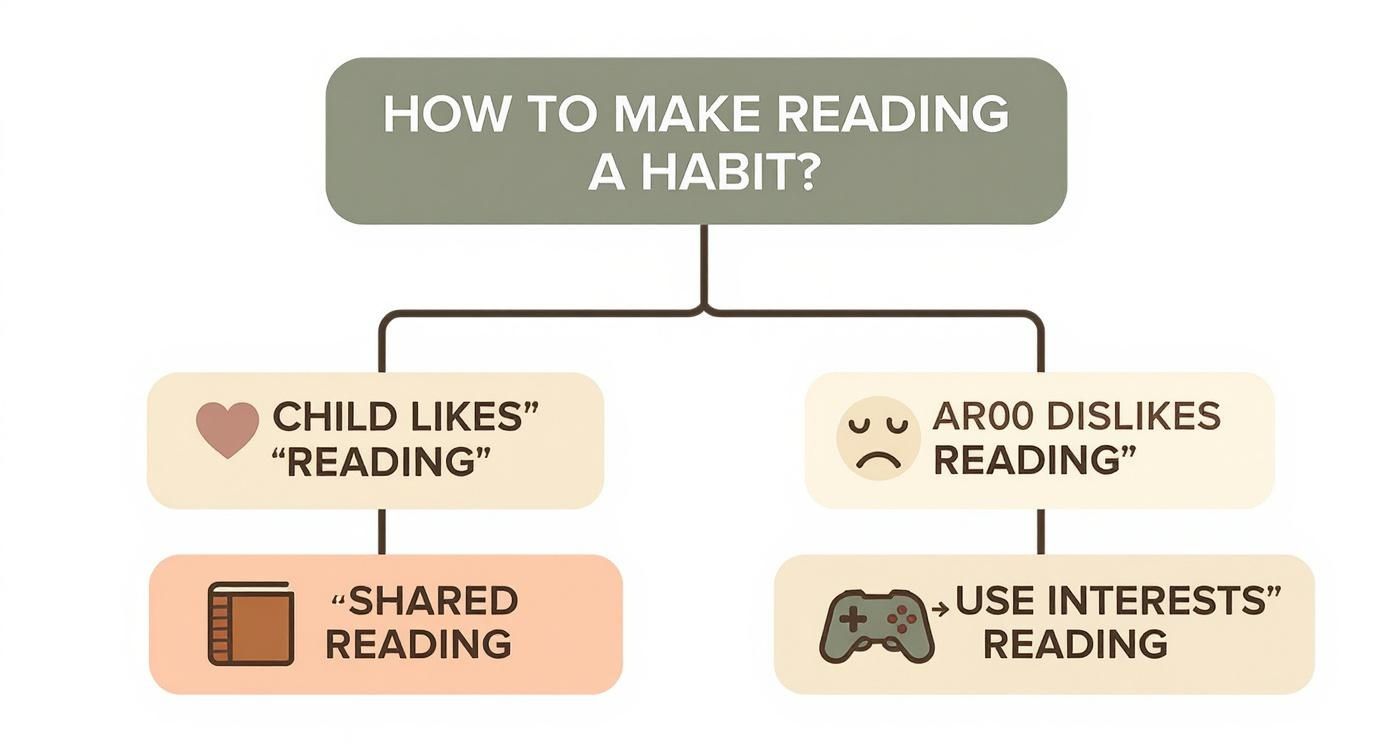
As you can see, the path forward starts with understanding how your child feels about reading. From there, you can choose activities that build positive momentum, whether that’s shared experiences or stories based on their biggest interests.
Knowing When to Call in a Pro
You can provide incredible support at home, but there are times when a reading specialist or educational psychologist is the right next step. If you've consistently tried different strategies and your child's struggles are persisting or getting worse, it might be time to reach out.
Key signs include extreme avoidance of reading, high levels of anxiety around books, or difficulties that are starting to impact their overall school performance.
An expert can run formal assessments to identify underlying issues like dyslexia or other learning differences. Getting that professional insight is invaluable—it ensures your child receives the precise, specialized support they need to truly thrive.
Your Reading Comprehension Questions, Answered
As you start this journey to help your child become a stronger reader, questions are bound to pop up. It's totally normal. Here are some of the most common ones we hear from parents and teachers, with clear, practical answers from our own experience.
What Is the Best Age to Start Focusing on Comprehension?
You can start from day one. Seriously. The foundation for reading comprehension isn’t about letters and sounds at first—it’s about rich, spoken language.
Every time you talk, sing, or read a story aloud to your baby, you’re building the massive vocabulary and listening skills they’ll need later on. These early, cozy interactions are the first and most important step.
You can introduce more formal strategies, like asking simple questions about a story, as soon as your child starts really engaging with books, usually around age two or three. The trick is to keep it fun and conversational. It should feel like sharing a story, not giving a pop quiz.
How Long Should Our Daily Reading Session Be?
For little ones, consistency beats duration every single time. A focused, happy 15-minute session each day is worlds more effective than a frustrating, hour-long struggle once a week.
Here are a few guidelines to keep in mind:
Toddlers (Ages 2-3): 5-10 minutes of engaged reading is perfect.
Preschoolers (Ages 4-5): Aim for 10-15 minutes.
Early Elementary (Ages 6-8): 15-20 minutes of dedicated reading works wonders.
But the real secret? Watch your child, not the clock. The second you sense they're getting wiggly or frustrated, that’s your cue to wrap up on a positive note.
The goal isn’t just to finish the book. It’s to make them feel so good about reading that they can't wait to do it again tomorrow.
What if My Child Hates Reading?
First, take a deep breath. This is such a common—and fixable—challenge. A child's dislike for reading often comes from feeling pressured or like they’re failing. So, the first step is to shift the goal from performance to pure pleasure.
Figure out what they’re genuinely obsessed with, whether it’s monster trucks, sparkly unicorns, or weird facts about bugs. Find anything—books, magazines, graphic novels—on that topic. Connecting reading to a child’s existing passions is the single most powerful way to change their mind about it.
You can also lower the stakes. Try audiobooks they can follow along with, or read a book that’s based on a movie they already love. Your only goal right now is to reconnect books with joy, one fun story at a time.
How Can I Tell if a Book Is Too Hard?
This is a great question. A book that’s a little challenging helps a child grow, but one that’s too hard just kills their motivation. The "five-finger rule" is a simple, brilliant way to check if a book is a good fit.
Ask your child to read one full page from the book. Every time they come to a word they don't know or can't figure out, they hold up one finger.
0-1 Finger: This book is probably on the easy side. Great for building confidence and reading speed!
2-3 Fingers: You've found the sweet spot. This is a "just right" book that offers a healthy challenge.
4-5 Fingers: This book is likely too difficult for them to read alone right now. But it could still be a fantastic choice to read together, where you can help with the tricky words.
This little test helps you find books that build them up instead of knocking them down.
At Once Upon A Memory Books LLC, we believe the best stories are the ones a child can truly see themselves in. When you turn their own memories and photos into a beautiful, personalized book, you create an irresistible invitation to read—one where they are the hero of their very own tale.
Create your personalized storybook today and watch their love for reading grow!