Blog
Guide: how to build reading fluency with simple, effective strategies
Discover simple, engaging strategies for how to build reading fluency with games, guided practice, and progress tips.
When we talk about building reading fluency, what we’re really aiming for are three things: reading the words right, reading at a natural pace, and reading with a little bit of personality. It’s the magic combo that lets a child stop wrestling with the words on the page and start getting lost in the story.
What Reading Fluency Actually Means for Your Child

As a parent or educator, you’ve probably heard the term "reading fluency," but it’s more than just a buzzword. It’s a huge turning point in a child's journey with books. Think of it as the bridge between sounding out letters and actually understanding a story.
A fluent reader doesn't sound robotic or stumble over every other word. Instead, their reading flows. It sounds natural, almost like they’re just talking.
This is a game-changer. When a child isn't pouring all their mental energy into decoding, their brain is finally free to do the fun part: picturing the characters, feeling the suspense, and connecting the dots of the plot. To get the full picture, it helps to understand the fundamental skill of reading as a whole. Fluency is what unlocks the door to comprehension.
Why Speed Is Only Part of the Story
It’s a common myth that fluency just means reading fast. But have you ever listened to someone rush through a story? They often miss the whole point. The real goal isn’t speed; it’s automaticity. That’s when recognizing words becomes so quick and effortless, it’s like breathing.
This frees up so much brainpower.
I like to compare it to a musician learning a new song. At first, they're intensely focused on hitting every single note correctly. But after a while, they stop thinking about the notes and start making music—adding feeling, rhythm, and emotion.
Reading fluency is that exact moment. It's when a child goes from just "playing the notes" (decoding words) to "making music" (understanding and loving the story).
The Three Ingredients of Fluent Reading
Getting to that point means working on three key skills that all weave together. Each one is just as important as the next.
Accuracy: This is the foundation. It’s simply about reading the words on the page correctly. If a child makes too many mistakes, the story’s meaning gets twisted, and it’s tough to follow along.
Rate (or Pace): This is about finding a natural, conversational speed. It’s not a race. The goal is a rhythm that’s not too slow and choppy, but not so fast that the meaning gets lost in the blur.
Prosody (or Expression): This is where the magic happens! It’s reading with feeling—pausing for commas, raising your voice for a question mark, and matching your tone to the story’s mood. It's what makes a story come alive.
When these three ingredients click into place, that bridge to comprehension is complete. The hard work of reading fades into the background, and the real adventure—the story—can finally begin. Helping your child get there isn't about drills or pressure. It's about creating warm, supportive moments with books that build a foundation for a lifetime of confident reading.
The Three Pillars of Fluent Reading
When you listen to your child read, what are you listening for? It’s a great question. Fluent reading isn't just one thing; it's a blend of three skills working together like a well-rehearsed orchestra.
Think of it this way: when one instrument is out of tune, the whole song sounds off. But when everything is in sync, the result is beautiful. The same is true for reading. The three core components are accuracy, rate, and prosody.
Let’s break down what each one looks and sounds like.
Pillar 1: Accuracy (Reading the Words Correctly)
First and foremost is accuracy. This is the foundation—simply reading the words on the page as they are written. If a child stumbles over too many words, the story's meaning gets lost in translation, turning a fun narrative into a frustrating puzzle.
Accuracy is all about solid decoding skills. That’s a fancy term for being able to connect letters to their sounds to figure out a word. When a child struggles with accuracy, it's usually a sign they need more practice with the basics of phonics. A great starting point is strengthening their ability to hear and play with sounds in words—you can learn more about how to teach phonemic awareness here.
Pillar 2: Rate (Reading at a Natural Pace)
Next up is rate, which is just the speed at which a child reads. So many people think fluency just means reading fast, but that’s a huge misconception. The real goal isn’t to race to the finish line. It's to read at a natural, conversational pace—not so slow that the meaning gets lost between words, but not so fast that they trip over them.
A reader moving too slowly might forget the beginning of a sentence by the time they reach the end. On the flip side, a child who speeds through the text often makes more mistakes and misses important emotional cues in the story. We're aiming for that "just right" Goldilocks pace where the brain has enough time to process what it's seeing and build a mental movie.
Pillar 3: Prosody (Reading with Feeling)
This third pillar, prosody, is my favorite. It's where the magic happens. Prosody is the rhythm, expression, and emotion in a reader's voice. It’s what separates a robotic, word-by-word reading from one that pulls you into the story.
A reader with good prosody will naturally:
Pause at commas and stop fully at periods.
Make their voice go up at the end of a question mark.
Change their tone to match a character's feelings—maybe whispering a secret or shouting with excitement.
When your child’s voice sounds excited during a happy part of the story, that’s a huge clue. It shows they aren't just reading words; they understand the feeling behind them. This is a powerful sign of growing comprehension.
So, how do we know what a "good" rate actually is? Researchers have given us some helpful benchmarks. For kids in Year 1 (around kindergarten or first grade), the goal is to build up to 35–50 correct words per minute (WPM). By Year 2, that jumps to 70–100 WPM, and by Year 3, they're often aiming for 120–140 WPM. These numbers aren't about pressure; they're a guide to see if a child's fluency is on track to support their understanding of the text. As fluency research from the National Institute for Direct Instruction shows, this link between fluency and comprehension is incredibly strong.
To make this all a bit easier to spot during your own storytime sessions, here's a quick reference table.
The Three Pillars of Reading Fluency at a Glance
This simple table can help you become an active coach during your read-alouds, knowing exactly what to listen for and how to offer gentle support.
Pillar | What It Sounds Like | A Simple Way to Help at Home |
|---|---|---|
Accuracy | Your child reads the words correctly with very few errors. When they do make a mistake, they often notice and fix it themselves. | Gently point out a misread word. You can say, "Let's try that one again. Look at the first letter." |
Rate | The reading flows smoothly, like they're telling you a story. There are no long, awkward pauses between words. | Re-read a favorite short book together. When the text is familiar, their pace will naturally pick up. |
Prosody | Their voice changes to match the punctuation and the mood. It gets quiet, loud, or excited right along with the characters. | Model it! Use different voices for characters and let your own voice get animated. Ham it up—they’ll love it. |
Once you start listening for these three pillars, you’ll be able to pinpoint exactly what your child is doing well and where they might need a little nudge. You'll celebrate not just how many words they can read, but the life and meaning they bring to every story.
Proven Strategies to Improve Your Child's Reading Flow
Alright, now that you know the what and why behind reading fluency, let's get into the how. This is your practical toolkit, full of proven, engaging methods you can start using tonight. The best part? These aren't boring drills. They're powerful techniques that feel more like a game, turning practice into a treasured activity.
These strategies are all about building automaticity—making word recognition so effortless that your child's brain is free to focus on what the story actually means. Success hinges on creating positive, supportive sessions that build confidence right alongside skill.
The Power of Repeated Reading
One of the most effective ways to build reading fluency is through Repeated Reading. The idea is simple: your child reads the same short, engaging passage a few times over. This isn't about memorizing; it’s about building familiarity and confidence with a specific set of words and sentence structures.
Each time they read the text, they get a little faster and more accurate. The mental effort of decoding drops, letting them pay more attention to the rhythm and flow of the language. Research consistently shows that reading a passage just three times can lead to significant gains in fluency.
How to do it: Pick a short, interesting passage—around 50 to 200 words is perfect. It could be a page from a favorite picture book or a single paragraph from a chapter book. Have your child read it aloud.
Keep it fresh: For the second and third readings, add a fun twist. Try reading it in a silly voice, timing them with a stopwatch (in a low-pressure way!), or having them "perform" it for an audience of stuffed animals.
Why it works: Repetition strengthens the neural pathways for word recognition. As words become more familiar, the brain processes them faster, which directly improves both reading speed and accuracy.
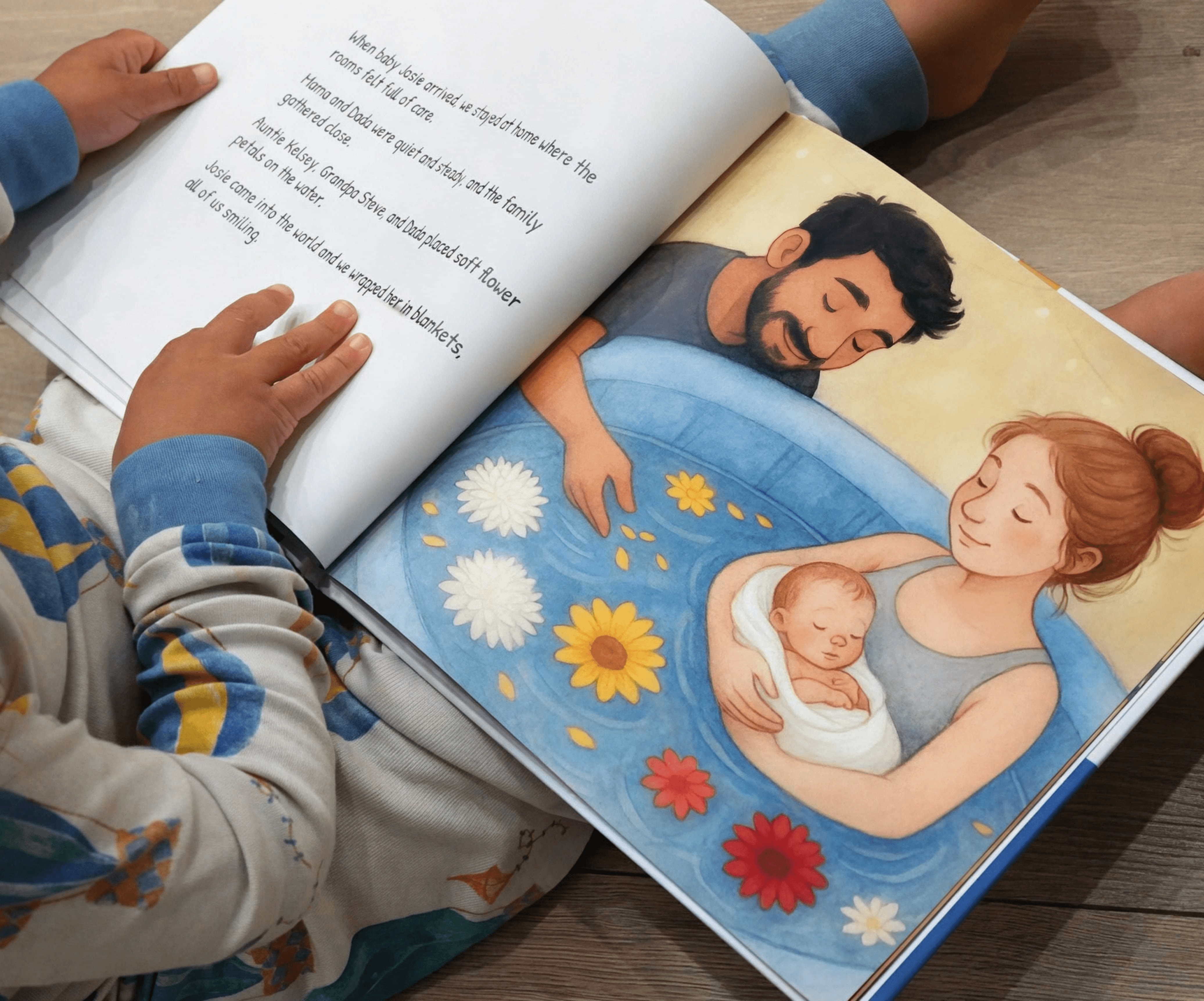
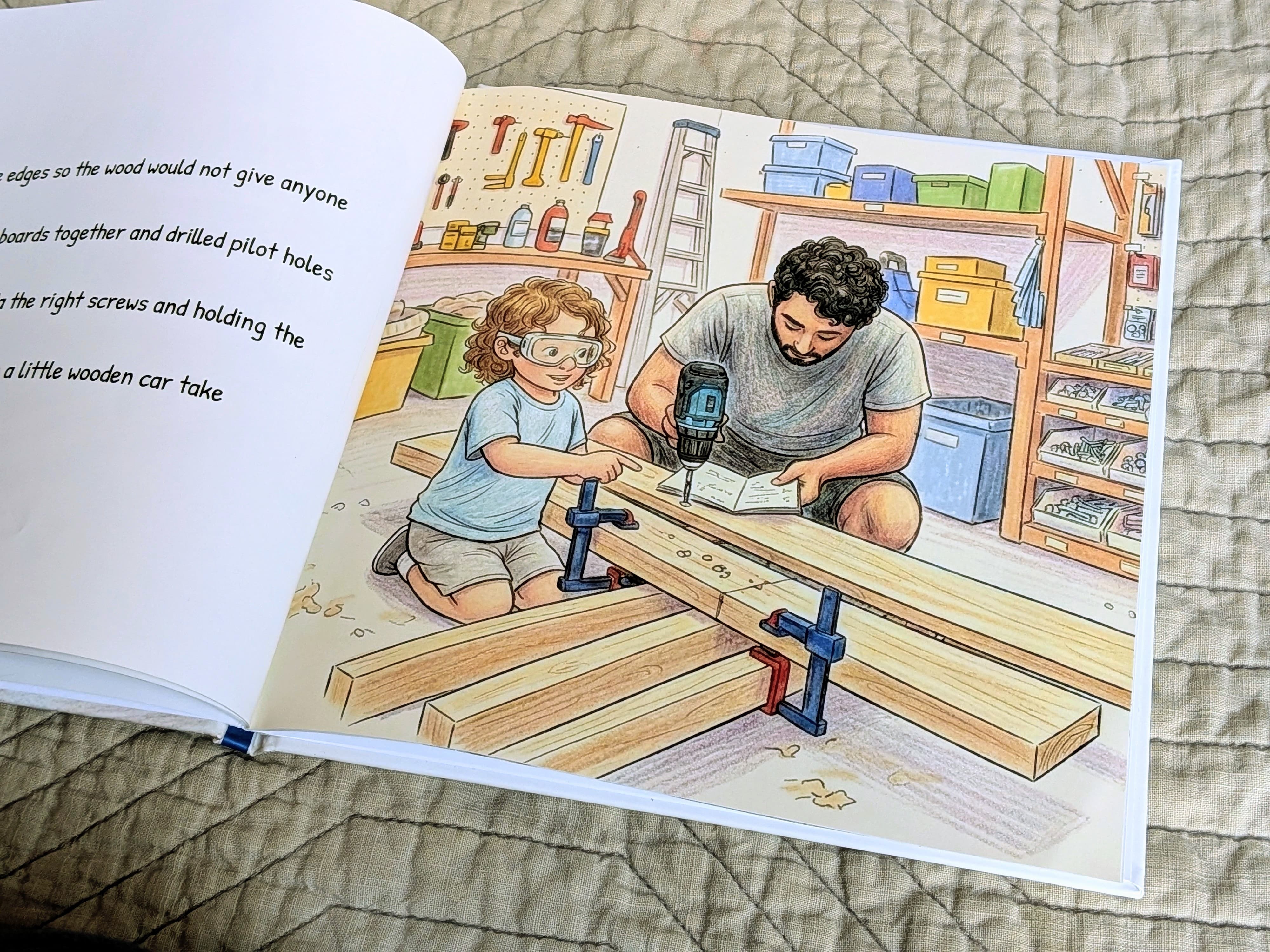
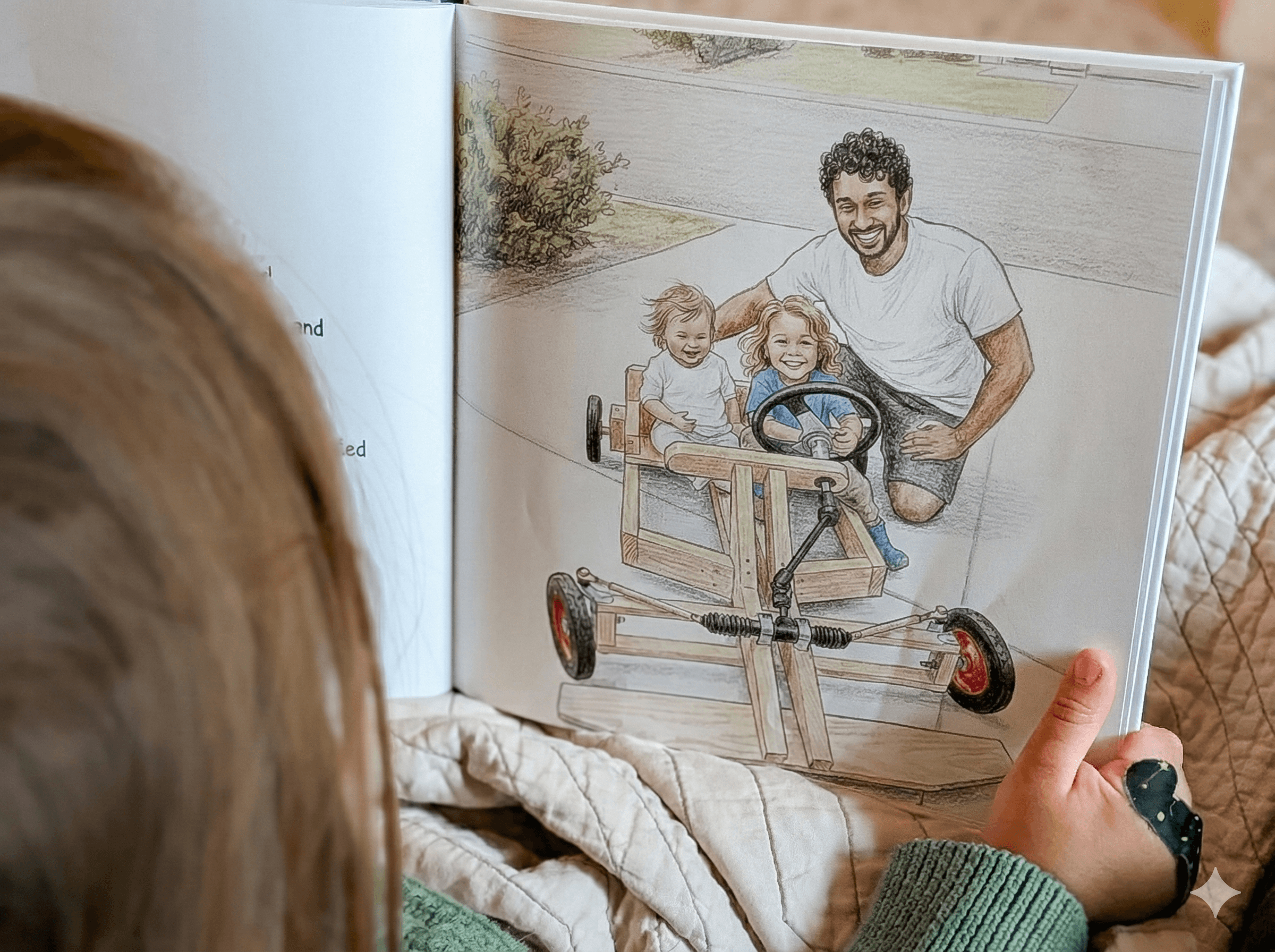
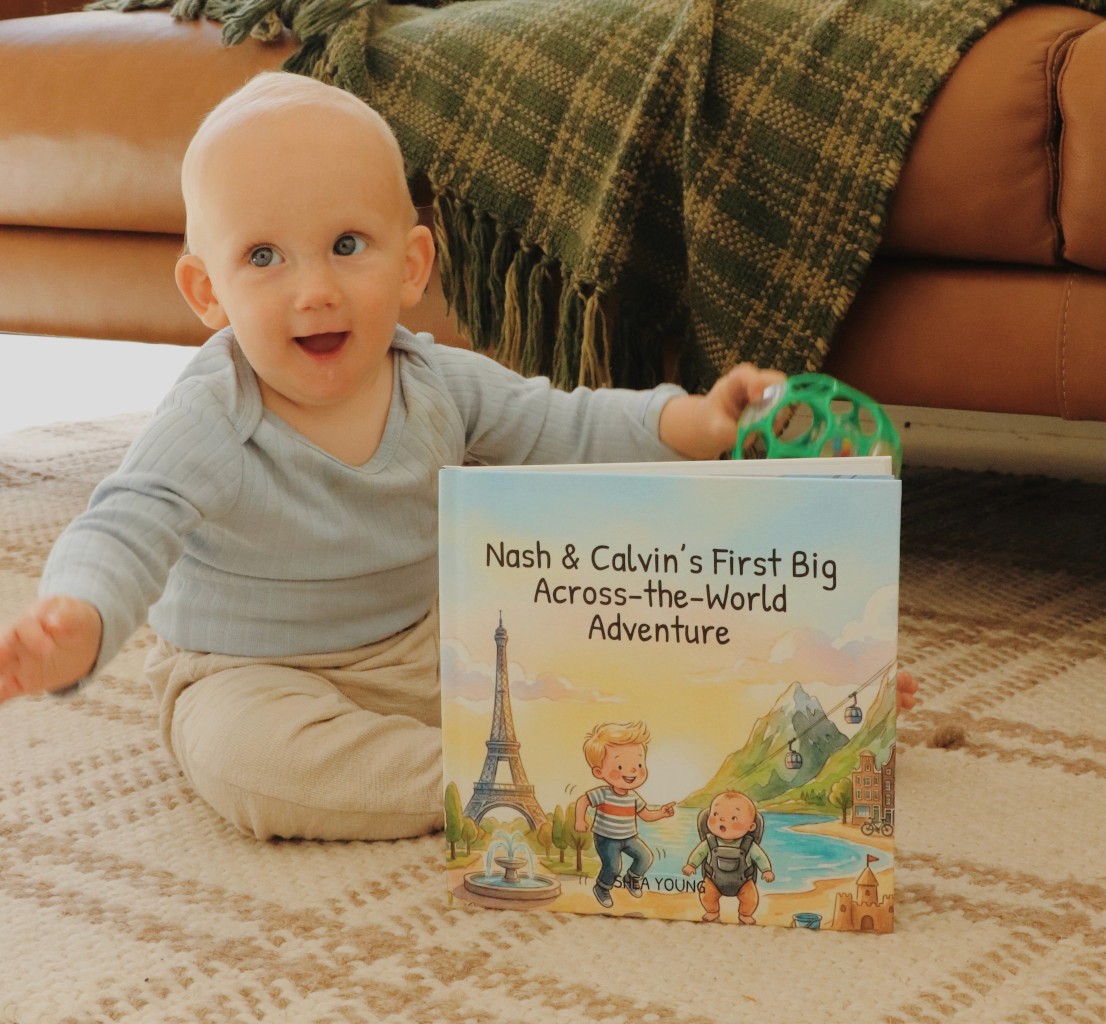
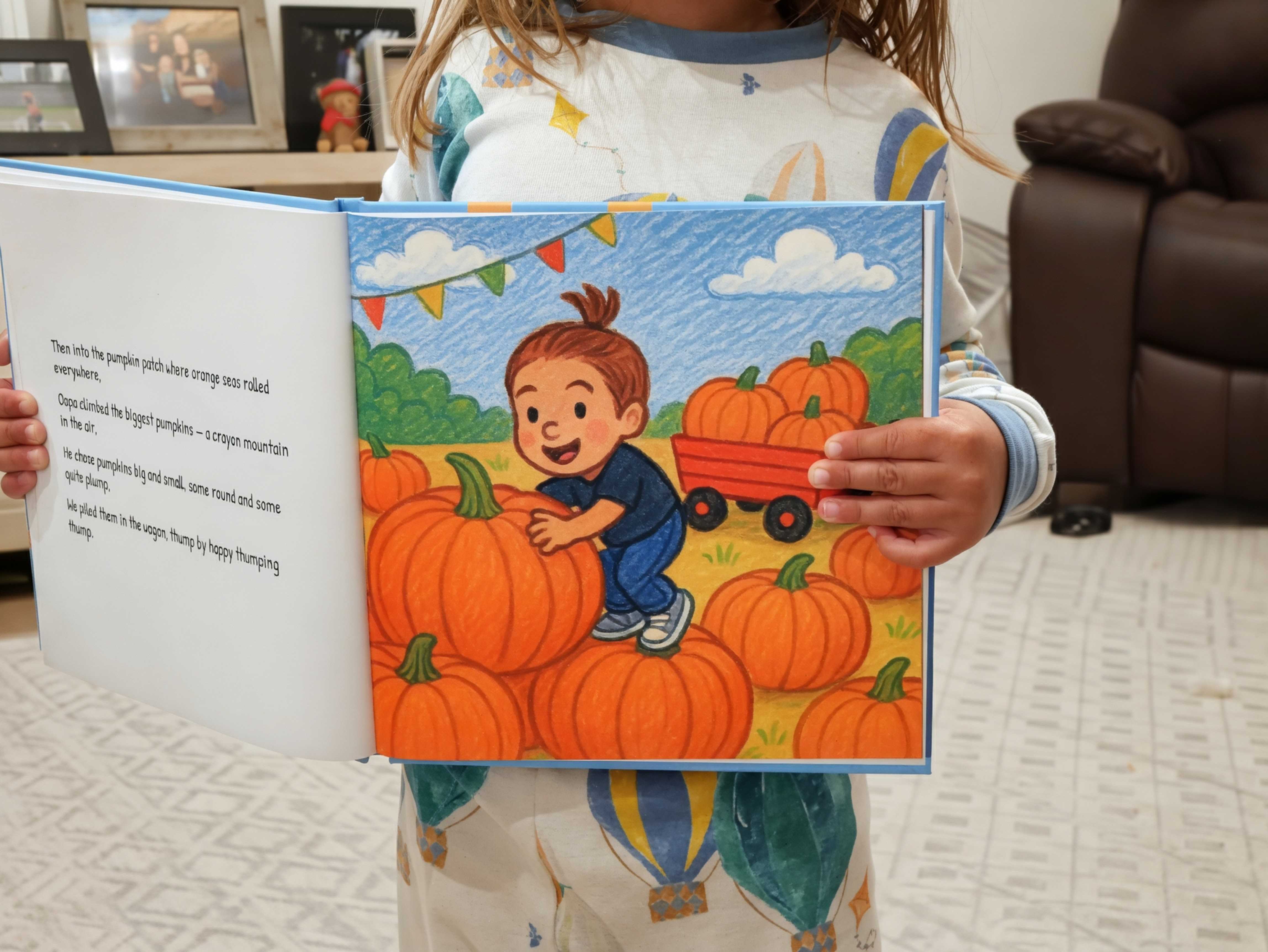
This strategy is especially powerful when you use personalized books that feature your child as the main character. When a child sees their own name and experiences in a story, their motivation to re-read skyrockets. Practice suddenly feels a lot more like play.
Guided Practice with Echo and Paired Reading
While independent practice is great, guided strategies where you read together provide crucial, real-time support. Two of the best methods for this are Echo Reading and Paired Reading. These techniques model what fluent reading actually sounds like and give your child a scaffold to build on.
This infographic breaks down the three core components—Accuracy, Rate, and Prosody—that these strategies are designed to improve.
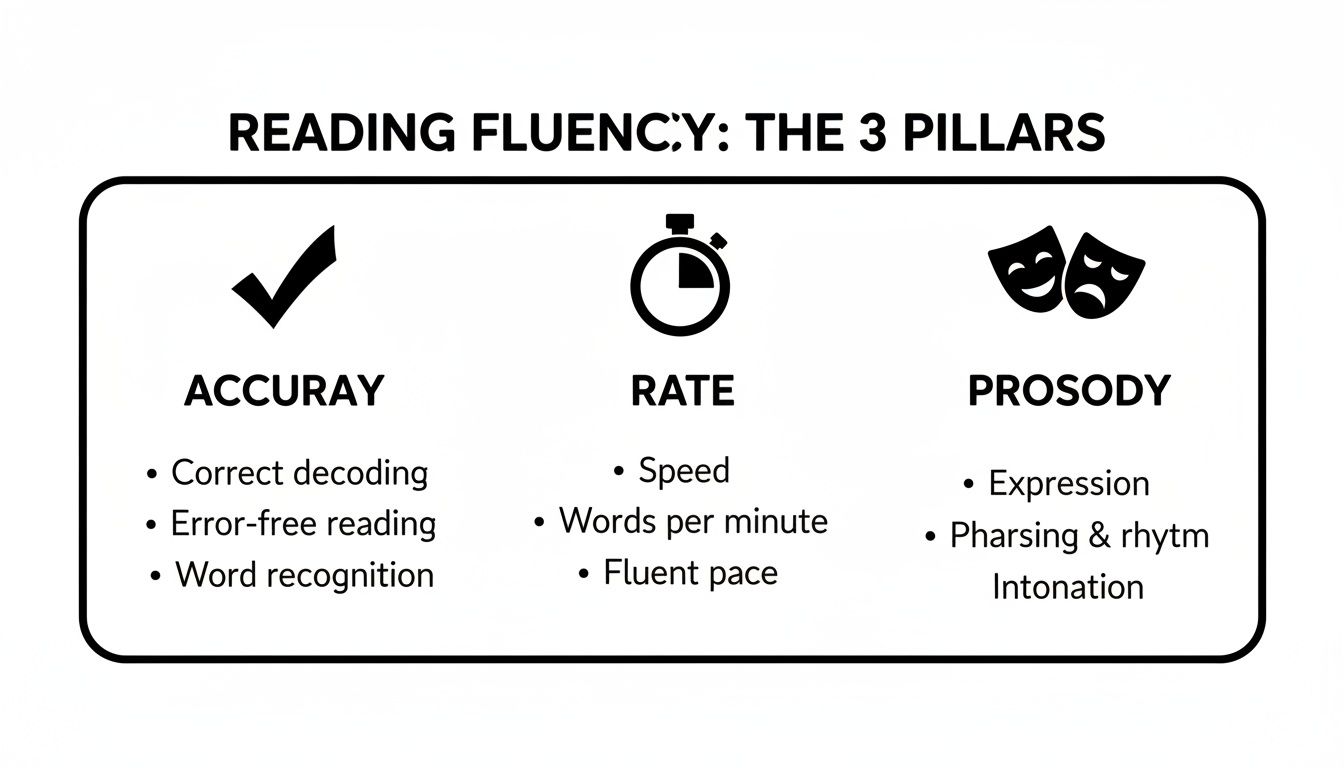
As you can see, each pillar is essential for a seamless and enjoyable reading experience, and the following strategies target all three.
Using Echo Reading to Model Expression
Echo Reading is a wonderful technique for younger readers or those just starting to work on their expression, or prosody. In this method, you're the leader and your child is your echo.
You read a short sentence or phrase with full expression, and then your child immediately reads it back to you, trying to match your tone and pacing. It's a simple, interactive game of "copycat" that has a huge impact.
I often tell parents to really lean into this. If a character is whispering, cup your hand and whisper. If they are shouting, raise your voice! This gives your child a clear, fun model of how to bring words to life.
Boosting Confidence with Paired Reading
Paired Reading, sometimes called Choral Reading, is when you and your child read the same text aloud, at the same time. This is an incredibly supportive strategy because your voice provides a steady guide, helping your child navigate tricky words without getting stuck.
If your child is feeling more confident, you can agree on a signal (like a gentle tap on the book) for when they want to read a sentence on their own. This gives them control and helps you see their growing independence. This shared experience is one of the many benefits of reading aloud to children, as it builds connection and melts away the anxiety that can sometimes creep into reading practice.
Making Fluency Practice Irresistible
The secret to building reading fluency isn't just about using the right techniques; it's about making the practice so enjoyable that your child wants to do it. And the most powerful way to do that is through personalization.
When a story is about their own birthday party, their first day of school, or their beloved pet, the text becomes instantly meaningful. They aren't just reading words on a page; they are reliving a cherished memory.
Consider these simple ways to personalize the experience:
Choose Books on Topics They Love: Whether it's dinosaurs, ballet, or fire trucks, selecting books that align with your child's passions provides an instant dose of motivation.
Create Your Own Stories: Use a service like Once Upon A Memory to turn their own photos and life events into a beautifully printed storybook. The connection they feel to a book starring them is unmatched.
Make It a Performance: Get creative with props and voices. Turn reading time into a mini-play or a "radio show." This focus on performance naturally encourages expressive reading.
By combining proven methods like Repeated, Echo, and Paired Reading with the powerful motivator of personalization, you create a positive cycle. Joyful practice leads to better skills, which in turn builds the confidence needed to tackle new reading challenges. You aren't just teaching a skill; you're nurturing a lifelong love for stories.
Building a Daily Reading Routine That Actually Sticks
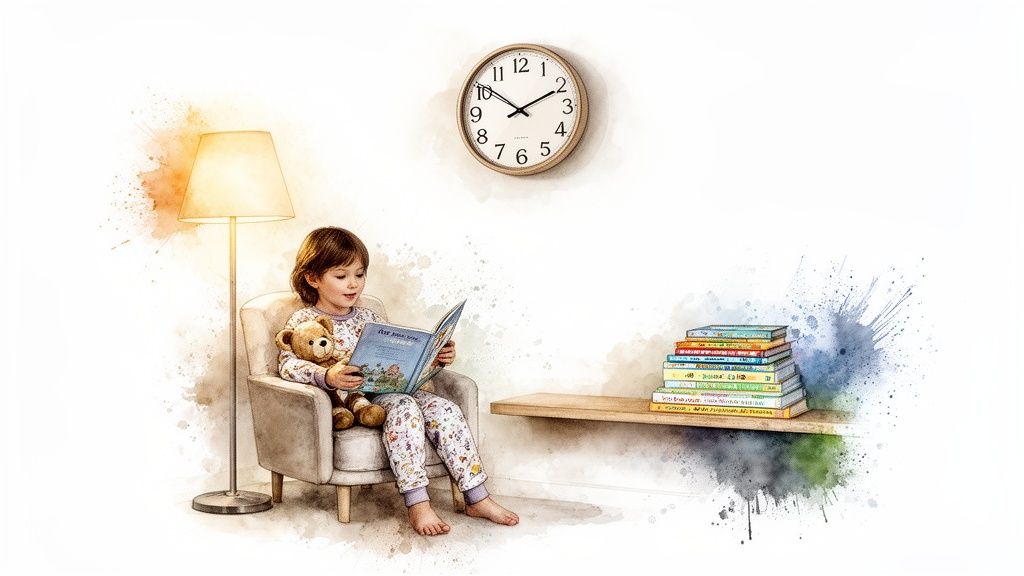
We all know consistency is the secret sauce for building reading fluency. But the advice to "just read every day" can feel a little hollow. Life is busy, schedules are chaotic, and adding one more thing to the to-do list often feels impossible.
The good news? A solid routine isn't about finding a full, uninterrupted hour. It's about weaving short, joyful reading moments into the fabric of your existing day.
Think of it this way: consistency beats intensity every time. A focused 15 minutes of reading each day is far more powerful than a stressful, hour-long session once a week. Short, frequent practice keeps skills fresh and stops reading from ever feeling like a chore.
Finding Your Perfect Reading Moment
The trick to a routine that actually sticks is finding a natural home for it in your schedule. Instead of trying to invent new time, anchor your reading practice to something you already do. This is often called "habit stacking," and it helps make the routine feel automatic rather than forced.
Look for small pockets of time you can claim:
The Post-Snack Wind-Down: After a snack, kids are often settled and receptive. Use that calm five-to-ten-minute window for a quick read-aloud.
The "Waiting" Game: Do you spend time waiting for an older sibling's soccer practice to end? Keep a few favorite books in the car to turn that downtime into productive fluency practice.
The Cozy Bedtime Ritual: This is a classic for a reason. Winding down with a story creates a powerful, positive association with books and provides a predictable, calming end to the day.
The goal is to find a time that’s consistently available and low-stress for both of you. Experiment for a week and see what feels most natural for your family’s rhythm. For more ideas on creating this positive environment, check out our guide on how to raise a reader.
Create an Irresistible Reading Nook
Your environment plays a huge role in making reading feel like a treat, not a task. You don't need a dedicated library—a small, inviting corner is all it takes to signal that this is a special time.
A great reading nook can be as simple as a pile of comfy pillows in a corner, a beanbag chair next to a bookshelf, or even a "reading fort" made from blankets and chairs. The important thing is that it’s a cozy, well-lit space where books are easy to grab.
Letting your child help design this space gives them a sense of ownership and builds excitement. When they have a special spot that's just for stories, they'll be more likely to seek it out on their own.
Across major education systems, daily reading volume is one of the strongest—and most overlooked—levers for building fluency. Shockingly, large-scale surveys show that less than 20% of children read for 30 minutes or more per day, while over 50% read for fewer than 15 minutes. This is where a predictable family ritual becomes so powerful. Even 10–20 extra minutes of reading aloud can rebuild the frequent exposure that school alone may not provide.
Your 15-Minute Daily Fluency Workout
Feeling stuck? Here's a simple, repeatable plan you can use every day. This little workout mixes different strategies to keep things fresh and engaging.
Warm-Up (3 minutes): Start with an old favorite. Re-reading a familiar, beloved book is a fantastic confidence booster. Focus on making the words sound smooth and full of expression.
Guided Practice (7 minutes): Introduce a new, short passage or a page from a slightly more challenging book. Use Echo Reading (you read a line, they repeat it) or Paired Reading (reading aloud together) to offer support without pressure.
Fun Finisher (5 minutes): Always end on a high note. Read a silly poem, act out a scene from the book, or have your child "perform" their favorite page for the family. The goal is to finish with a smile.
How to Handle Common Reading Hurdles with Confidence
Every child’s path to becoming a reader has its share of bumps. It’s completely normal to hit a few snags along the way. The real key isn’t avoiding these moments, but knowing how to meet them with confidence and empathy, turning frustration into a chance to grow.
When a challenge pops up, our response as parents and caregivers sets the tone. A supportive, patient approach builds resilience. Pressure or criticism? That just makes them shut down. Your job is to be their steady, encouraging coach through it all.
When Your Child Refuses to Read Aloud
One of the most common hurdles is a flat-out refusal to read aloud. This almost always comes from a fear of making mistakes, not defiance. Pushing them harder will only dial up the anxiety and make them dig their heels in even more.
Instead, try taking the pressure off entirely.
Read together. In paired reading, you read aloud in unison. Your voice acts as a scaffold, carrying them through tricky words without putting them on the spot.
Go back to basics. Pull out much easier books, even ones that feel a little "babyish." The goal here is simple: give them a string of successful, feel-good reading experiences to rebuild their confidence.
Take turns. You read a page, then they read a sentence. This breaks the task into small, manageable bites and keeps things moving.
Correcting Mistakes Without Crushing Their Spirit
It’s so tempting to jump in and fix every single mistake, but this can quickly deflate a child’s confidence. A much better approach is what I call the "pause, prompt, praise" method.
Pause. When they misread a word, don’t interrupt right away. Give them a few seconds—about 5 seconds is a good rule of thumb—to see if they catch the error and self-correct. It’s amazing how often they do.
Prompt. If they don't fix it, offer a gentle nudge. You could say, "Try that one again," or cover up part of the word and ask, "What sound does this part make?"
Praise. The moment they get it right, offer specific praise for their effort. "Great job fixing that!" or "I love how you sounded that out."
This method teaches problem-solving instead of dependence. You're showing them that a mistake isn't a failure; it's just a moment to pause and figure things out. It shifts you from a critic into a supportive guide.
The Speedy Reader Who Misses the Point
Some kids read with incredible speed but retain almost nothing of what they’ve just read. Their eyes are moving faster than their brain can process the meaning. For these little racers, the goal is to gently encourage them to slow down and actually connect with the story.
A simple yet powerful trick is to model slower, more expressive reading yourself. Use your finger to track the words as you read aloud at a more thoughtful pace. Then, ask them to do the same when it's their turn. The physical act of pointing often helps regulate their speed naturally.
For children facing more persistent difficulties, exploring practical strategies to help struggling readers can make a real difference. Remember, your calm and confident support is the most powerful tool you have to help them become a happy, fluent reader for life.
Your Top Questions About Reading Fluency, Answered
Navigating the world of reading skills can bring up a lot of questions. As you guide your child on this journey, it’s completely normal to wonder if you’re focusing on the right things at the right time. I get it.
Let's tackle some of the most common questions I hear from parents. Think of this as your go-to guide for those "am I doing this right?" moments. The goal here is to replace any uncertainty with clear, actionable insights you can use tonight.
When Should I Start Focusing on Fluency?
This is a fantastic question because the answer is more about readiness than a specific age. The real foundation for fluency begins the day you start reading to your child, even as an infant. That early exposure to the rhythm and flow of language is priceless.
However, focused fluency practice—where you're actively working on accuracy, rate, and expression—usually clicks into place once a child has a solid grasp of basic decoding. This often happens around ages 5 to 7. The key signal isn't their birthday, but their ability to sound out simple words without a major struggle on each one.
The most important takeaway is this: fluency work should begin when decoding is no longer a major hurdle. If a child is still pouring all their mental energy into figuring out what a word is, they don't have the capacity to work on making it sound smooth.
How Do I Know If My Child's Fluency Is on Track?
It’s so easy to get caught up in charts and benchmarks. But honestly, the best indicators are things you can see and hear during your daily reading time. Progress, not perfection, is always the goal.
Look for these positive signs of developing fluency:
Reading in Phrases: They start grouping words into natural phrases instead of reading one... word... at... a... time. This is a huge leap forward.
Using Expression: Their voice starts to reflect the story’s mood or punctuation. You might hear their voice rise for a question mark or drop to a whisper for a secret.
Growing Confidence: This might be the most important sign of all. They're more willing to read aloud. They might even pick up a book and start reading on their own, unprompted.
While we've talked about words-per-minute targets, these qualitative signs are just as valuable. They show that your child isn't just decoding words; they're starting to connect with the meaning and emotion behind them. A confident reader is a reader who is on the right track.
What Is the Single Best Thing I Can Do to Help?
With all the strategies and techniques out there, it's easy to feel overwhelmed. If you're looking for the one thing that will make the biggest difference in building reading fluency, the answer is beautifully simple: make reading a positive, shared experience.
The most powerful strategy is consistent, joyful reading with books your child genuinely loves. When reading feels like a warm, connecting ritual instead of a chore, the practice needed for fluency happens naturally. Let them choose the book, even if it’s the same one for the tenth time.
Celebrate their effort, not just their performance. Praise them for trying a tricky word or for reading a sentence with feeling. Your encouragement is the fuel that will power their entire reading journey. When a child feels safe, supported, and connected to a story, they'll want to come back to it again and again—and that repetition is the heart of building strong, confident fluency.
Ready to turn your child's favorite memories into a story they'll want to read over and over again? At Once Upon A Memory Books LLC, we create beautiful, personalized storybooks that make your child the hero of their own tale. It's the perfect way to make fluency practice feel like magic. Create your personalized book today!