Blog
Create a Story with Pictures: Turn Photos into a Heartfelt, Personalized Book
Create a Story with Pictures: Turn family photos into a personalized storybook your child will treasure by learning how to create a story with pictures.
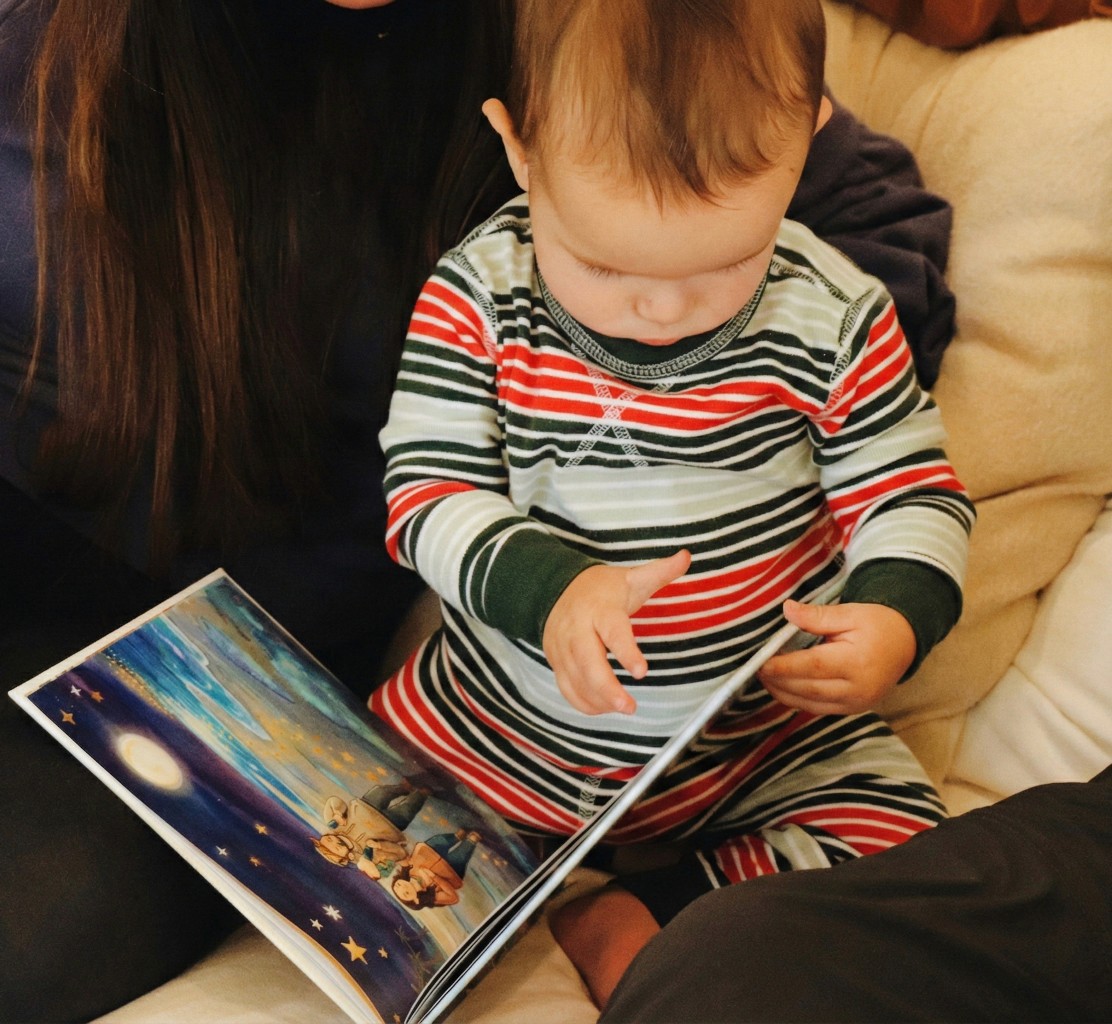
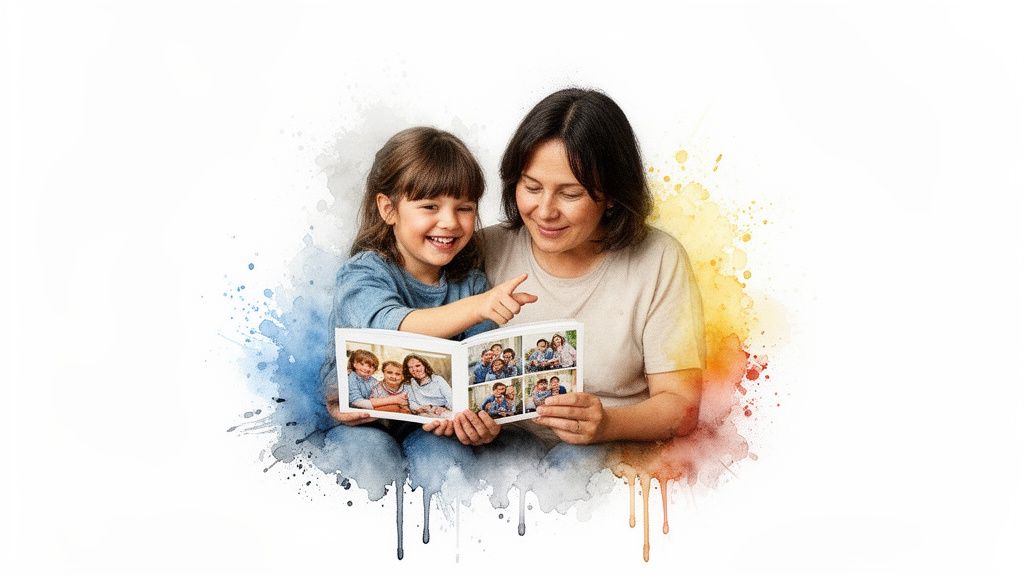
Imagine your child’s face lighting up as they see themself as the hero of their very own book. That’s the magic we’re talking about here. To create a story with pictures, you just need a handful of your favorite family photos and a simple idea to tie them all together. It’s a beautiful way to turn those digital memories on your phone into a real, tangible heirloom that builds confidence and a genuine love for reading.
Why Turning Photos into Stories Is So Powerful
Creating a storybook from your photos is so much more than a weekend craft project. It’s a heartfelt way to connect with your child and cement their most precious memories.
In a world of fleeting digital posts, a custom photo book becomes a permanent family treasure. It’s a dedicated, screen-free way to relive a family vacation, celebrate a huge milestone like learning to ride a bike, or just capture the silly, everyday joy of a regular Saturday afternoon.
This guide is for busy parents and grandparents who want to give a gift that’s truly personal. We’ll walk through how to:
Brainstorm a simple, engaging theme.
Pick the perfect photos to build your narrative.
Write sweet, simple text that brings the images to life.
Print a beautiful book that will be read for years to come.
The Magic of Personalization in Early Literacy
Seeing themselves as the main character in a story has a huge impact on a child's excitement for reading. This isn't just a sweet idea; it’s a real trend. The personalized children's book market, valued at a massive US$569 million, is expected to hit US$1,051 million by 2031.
This isn't just about cute keepsakes. Studies show that when kids see themselves in stories, they read 25% more often, which is a huge boost for early literacy skills. You can dig into more of the data on this at Valuates Reports.
By making your child the hero, you're not just saving memories—you're actively building a foundation for a lifelong love of reading. Storytime shifts from something they just listen to, into an interactive, confidence-building experience.
Your Photo Storybook Creation Path
The journey from a folder of photos to a finished book is straightforward and so rewarding. It really just breaks down into a few core stages, each one simple and fun. For a deeper look at building meaningful narratives, check out our guide on making family picture books.
To give you a bird's-eye view, here's a quick look at the core stages of turning personal photos into a beautiful, custom storybook for your child.
Your Photo Storybook Creation Path
Stage | Your Goal | Why It Matters |
|---|---|---|
Theme & Idea | Choose a central memory or event to focus on. | A clear theme provides a narrative spine for your story, making it easy for little ones to follow. |
Photo Curation | Select images that show a beginning, middle, and end. | Thoughtfully chosen photos act as visual chapters, driving the story forward without needing a lot of words. |
Writing & Narration | Add simple, descriptive text to each page. | Words give context to the pictures and bring your child’s adventure to life in their own voice. |
Design & Print | Arrange your photos and text into a final book layout. | This is the fun part where your story becomes a beautiful, physical keepsake to treasure for years. |
Each step is a chance to pour a little more love into a gift your child will never forget. Let's get started.
Finding the Perfect Theme for Your Story
Every great story starts with a simple, heartfelt idea. Before you even begin scrolling through your photo gallery, let’s find a theme that will really light up your child’s face. The best stories are usually hiding in plain sight, tucked away in everyday moments of joy, growth, and adventure.
Think about a recent milestone or a beloved family memory. Did you just get back from a beach trip? Was there a wonderfully chaotic birthday party? Maybe your child finally learned to ride their bike, or they had their first day of school. These are the perfect ingredients for a story they’ll want to hear again and again.
Uncovering Your Story's Core Idea
The goal is to find a narrative that’s easy for a young child to follow and exciting for them to relive. A collection of photos from a weekend camping trip, for example, easily becomes a tale called "The Great Outdoor Adventure." A series of pictures from a rainy afternoon spent baking could turn into "The Mystery of the Missing Chocolate Chips."
The best themes are specific and feel personal. Instead of a generic title like "A Fun Day," try something like "Our Trip to the Apple Orchard" or "Building the World's Tallest Pillow Fort." That little bit of detail makes the story feel special and truly theirs.
Not sure where to start? Try these prompts:
A Special First: What’s something your child did for the very first time? Think first haircut, first swim lesson, or first snow day.
A Family Tradition: Do you have an annual holiday ritual or a special weekend routine? Decorating the Christmas tree or making Sunday morning pancakes are pure gold.
An Everyday Adventure: Sometimes the simplest activities bring the most joy. A trip to the park, a visit to Grandma and Grandpa's house, or just playing with a pet can make a wonderful story.
Setting the Tone of Your Tale
Once you have your theme, think about the story's feeling. Is it a silly, laugh-out-loud story filled with funny faces and goofy moments? Or is it a quiet, heartwarming tale about a tender memory?
Defining the theme and tone is the most important step to create a story with pictures. It becomes your North Star, making every other decision—from choosing photos to writing the words—feel intuitive and natural.
A story about a clumsy puppy's first day at home will probably be playful and lighthearted. In contrast, a book about a child meeting their new baby sibling might feel more gentle and reassuring. The photos you choose will do a lot of the work, but having a clear intention from the start keeps your story focused and cohesive.
Doing this little bit of prep work ensures your story connects deeply with its most important reader.
Choosing Photos with a Storyteller’s Eye
Your camera roll is a treasure chest, but the real magic is learning to spot the story hidden inside. When you want to create a story with pictures, you have to stop thinking like a scrapbooker and start thinking like a storyteller. It's less about picking the cutest snapshots and more about curating a few key moments that move the story forward.
Each photo should be a stepping stone, carrying your child from one part of the memory to the next.
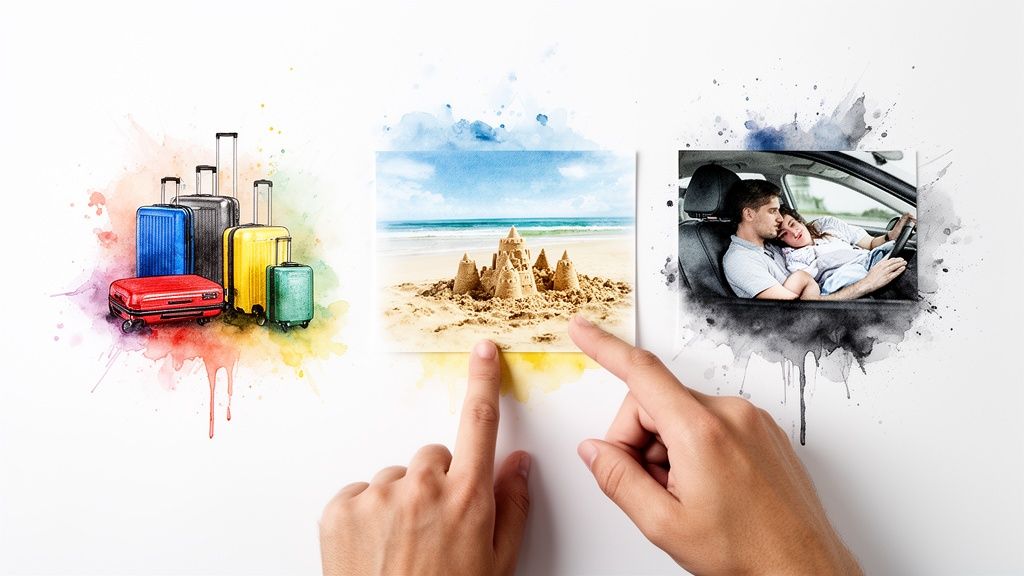
The goal is simple: find photos that create a natural timeline with a clear beginning, middle, and end.
Finding Your Story Arc in Snapshots
A great storybook doesn't need dozens of photos. In fact, fewer is often better. You’re looking for a handful of powerful images that capture the heart of the experience.
For a family vacation, that narrative arc might look like this:
The Beginning: A shot of the kids, bursting with excitement as they stuff their favorite toys into a tiny suitcase. This one picture perfectly sets the stage for an adventure.
The Middle: A vibrant, action-packed photo of everyone building a magnificent sandcastle on the beach. This is the peak moment—the heart of the fun.
The End: A sweet, candid photo of them sleeping soundly in the back of the car on the drive home, tired and happy. It's a gentle, satisfying conclusion.
This simple structure transforms a random collection of vacation pictures into a real story. Of course, finding these gems is much easier if your photos are organized. If you need help getting started, our guide on how to organize family photos is a lifesaver.
Selecting Images That Will Print Beautifully
Beyond the story, the technical quality of your photos really matters for the final printed book. You’ll want to pick images that are clear, well-lit, and high-resolution. A blurry or pixelated photo can pull you right out of an otherwise beautiful story.
Prioritize candid shots that capture genuine emotion over perfectly posed pictures. A laughing face mid-giggle, a look of fierce concentration while learning to ride a bike, or a tender hug—these are the moments that turn snapshots into powerful storytelling tools.
This shift toward authentic, personal stories is bigger than you might think. The global personalized children's books market is projected to reach USD 1.5 billion by 2035. For kids aged 3-6, this trend is exploding as parents turn real memories into epic adventures, boosting reading engagement by an estimated 40%. These personalized book market insights show just how much families are loving this approach.
Writing Simple Words That Spark Imagination
Okay, your photos are in order. Now comes the part that feels intimidating to some but is actually the most heartwarming: adding the words. Don't worry about being a "writer." The goal here isn't to win a literary award; it's to create a story with pictures that you can read aloud with love.
Think of it less like writing and more like you’re just talking to your child, sharing a memory.
The best stories for little ones are simple and conversational. Short sentences are your best friend. The words should add feeling and context to the picture, not just describe what’s obviously happening.
For example, for a photo of your toddler splashing in the ocean, you don’t need to say, "Here you are laughing in the water." Instead, capture the feeling of the moment: "The salty waves tickled my toes and made me giggle!" See the difference? One is a caption; the other is a story.
Finding the Right Words for Your Little Reader
To keep your little one hooked, lean into sensory details and action words that are just plain fun to say out loud. Try to match the language to your child's age so it feels like their very own special book.
If you're stuck, here are a few sentence starters that I've found work wonders:
For action shots: "One sunny morning, Leo decided it was time for a big adventure..."
For emotional moments: "Snuggling close with Grandma made me feel so warm and cozy."
For funny memories: "Woosh! The wind blew my hat right off my head, and everyone laughed."
For trying something new: "I took a deep breath and pedaled the bike all by myself for the very first time!"
Overcoming Writer's Block with a Little Help
Staring at a blank text box can feel like a lot of pressure, even when the story is one you know by heart. If you’re struggling to find just the right words, don't sweat it. Modern tools are fantastic for getting you off the starting block.
The most powerful story is the one told in your own voice. Don't worry about sounding like a published author. Your child wants to hear you. Simple, loving words are always more meaningful than complex prose.
Many platforms, including ours, now have AI assistants built right in for this exact reason. At Once Upon A Memory Books, you can just jot down a simple note about a photo—like "Max's first time seeing snow"—and our helper will draft a sweet, age-appropriate narrative for you.
From there, you can tweak, edit, and add your personal touch. It takes away all the pressure of starting from scratch and lets you focus on making the story feel perfectly yours.
Designing and Printing Your Professional Storybook
This is my favorite part—where all the planning, photo-sorting, and storytelling come together. You’ve gathered the perfect pictures and woven them into a sweet narrative. Now, it’s time to turn those digital pieces into a beautiful, physical book your child can actually hold in their hands.
This is where the magic becomes real.
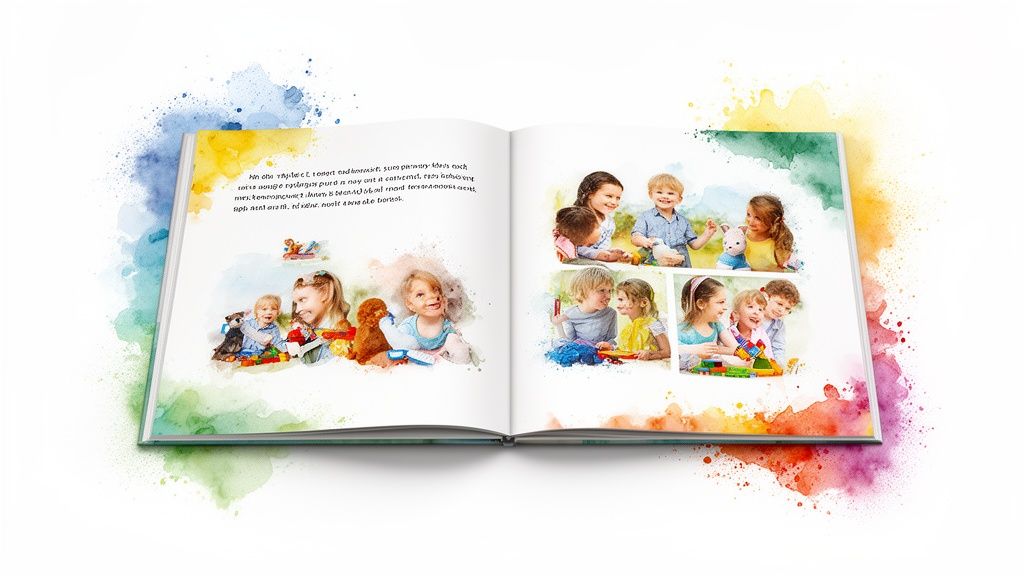
Thankfully, modern platforms have made this process incredibly simple. You’ll upload your photos and text into a user-friendly editor, letting you see exactly how the layouts look page by page. It's your chance to see how the words and images flow together and make any final tweaks.
Fine-Tuning Your Masterpiece
Even with AI helping you get the words just right, you’re still the director of this story. The editing tools are designed to be intuitive, so you can adjust every little detail until it feels perfect.
Refine the Narrative: Reread the text. Does it sound like you? Don’t hesitate to change a few words, adjust a sentence, or add a silly inside joke that will make your little one giggle.
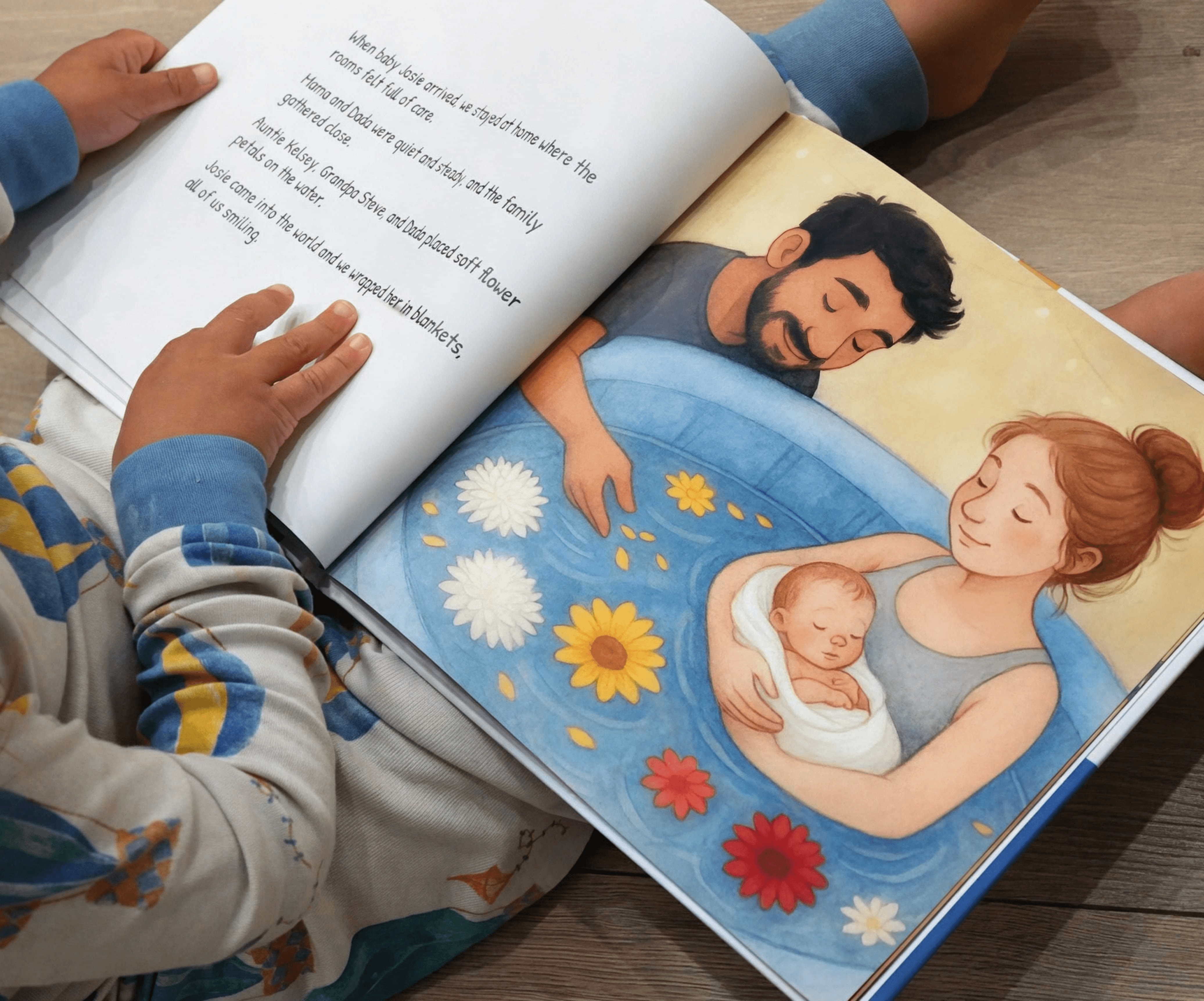
Adjust Illustrations: Many services, including ours at Once Upon A Memory Books, create custom illustrations based on your photos. You can often refine these to better match your vision, making sure the art truly captures your family’s memories.
This stage is all about personalization. The goal is to create a story with pictures that feels authentically yours. For a deeper dive into this process, you can learn more about how to create your own customizable book.
Before you hit that "order" button, treat yourself like a professional editor. Read the entire book out loud—it’s the best way to catch awkward phrasing or typos that your eyes might otherwise skim over.
Your Pre-Flight Printing Checklist
A quick final check ensures your book arrives exactly as you imagined it. There’s nothing more frustrating than spotting a tiny error after the book has already been printed. Run through this simple checklist before you finalize everything.
Proofread Every Word: Check for any spelling or grammar mistakes. Even better, have a friend or partner take a look with fresh eyes.
Verify Image Placement: Do a quick flip-through to double-check that each photo is on the correct page and lines up with the right part of the story.
Check Image Quality: In the final preview, make sure none of your photos look blurry or pixelated.
Choose Your Book Type: Decide between a durable board book (perfect for toddler hands!) or a classic hardcover for older kids. Think about who will be reading it the most.
Taking these few extra minutes guarantees that what arrives at your doorstep is a polished, professional-quality keepsake ready for countless story times.
Of course. Here is the rewritten section, crafted to match the human-written style, tone, and voice from the provided examples.
Your Photo Storybook Questions, Answered
Deciding to turn your family photos into a story is such a fun idea. But right after the inspiration hits, the practical questions usually follow. How many photos is too many? Are my phone pictures good enough? What if I’m not a great writer?
These are the exact questions we hear from parents all the time. Let’s walk through them, because getting these details sorted out is the key to feeling confident and having fun with the process.
How Many Photos Should I Use?
It’s tempting to want to include every adorable picture, but when it comes to a kids’ storybook, less is definitely more.
We’ve found the sweet spot is somewhere between 10 and 20 photos. That’s enough to tell a complete story—with a clear beginning, middle, and end—without overwhelming a little one’s attention span. Think of it as one powerful image per page or two-page spread. The goal is always quality over quantity; it’s far better to choose a handful of photos that really move the story forward.
For example, a story about a birthday party doesn't need 50 pictures. Just four key moments can tell the whole tale beautifully:
Guests arriving, full of excitement.
An action shot of everyone playing a game.
The classic moment of blowing out the candles.
A final, happy photo of your child opening a special gift.
Do My Photos Need to Be Professional Quality?
Absolutely not! In fact, the raw, real-life feel of your everyday snapshots is what makes these books so magical. The photos you already have on your phone are perfect for this.
What truly matters is the feeling captured in the frame—the genuine smiles, the messy-haired morning snuggles, the candid moments of pure joy. Kids connect so deeply with real pictures of themselves, their family, and their pets. Our service uses your photos as direct inspiration for the illustrations, so as long as the main subject is clear, that’s all that matters.
The goal is to capture a feeling, not a flawless portrait. A slightly blurry photo filled with laughter is always more powerful than a perfectly posed picture with a forced smile. Your child will cherish the memory, not the resolution.
What If I’m Not a Good Writer?
This is probably the biggest thing that holds parents back, but it really doesn’t have to. The best children’s stories are simple and heartfelt. All you need to do is write like you talk to your child during playtime or at bedtime. It’s that simple.
But if you’re staring at a blank page and feeling stuck, you are not alone. That’s why modern tools are built to help. Many platforms, including ours, offer AI-powered writing assistance. You can just type a simple note about the photo, like "Leo's first time on the swings at the park," and the tool will generate a sweet, age-appropriate narrative for you. From there, you can easily tweak it to sound more like you. It takes all the pressure off.
How Can I Be Sure My Photos Are Safe?
As a parent, I get it. Sharing family photos online can feel nerve-wracking, and privacy is everything. Any reputable company should take this just as seriously as you do. Before you start creating, take a minute to read their privacy policy.
Look for clear, simple language explaining how your data is stored and protected. A trustworthy service will state upfront that your photos are only used to create your book—never shared, sold, or used for anything else. Choosing a platform that is transparent about its security gives you the peace of mind to know your family’s memories are in safe hands.
Ready to turn your family's best moments into a beautiful storybook? At Once Upon A Memory Books LLC, we make it easy to create a personalized, professionally printed book your child will cherish forever. Start creating your story today!