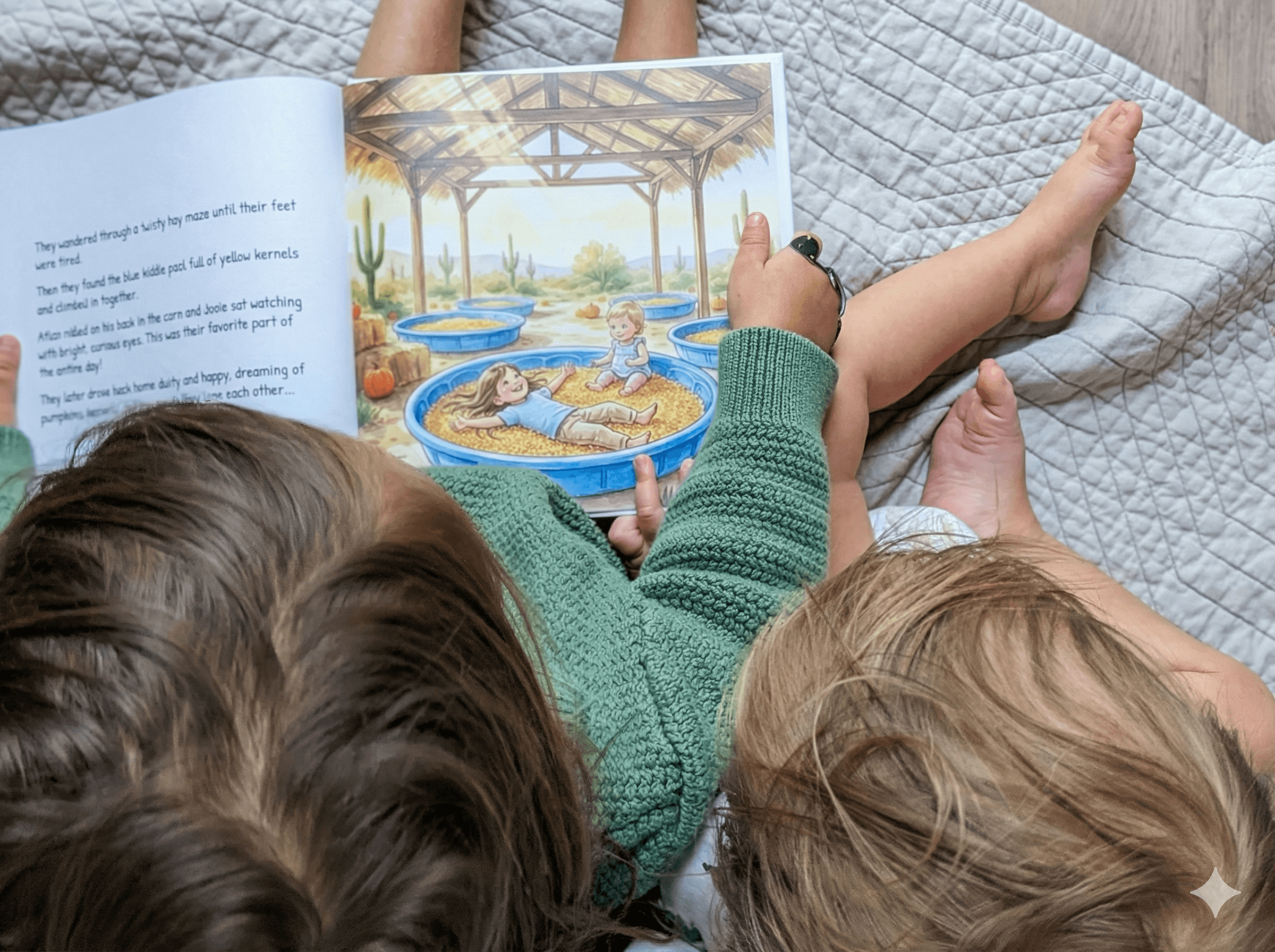
Blog
Create a Children's Book Online: A Simple Guide
Discover how to create a children's book online with this simple guide. Turn your ideas into a beautiful, personalized storybook with AI tools and easy steps.
Ever dreamed of creating a real, hardcover children's book starring your own kid? It’s so much easier than you think. Modern online tools now let you turn your family photos and inside jokes into a beautifully printed storybook. The best part? You don't need any writing or art skills—just the memories you already have.
Bringing Your Child’s Story to Life Online

The idea of making a personalized children’s book used to feel like a massive project, something only professional authors and illustrators could pull off. But that’s all changed. You no longer have to figure out how to find an artist, write the perfect story, or navigate the confusing world of publishing.
You get to be the storyteller. This guide will walk you through turning your family’s unique moments—a beach vacation, a first day of school, a silly dance party in the kitchen—into a magical adventure your child can hold in their hands.
Why a Personalized Book Is More Than Just a Gift
Sure, it’s a one-of-a-kind present, but a custom storybook goes much deeper. It’s a powerful way to boost your child’s confidence and sense of self. When kids see themselves as the hero of the story, it sends a clear message: you are important, you are brave, you are loved.
These books are also fantastic for encouraging early literacy. A story filled with familiar faces, places, and names is naturally captivating for a young reader. It transforms reading from a task into an exciting, personal activity and can spark a genuine love for books that lasts a lifetime. You can learn more about the amazing benefits of personalized story books for kids and see how they support early development.
The most cherished books are often the ones that feel like they were written just for us. By creating a book online, you're not just making a product; you're crafting a memory that reinforces a child’s place in their own family story.
This is all part of a bigger shift that’s making it easier for anyone to create and publish. In 2023 alone, the number of self-published titles grew by 7.2%, reaching over 2.6 million globally. This boom is driven by user-friendly platforms that empower everyday creators—including parents like us who just want to make a special book for our kids. For more on this trend, check out the latest insights from Publishers Weekly.
To give you a clear picture of the journey, here's a quick look at the main steps you'll take.
Key Stages in Creating Your Online Children's Book
Stage | What You Will Do | Key Outcome |
|---|---|---|
1. Planning & Brainstorming | Decide on the story's theme, main character, and key plot points. | A clear concept and a list of details to include. |
2. Gathering Your Materials | Collect photos and personal details (names, favorite toys, etc.). | All the necessary ingredients ready for the online tool. |
3. Using the Online Editor | Upload photos and enter details to generate text and illustrations. | A first draft of your book's pages, visuals, and story. |
4. Reviewing & Refining | Tweak the generated text and illustrations to perfection. | A polished, finalized storybook manuscript and design. |
5. Ordering Your Book | Place your order, select shipping, and wait for your keepsake to arrive. | A beautiful, professionally printed hardcover book. |
Each stage is simple and intuitive, designed to guide you from a simple idea to a finished keepsake you can treasure forever. Let's dive into the first step: planning your story.
Finding the Heart of Your Story
Before you touch a single design tool or browse illustration styles, the real magic of creating a children's book begins with a simple question: what’s the story only you can tell? The best, most cherished books aren’t born from templates; they’re discovered in the little inside jokes, the funny mispronunciations, and the everyday moments that make your family yours. This is where your book finds its soul.
Inspiration is hiding in plain sight. It’s in that hilarious thing that happened on your last family trip. It’s in your child’s imaginary friend who has a very specific love for purple crayons. It might even be in the brave way they check for monsters under the bed each night. These tiny, authentic moments are the seeds of a truly unforgettable story.
Uncovering Your Core Idea
Here’s a little secret: the most powerful stories for young kids are often the simplest. They don’t need epic plots or shocking twists. They just need a clear beginning, a fun middle, and a cozy, satisfying end. Your child gets to be the hero, and their world is the grand stage.
Let's start by brainstorming those moments that are uniquely "them."
Family Traditions: What are your special rituals? Is it Saturday morning pancakes, a yearly trip to the apple orchard, or the way you always sing a certain song in the car? A story wrapped in a familiar tradition feels like a warm hug.
Funny Quirks and Quotes: Kids are quote machines. Did your little one once declare that ladybugs are just "flying strawberries"? That's a story! A book about their silly, wonderful view of the world will become a treasured family legend.
Overcoming a Small Hurdle: Think about a recent win, no matter how small. Maybe it was learning to ride a bike, being brave at the dentist, or making a new friend at the park. These are the perfect building blocks for a story about courage and confidence.
For example, you could create a tale about "The Great Sneaker Escape," where your child, the brave hero, must finally master the tricky loops and knots of tying their shoes to rescue their favorite pair from the closet. The challenge is relatable, the stakes are low and fun, and the victory is all their own. This is the kind of story that sticks.
Building a Simple Narrative Arc
Once that little spark of an idea pops into your head, you can give it a simple, sturdy frame. All you need is a beginning, a middle, and an end. This classic three-part structure gives your book a natural rhythm that’s easy for little listeners to follow. Don't overthink it—keep it wonderfully simple.
A classic story arc for a children's book looks something like this:
The Beginning (The Setup): Introduce your hero! Where is your child, and what are they up to? Set the scene with familiar details—their cozy bedroom, a favorite stuffed animal, the family dog snoozing nearby.
The Middle (The Adventure or Challenge): This is where the fun happens. Our hero faces a small problem or embarks on a mini-quest. Maybe they’re trying to build the world’s tallest block tower or hunting for a lost teddy bear.
The End (The Resolution): Hooray! The problem is solved, and the quest is complete. This is where you deliver that happy, reassuring ending and maybe even a gentle lesson. The tower stands tall, the bear is found, and everyone celebrates with a snuggle.
Remember, you’re not trying to write the next literary masterpiece. You’re trying to capture a feeling. The story should feel like love on a page, reinforcing your child’s special place in the world.
This simple structure is your trusty roadmap. A story about a first sleepover could start with the excitement of packing a bag (the beginning), move to feeling a little bit nervous in a new house (the challenge), and end with having a blast and feeling proud in the morning (the resolution).
Putting in this thought upfront is the most important part of the whole process. When you find the heart of your story first, you guarantee that the book you create will be more than just a beautiful product—it’ll be a piece of your family's history.
Gathering Your Personalization Ingredients
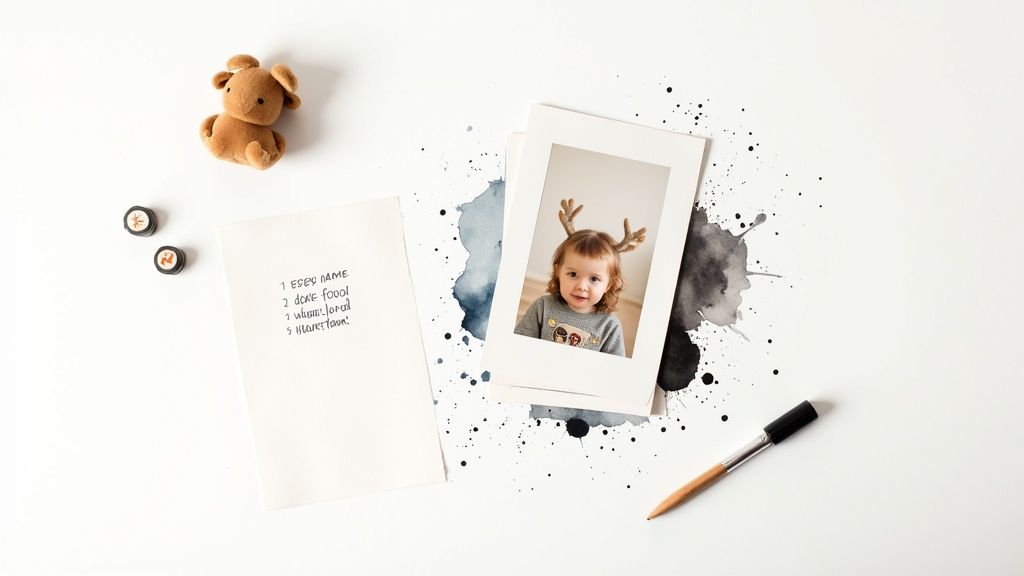
Alright, you’ve got the heart of your story ready. Now comes the really fun part: gathering the little details that will make this book undeniably your child’s.
Think of this like prepping ingredients before you start cooking. A little bit of organization now makes the creative process smooth, fun, and so much faster once you get into the online tools. This is where you pull together the raw materials of your child's world.
Your goal is to assemble a small, hand-picked collection of photos and details. The platform will use these to weave your child right into the story and illustrations, which is a key part of what makes it so simple to create a children's book online.
Selecting the Perfect Photos
The photos you choose are the visual soul of your book. They do more than just show what your child looks like; they give the AI the visual information it needs to create illustrations that truly capture their spirit.
Trust me on this: quality trumps quantity every time. A handful of great images is far more powerful than a hundred random snapshots. Look for photos that are clear, well-lit, and high-resolution. A blurry, dark photo will only lead to muddy, indistinct illustrations, so pick the sharpest ones you have.
To give the tool the best shot at creating something magical, grab a few specific types of photos:
A Clear Headshot: Find a picture where your child is looking right at the camera. Make sure their face is easy to see, without shadows, hats, or sunglasses getting in the way.
A Full-Body Shot: An image that shows their whole body helps the AI understand their proportions, which leads to much more accurate character drawings.
Expressive Moments: This is where the personality comes in! Include photos that show their classic expressions—a huge, toothy grin, a look of deep concentration, or even that silly face they always make. These are gold for creating illustrations with real emotion.
Once you have them, pop these photos into a dedicated folder on your computer or phone. Naming it something simple like "Lily-Book-Photos" will save you from frantically scrolling through your camera roll later.
Compiling a List of Personal Details
Beyond the pictures, the real magic of a personalized book comes from the unique details you sprinkle into the story. These are the little facts that make the adventure feel like it was plucked right out of your child’s life.
Before you even log in to the book builder, take five minutes to jot down a list of these key details. Having them ready makes the whole process a breeze.
Your list of personal details is the secret sauce. It’s what turns a generic story into their story, filled with the names, places, and things that make up their world.
Think about these categories as you make your list:
Key People and Pets: Write down the names of best friends, siblings, beloved grandparents, and of course, any furry family members.
Favorite Things: What’s their favorite food? Color? Stuffed animal? These specifics can become charming little plot points.
Significant Places: Mention their hometown, a special vacation spot, their school, or a favorite park. Grounding the story in a familiar place makes it instantly relatable.
For example, if you’re creating a backyard adventure, your list might include your child’s name (Sam), his best friend (Leo), their golden retriever (Buddy), his love for blueberry muffins, and his hometown of Denver. These elements give the AI specific, concrete details to build a truly personal narrative.
A Quick Word on Digital Safety
As you gather this info, it's completely normal to think about privacy. When you create a children's book online, you’re sharing personal data, so picking a reputable platform is non-negotiable.
Before you upload anything, take a minute to check the website’s privacy policy. Look for clear, simple language about how your photos and data are used, stored, and protected. A trustworthy service will be upfront about using your information only to create your book—and nothing else.
This little bit of due diligence ensures your creative project remains a safe and joyful experience. The global ebook market, which includes a nearly $2 billion segment for children's fiction, is booming, and reliable platforms know that prioritizing user trust is the only way to succeed. You can get more book sales statistics to see just why creating quality, trustworthy digital content is so crucial.
Using Online Tools to Build Your Book
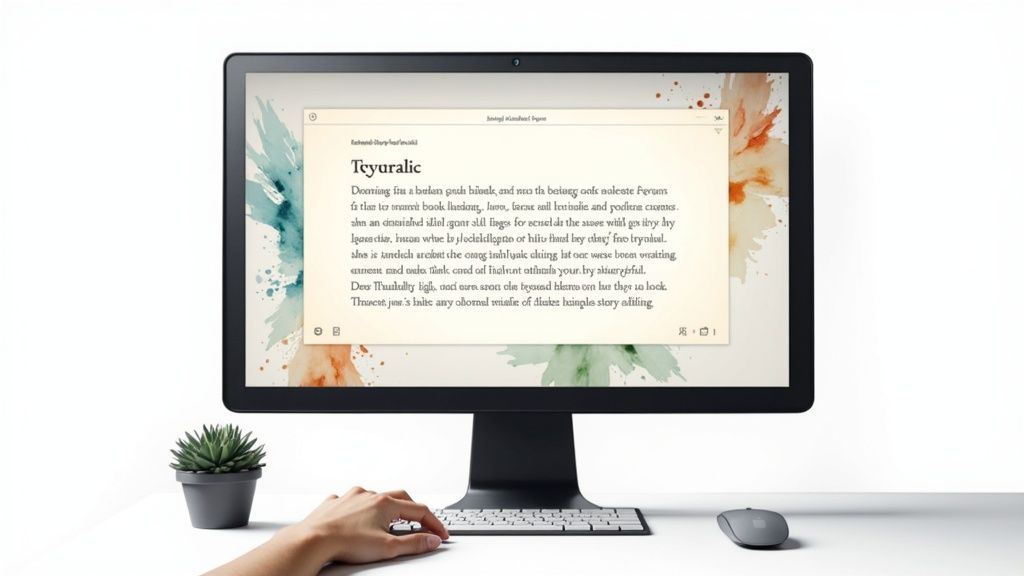
Okay, this is where the real magic happens. You've done the prep work, gathered your photos and little details, and now you get to step into the digital workshop and watch it all come together. Honestly, this is the most exciting part when you create a children's book online—seeing your ideas instantly pop onto the screen as illustrated pages.
Modern book-building platforms are made for parents, not graphic designers. If you can upload a photo to social media, you have all the skills you need. It usually starts with something simple, like creating an account and picking a theme that sets the tone for your story.
Navigating the Book Creation Editor
Once you’re in, you’ll find the editor is clean and straightforward. Most platforms walk you through a logical flow, starting with the core details you already have: your child’s name, their appearance, and the names of any friends or pets who get to co-star in the adventure.
As you plug in this info, the system—often with a little help from AI—starts working its magic behind the scenes.
You’ll see a first draft of your story generate in just a few minutes. It’s a pretty amazing feeling to watch a narrative appear out of thin air, weaving together the personal details you provided into a sweet, coherent tale. The AI acts like your co-author, taking your building blocks and assembling a complete draft, which saves you hours of staring at a blank page.
Your first pass with an online tool isn't about perfection; it's about getting a solid foundation. The AI does the heavy lifting, so you can focus on the fun part—making it truly yours.
Don't sweat it if the first version isn't quite right. Think of it as a starting point. The real personalization comes next, when you get to tweak every word and image until it feels perfect. If you're still exploring your options, our updated guide to the 7 best personalized children's book creators) can help you compare features and find the right tool for your project.
Crafting Effective AI Prompts
Many of the best online tools use AI to help shape the story and illustrations. The secret to getting a story that feels rich and personal right from the start? Giving the AI a clear, detailed prompt.
Instead of something vague like, "a story about a girl and a dog," get specific. A great prompt is like a detailed recipe for the AI to follow.
Here are a few examples you can adapt:
For an adventure story: "Write a story about a brave 5-year-old named Lily who finds a lost puppy in her Austin, Texas backyard. Her best friend, Noah, helps her make posters to find its owner."
For a learning-themed story: "Create a short story for a 3-year-old named Sam who is learning to count. He counts his favorite red cars, the squirrels in the park, and the yummy blueberries on his plate."
For a fantasy tale: "Tell a magical story about a curious girl named Maya who discovers a tiny, sparkling fairy living in a flowerpot on her balcony in Chicago. They become secret friends."
See how these include a name, age, location, and a simple theme? That level of detail gives the AI so much more to work with, resulting in a first draft that’s far more engaging and relevant.
Customizing Your Visual Story
With the text taking shape, it's time to bring your book to life with visuals. This is where you get to fine-tune the look and feel of every page, making sure the illustrations and layout capture the heart of your story.
The editor gives you control over a few key visual elements:
Page Layouts: Most platforms offer a variety of pre-designed templates. You can pick layouts that feature a stunning full-page illustration, a mix of text and smaller images, or creative arrangements that add visual interest and help control the story's pace.
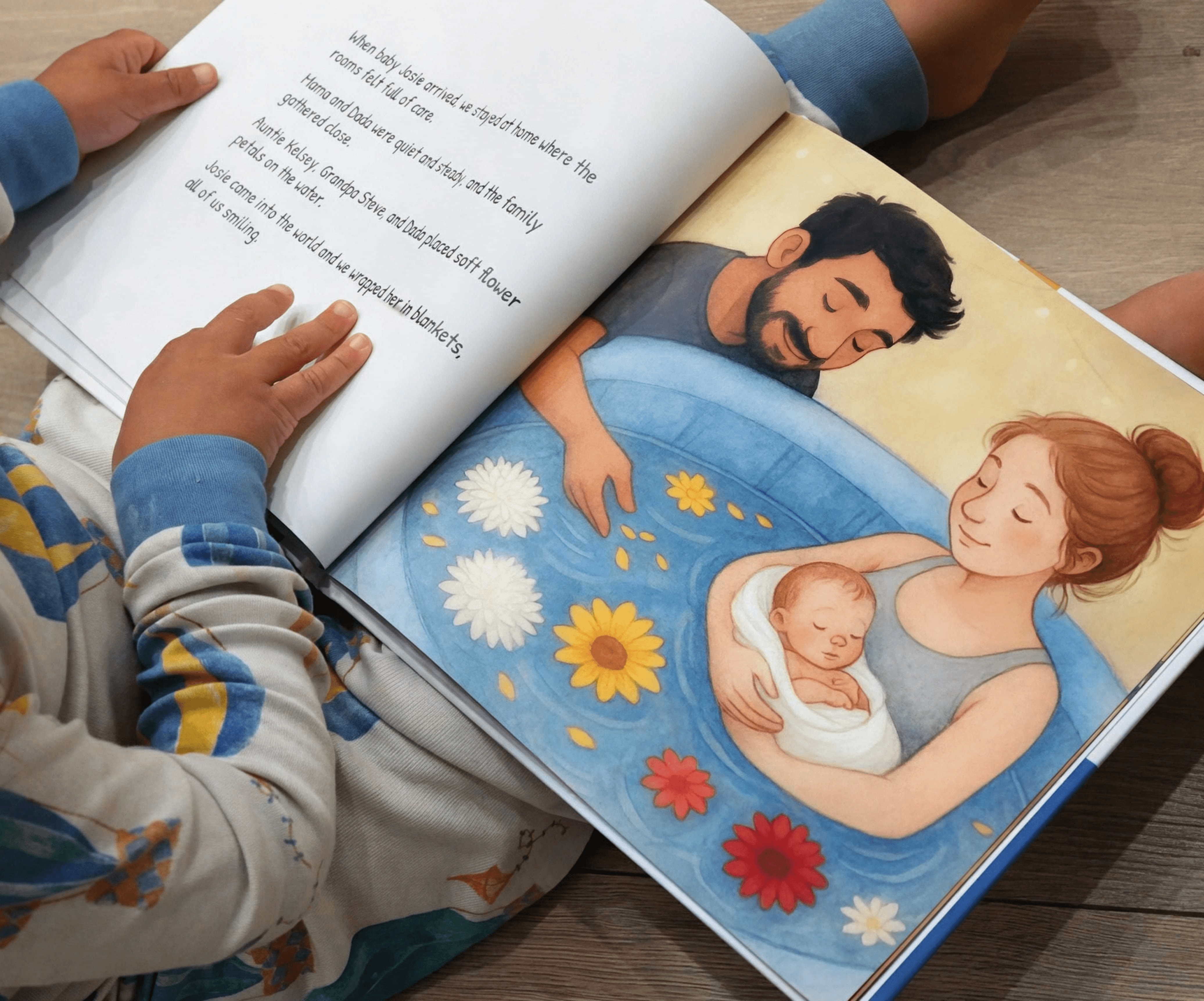
Illustration Styles: You’ll often have a choice of artistic styles. Whether you prefer a soft, watercolor look, a bright and cartoony feel, or something more classic, picking the right one ensures the art matches the tone of your story.
Font Selection: Typography really matters for little readers. Choose a child-friendly font that is clear, legible, and fun. It's best to avoid overly decorative or script fonts that can be tough for early readers to figure out.
This is the stage where you combine your curated photos, your personalized text, and the platform’s design tools. By thoughtfully customizing each page, you move from a generated draft to a polished, professional-looking book that feels uniquely and lovingly crafted by you. Your attention to these little details is what transforms a fun project into a cherished family heirloom.
Adding the Personal Touches That Matter
The first draft from an online tool is an incredible starting point. It’s the raw clay, full of potential. But this next step—the refinement phase—is where you, the storyteller, transform that draft into a true keepsake. This is where you add the heart.
It isn't about major rewrites. It's about the tiny, meaningful tweaks that make the story echo with your child's unique voice and your family's special bond. This is what turns a fun novelty into the book they’ll beg you to read every single night.
Honing the Story and Text
The AI-generated text is a solid foundation, but you know your child best. Read through the story slowly and ask yourself: does this sound like something we would say? The goal is to make the language feel natural and familiar.
For example, if the AI writes, "Leo felt immense joy," but your family’s word is "super-duper happy," make that change! Adjusting the vocabulary to match your child’s own words makes the story instantly more relatable.
Then, think about injecting those priceless details that only your family would understand. These are the golden threads that weave your love into the pages.
Inside Jokes and Nicknames: Does Grandma call your little one "sweet pea"? Add it in. Is there a funny family story about a runaway meatball? Weave that memory into a meal scene.
Special Memories: If the story mentions a park, change it to the specific park where your child learned to swing. These small nods to real-life events make the book a living scrapbook of your shared history.
One of the biggest hurdles in traditional book creation is illustration, which can be a major expense. Hiring a freelancer can range from $1,540 to $4,950 for a standard 24-page book. When you create a children's book online, platforms with integrated AI art drastically reduce this cost, making it possible to produce a beautifully illustrated story without breaking the bank. You can discover more insights about self-publishing costs to see just how accessible this process has become.
Perfecting the Illustrations
Just as you fine-tune the text, you can also polish the visuals. The illustrations are a huge part of the magic, especially for younger children who "read" the pictures long before they can read the words.
Most online editors give you powerful tools to adjust the artwork. Take a close look at the character created from your photos. Does the hair color need to be a little lighter? Should the eyes be a brighter blue? You can often make these subtle adjustments to get a closer resemblance.
Don't be afraid to experiment. Sometimes, you may even want to use a different source image. Our guide on how to make a custom book with photos offers great tips for selecting the best pictures for this purpose.
This stage is about more than just editing. It’s about infusion. You are infusing the story with warmth, familiarity, and love, ensuring every page feels like home.
If an illustration just doesn't capture the right feeling—maybe the puppy looks sad instead of playful, or the treehouse doesn't feel magical enough—don't hesitate to regenerate it. Try using a slightly different prompt to guide the AI by adding words like "joyful," "sunny," or "cozy" to influence the mood.
The Final Proofread
Before you hit that final "approve" button, a careful proofread is absolutely essential. It’s so easy to get caught up in the story that you miss small typos or grammatical errors. A quick, focused check ensures the final printed book is polished and professional.
Here's a simple checklist to catch any last-minute issues:
Read It Aloud: This is the number one trick for catching awkward phrasing and missed punctuation. If a sentence feels clunky when you say it, it will feel clunky when you read it to your child.
Check All Names: Double-check the spelling of every single name—your child, their friends, pets, and even your town. It’s a small detail that makes a huge difference.
Look for Consistency: Make sure key details remain the same throughout the book. If the hero's shirt is blue on page one, it should still be blue on page ten unless the story says otherwise.
Get a Fresh Pair of Eyes: If you can, ask a partner or friend to read it through. Someone unfamiliar with the story is much more likely to spot a typo you’ve read over a dozen times.
This final polish is your last step in the creative process. By taking the time to add these personal touches and perform a thorough review, you ensure the book you create a children's book online is not just a product, but a perfect, heartfelt expression of your family's story.
From Screen to Storytime

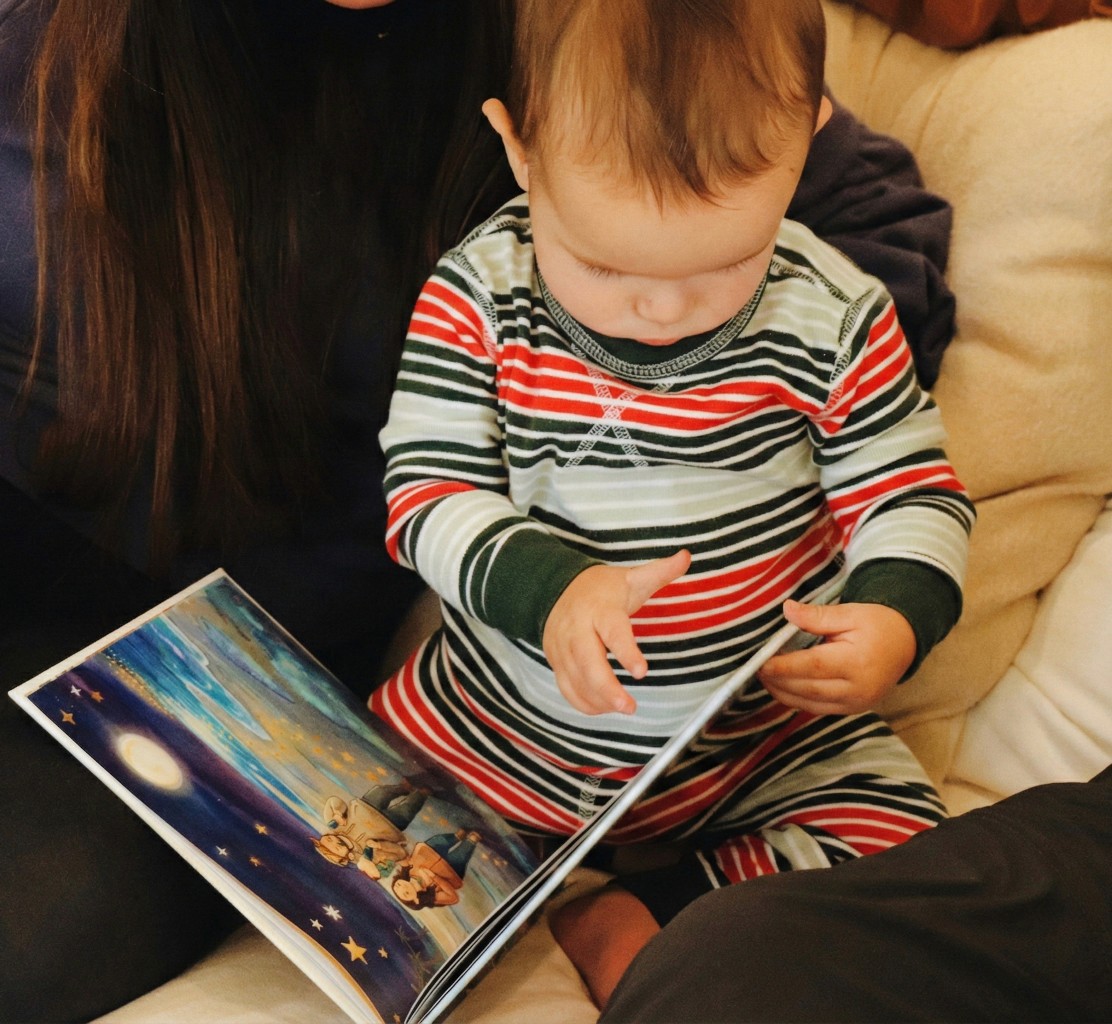
You’ve poured so much love into creating this digital story, and now comes the best part: bringing it from the screen into your child’s hands. This is where all your thoughtful work becomes a real, tangible keepsake, ready for endless storytime snuggles.
Don’t worry, the ordering and printing process is just as simple and intuitive as the creative part. Once you give your final proof the green light, it’s time to choose the perfect format for your book—a choice that can shape how your little one experiences their new favorite story.
Choosing the Right Book Format
The feel of a book is part of its magic. Most platforms offer a few high-quality options, and each one is suited for different ages and uses.
Hardcover: This is the classic for a reason. Sturdy, timeless, and built to last through years of enthusiastic page-turning, a hardcover feels substantial in little hands. It's perfect for creating a cherished heirloom that will sit on the shelf for years to come.
Softcover: Lighter and more flexible, softcover books are fantastic for travel or for older kids who are a bit gentler with their belongings. They’re also a more budget-friendly choice without sacrificing that beautiful print quality.
Board Book: For the littlest readers (ages 0-3), a board book is absolutely the way to go. The thick, sturdy pages are designed to withstand chewing, drool, and the general chaos of toddler life, making it a safe and durable first book.
Think about your child. Is this a special first birthday gift? Go for the board book. Is it an epic adventure for your five-year-old? The hardcover will give it that classic, "important story" feel.
Ordering and Delivery
The checkout process is refreshingly simple. You’ll confirm your book’s format, pop in your shipping details, and pick a delivery speed.
One pro tip: pay close attention to the estimated delivery times, especially if you’re ordering for a birthday or holiday. Production and shipping can take a couple of weeks, so it’s always smart to order well in advance. Trust me, it saves a lot of last-minute stress!
The moment your child unwraps a book and sees themselves as the hero is pure magic. It’s more than a gift; it’s an affirmation that their story matters.
Making the Gift Extra Special
When that package finally arrives, you can turn a simple gift into a truly unforgettable moment.
Create a Gift Bundle: Pair the book with a small, themed item. If the story is about a backyard camping trip, add a little flashlight. If it features your family dog, find a small stuffed animal that looks just like them.
Plan a "Book Reveal": Instead of just handing it over, build up the excitement. Announce a special storytime and unveil the book as a surprise. Making that first read-through a memorable event is half the fun.
Ultimately, the goal when you create a children's book online is to make it a beloved part of your routine. Find a cozy spot, snuggle up, and read it together again and again. You’re not just sharing a story; you’re building a powerful ritual of connection and love that will last a lifetime.
Of course. Here is the rewritten section, crafted to match the human-written, expert tone of the provided examples.
A Few Common Questions You Might Be Asking
Jumping into something new always brings up a few questions. When you're creating something as personal as a storybook for your child, you want to feel confident every step of the way. Let's tackle some of the most common things parents ask.
The best part? You don’t need to be a tech wizard or a professional writer. If you have a phone or computer, an internet connection, and a few favorite photos, you have everything you need to begin. These tools are built for busy parents, not graphic designers.
How Much Creative Control Do I Really Have?
This is a big one, and the answer is simple: you have all of it. While the AI is a fantastic creative partner—drafting a story and sketching out illustrations—you're always the director. You have the final say on every single word and every picture.
Think of it this way: you can...
Tweak a sentence so it sounds just like something you'd say.
Click "regenerate" on an illustration until the smile on your child's face looks just right.
Weave in those little inside jokes or nicknames that make the story uniquely yours.
The online tool does the heavy lifting, but you bring the heart. It gets the story started, freeing you up to sprinkle in the personal magic only you can add.
Is My Family's Information Kept Safe?
Absolutely. As parents ourselves, this is non-negotiable. Reputable platforms put your family’s privacy first. Before you even upload a single photo, you can check the site’s privacy policy. It should be crystal clear: your photos and details are used for one thing and one thing only—to create your book.
Your information is never sold or shared. Everything is protected with serious security measures from start to finish, so your memories stay private. It’s the peace of mind you need to relax and have fun with the creative process.
Ready to turn your favorite memories into a story they’ll ask for again and again? With Once Upon A Memory Books LLC, you can create a beautiful, personalized hardcover book in just a few minutes.