Blog
A Guide to Story Books with Picture and Why They Matter
Explore the power of story books with picture. Learn their developmental benefits, how to choose the right books, and how to create personalized keepsakes.
Story books with pictures are so much more than just a way to pass the time before bed. They’re a child’s first real blend of art and language, a magical combination that sparks their imagination and lays the groundwork for a lifetime of reading. These books build a bridge between the words they hear and the world they see, turning learning into a beautiful, visual adventure.
The Unforgettable Magic of Picture Story Books
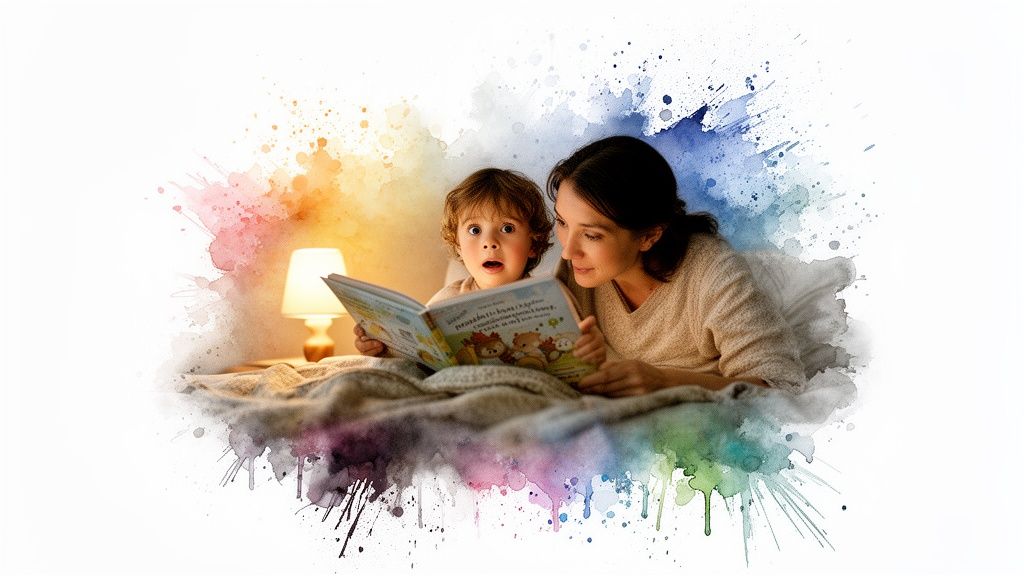
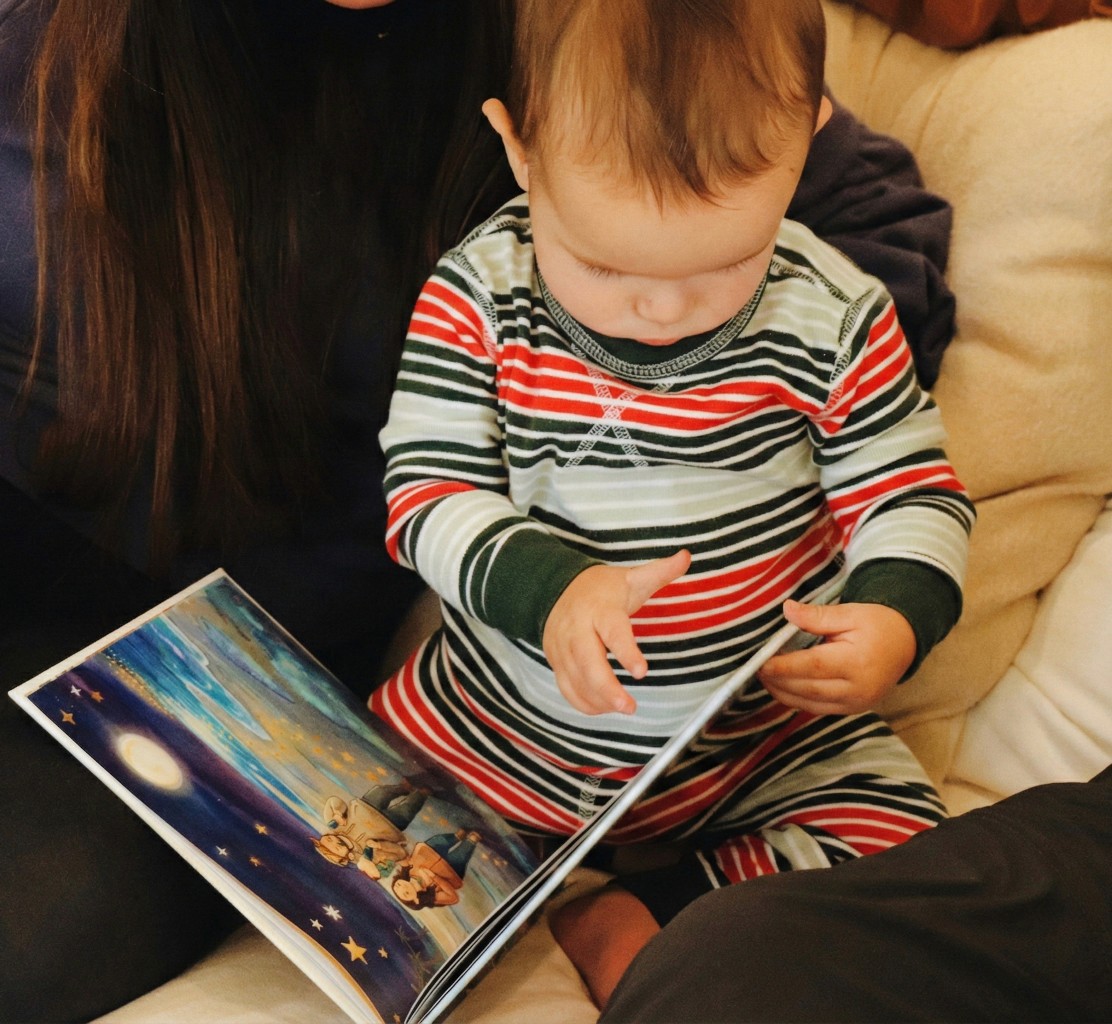
There’s a special kind of quiet magic that unfolds when a child curls up with a parent for a bedtime story. The busy day fades away, replaced by whimsical worlds and unforgettable characters brought to life through colorful illustrations and a familiar, loving voice.
These shared moments are about so much more than just reading words on a page. They are about connection, discovery, and creating memories that stick around long after the book is closed. A good story book with pictures is a true gateway experience, opening up new worlds and big ideas for little minds.
From timeless classics like The Giving Tree to modern personalized treasures, these books have a unique power to strengthen family bonds. This guide is all about helping you choose—or even create—the perfect book to spark that one-of-a-kind wonder.
More Than Just Words on a Page
Picture storybooks are powerful tools for growth, making abstract concepts feel real and understandable. Think about it: they are often the very first art gallery a child ever visits and their first introduction to the beautiful rhythm of language. The combination of pictures and text is a potent one-two punch for learning.
A picture book is a small door to the enormous world of the visual arts, and they're often the first art children see. It's a child's first museum.
This kind of visual storytelling is absolutely fundamental to early development. It helps children grasp complex emotions, understand context clues, and build a solid foundation for literacy long before they can read on their own.
A Tradition with a Bright Future
The love for these books isn't just nostalgia; it's a booming global phenomenon. The market for children's picture books was valued at a huge USD 12.34 billion in 2023 and is expected to grow to USD 21.68 billion by 2034.
That incredible growth is fueled by a real appreciation for formats that truly capture a child's attention. If you want to keep that love for reading going all year, you can learn more about celebrating events like National Read Across America Day and making reading a joyful part of your family’s routine.
Why Pictures Are a Child's First Language
Before a single letter makes sense, kids are already fluent in another language: pictures. The illustrations in a story book with picture act as a universal translator, beaming complex ideas, big feelings, and whole narratives straight into a young, developing mind.
Think of it this way: pictures are a child’s first bridge to understanding the world.
When a toddler points to an illustration of a smiling dog, they aren’t just seeing a drawing. They’re recognizing happiness. They connect the visual cue—the smile—to a feeling they’ve experienced themselves. This is a foundational block for emotional intelligence, and it’s a process known as visual literacy. It's the critical first step before they can ever learn to read.
Long before they can sound out the word "sad," they get it just by looking at a character's droopy shoulders. A 2019 study even confirmed that early exposure to picture books significantly boosts a child’s ability to guess what’s happening and understand how a story flows—skills that are non-negotiable for becoming a strong reader later on.
Pictures Build Vocabulary and Context
Visuals don’t just tell the story; they give words their meaning. When a book describes a "vast, green meadow," the picture cements that idea in a child’s mind far more powerfully than the words ever could alone. The image becomes a rich, tangible reference point.
This is how vocabulary growth explodes. A child sees a picture of a "tractor" while hearing the word, forging a powerful mental link. The magic of reading aloud is taken to a whole new level when pictures are involved, a topic we explore more in our guide on the benefits of reading aloud to children.
This is how a child’s word bank grows naturally. They aren’t just memorizing definitions from a flashcard; they're connecting new words to real images and ideas, creating a much richer, more interconnected web of knowledge in their brains.
A picture book is a small door to the enormous world of the visual arts, and they're often the first art children see. It’s a child’s first museum.
Fostering Empathy and Critical Thinking
Beyond just learning words, picture storybooks teach kids how to think critically and feel for others. When a child sees a character facing a dilemma in an illustration, they start to analyze the situation visually. They might ask, "Why does he look so scared?" or "What is she going to do next?"
That simple act of questioning the pictures is an early form of critical thinking. They’re making predictions, interpreting body language, and reading between the lines—or in this case, between the brushstrokes.
At the same time, seeing the world from a character’s point of view helps develop empathy. When they see a story from the perspective of a tiny mouse or a lonely monster, they learn to consider feelings and experiences completely different from their own. It’s this powerful blend of art and story that makes picture books so essential for raising not just a future reader, but a compassionate and thoughtful little human.
How to Choose the Right Picture Book at Every Stage
Picking out the right storybook is a bit like choosing the right pair of shoes—what works for a wobbly toddler won't fit a confident preschooler. The secret is matching the book to your child’s developmental stage to unlock all the magic, learning, and fun packed inside. The goal is to meet them right where they are.
This little chart shows exactly how literacy skills build on each other, starting with pictures and growing all the way to reading.
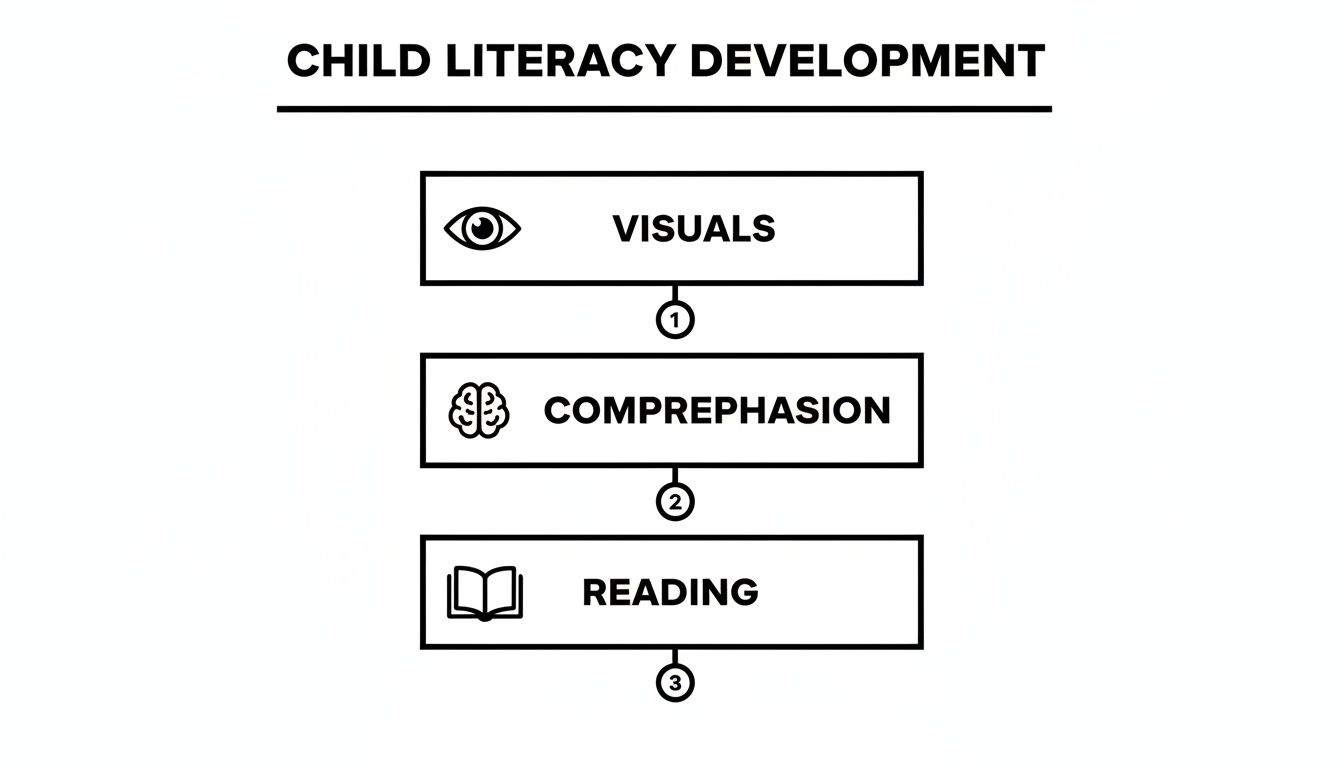
It’s a great reminder of why the right visuals are the perfect first step on their journey to becoming a reader.
For Infants and Toddlers (Ages 0-2)
At this stage, books aren't just for looking at—they’re a full-body experience. An infant’s world is a beautiful blur of new sights, sounds, and textures. Because their vision is still developing, high-contrast images, like bold black-and-white patterns, are fantastic for grabbing their attention.
The best books for this age are tough and interactive. Look for:
Board Books: Their thick, sturdy pages are practically indestructible. They’re built to survive tiny hands, curious mouths, and a whole lot of love.
Touch-and-Feel Books: A patch of soft fur on a puppy or a crinkly leaf makes the story a hands-on adventure, engaging their sense of touch.
Simple, Repetitive Text: Rhyming words and predictable phrases are so comforting. They also help build those foundational language patterns in their growing brains.
If you’re just starting your library, browsing lists of the best baby books for new parents can give you some wonderful, tried-and-true ideas. Just remember: sensory engagement and durability are everything.
For Preschoolers (Ages 3-5)
Once kids hit the preschool years, their ability to follow a story really takes off. They can track more complex plots and are starting to understand the world in a much deeper way. Now, the pictures in their books should do more than just show what’s happening—they should spark curiosity and get them talking.
A great picture book for a preschooler will have:
Richer Narratives: Look for stories with a clear beginning, middle, and end. Books that touch on relatable themes like making friends, sharing, or trying something new for the first time are pure gold.
Detailed Illustrations: The best artwork gives kids something new to discover every time you read. It encourages them to point, ask questions ("What's that little snail doing?"), and make connections.
Emotional Depth: When characters show a range of feelings, it helps preschoolers build empathy and find the words for their own big emotions.
To help you find the perfect fit, here's a quick guide breaking down what to look for at each stage.
Age-Appropriate Picture Book Selection Guide
Age Group | Key Features to Look For | Developmental Benefits |
|---|---|---|
0–1 Year | High-contrast images, board books, simple faces, textures, indestructible materials. | Visual Development and Sensory Exploration. |
1–2 Years | Simple words, familiar objects (animals, toys), lift-the-flap features, repetitive rhymes. | Language Acquisition and Object Recognition. |
2–3 Years | Basic plots, cause-and-effect stories, characters with simple emotions, rhyming text. | Early Comprehension and Predictive Skills. |
3–5 Years | More complex stories, relatable problems (sharing, friendship), detailed illustrations, diverse characters. | Empathy Building and Story Sequencing. |
Think of this table as your cheat sheet for bookstore trips! It helps you focus on the features that will truly connect with your child right now.
Choosing books that align with their cognitive and emotional growth gives preschoolers the tools to understand themselves and the world. Every story becomes a safe space to explore big ideas and even bigger feelings, laying the groundwork for a lifetime of loving books.
Making Your Child the Hero of Their Own Story

Imagine your child curled up beside you, listening to a story book with picture about a brave knight or a clever astronaut. Now, what if that hero suddenly had your child’s name and face?
It’s a simple switch, but the effect is profound. They're no longer just a listener; they’re an active, emotionally invested participant. When kids see themselves as the hero, the story becomes their story.
This deepens the experience in a way that’s pure magic. It’s not just a tale about some faraway character anymore—it's a reflection of their own life, their dreams, and who they are. That feeling of being seen builds self-esteem and makes the lessons inside the story feel personal and real.
Turning Memories into a Timeless Tale
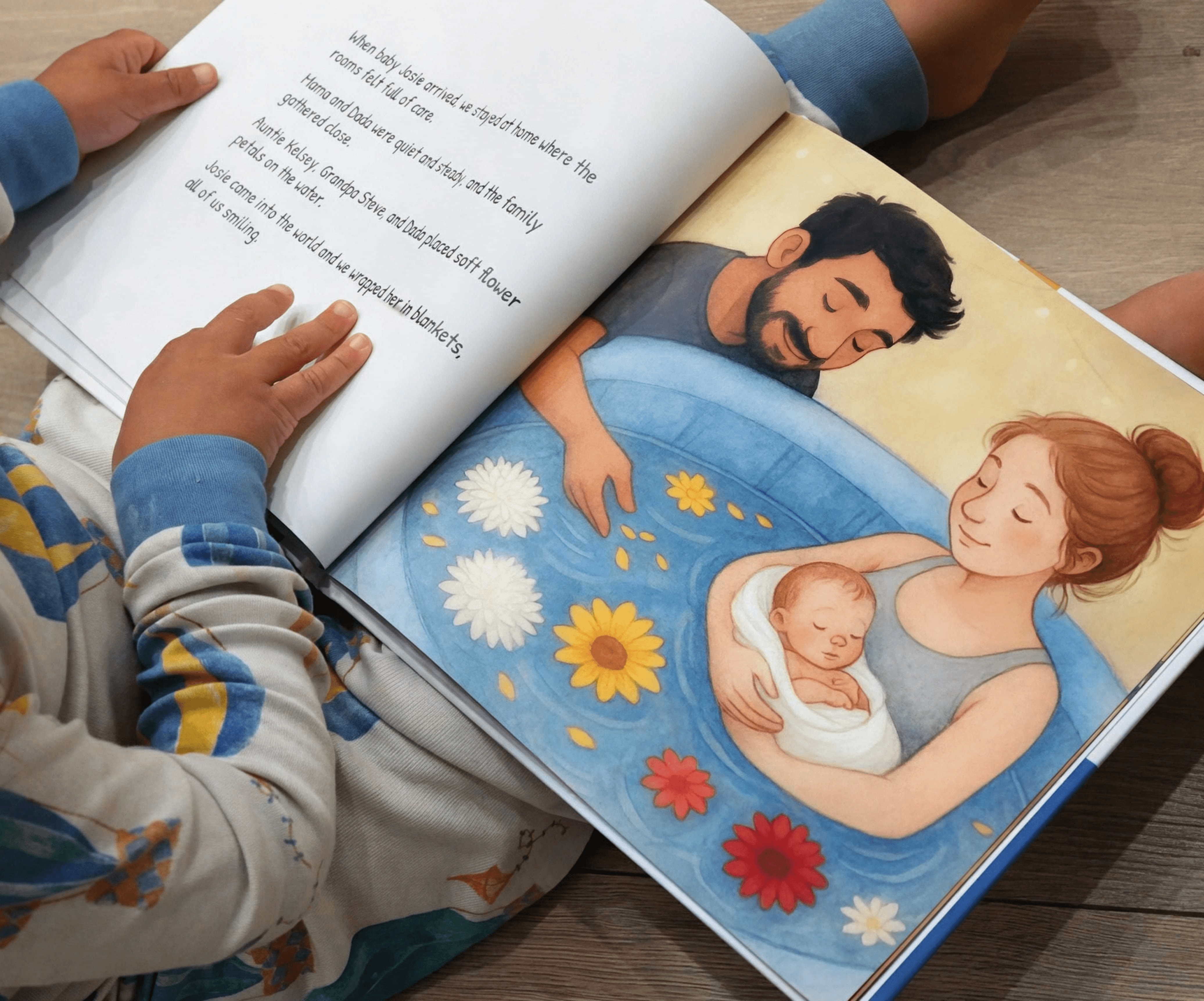
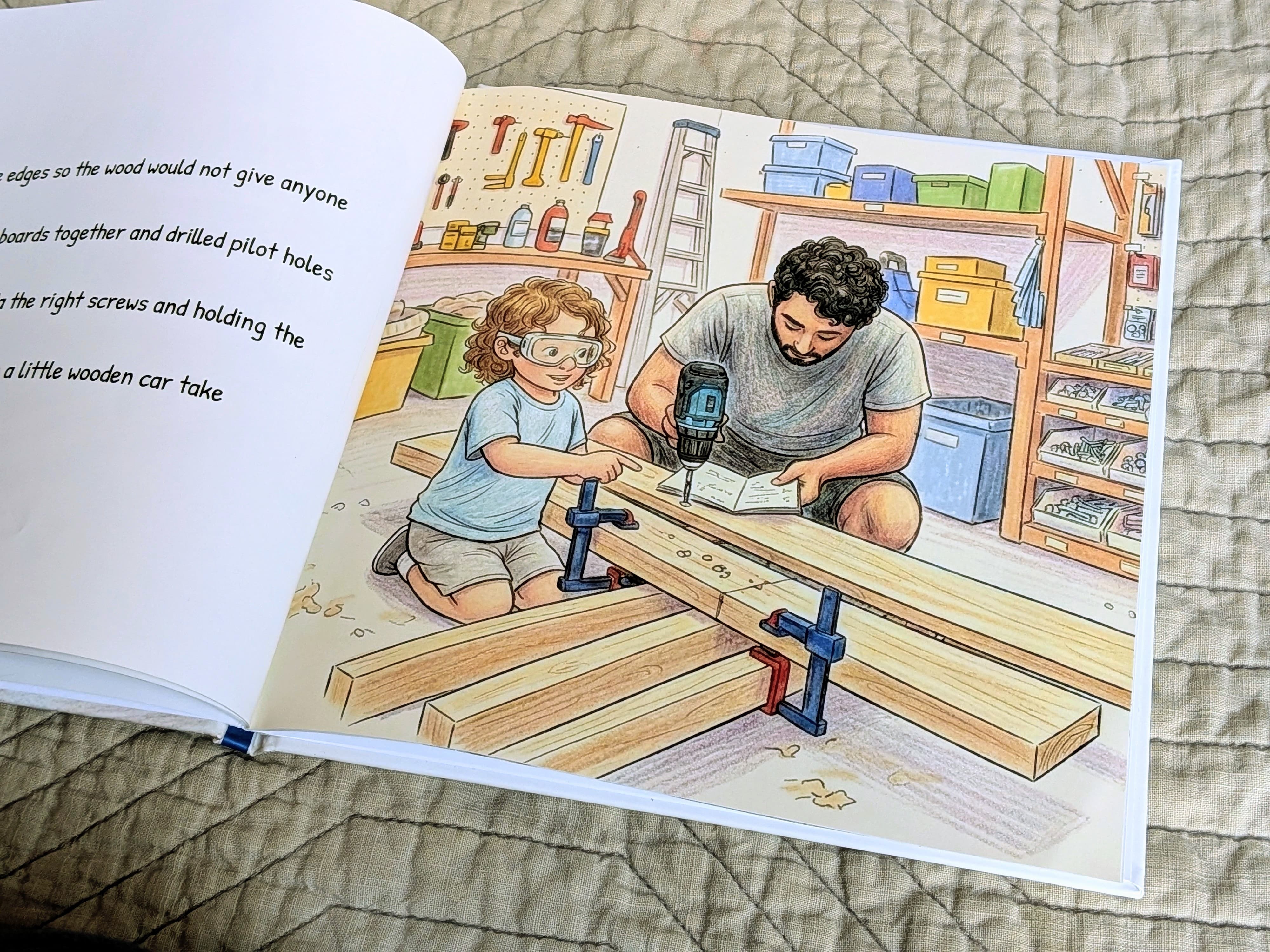
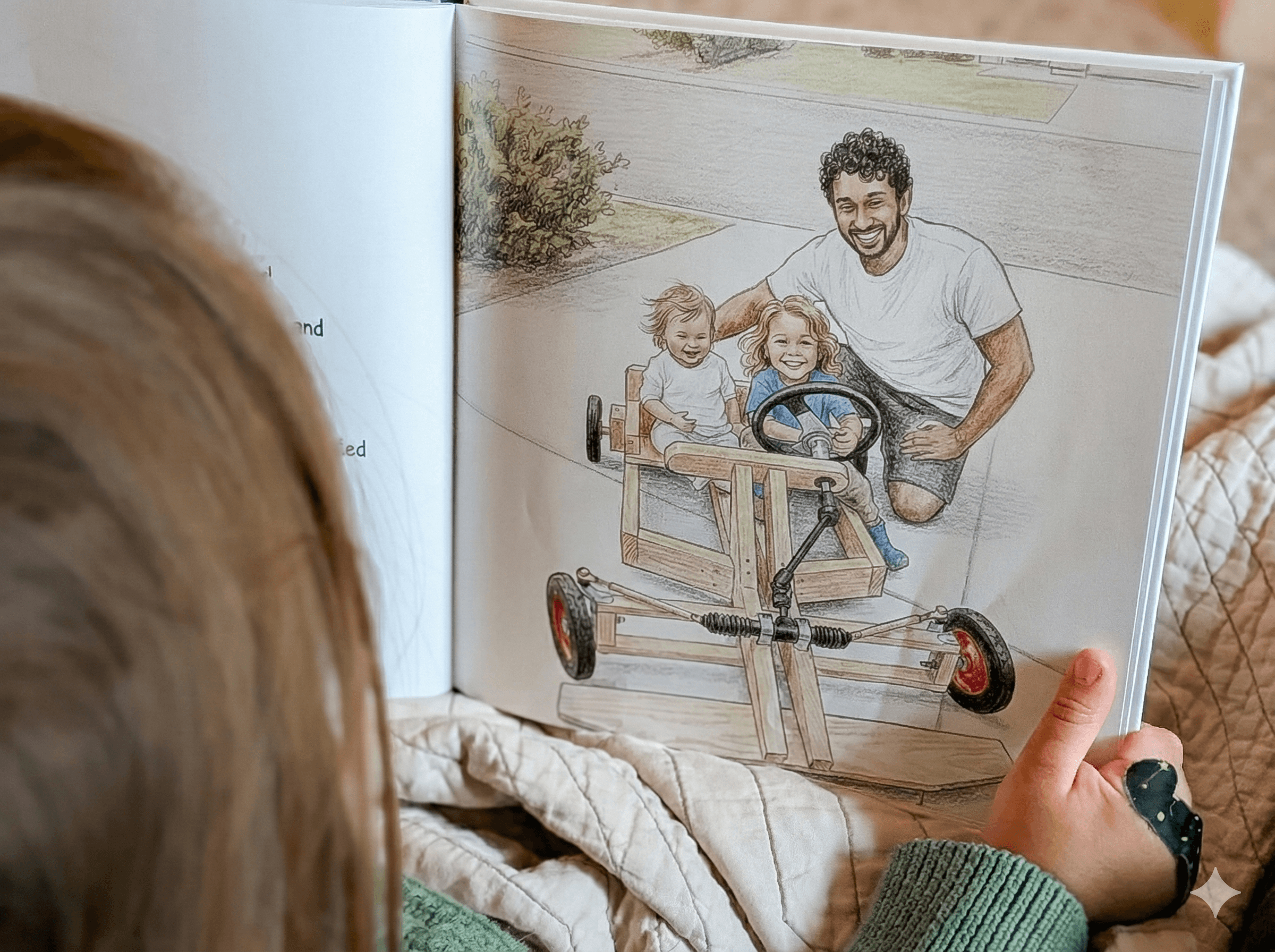
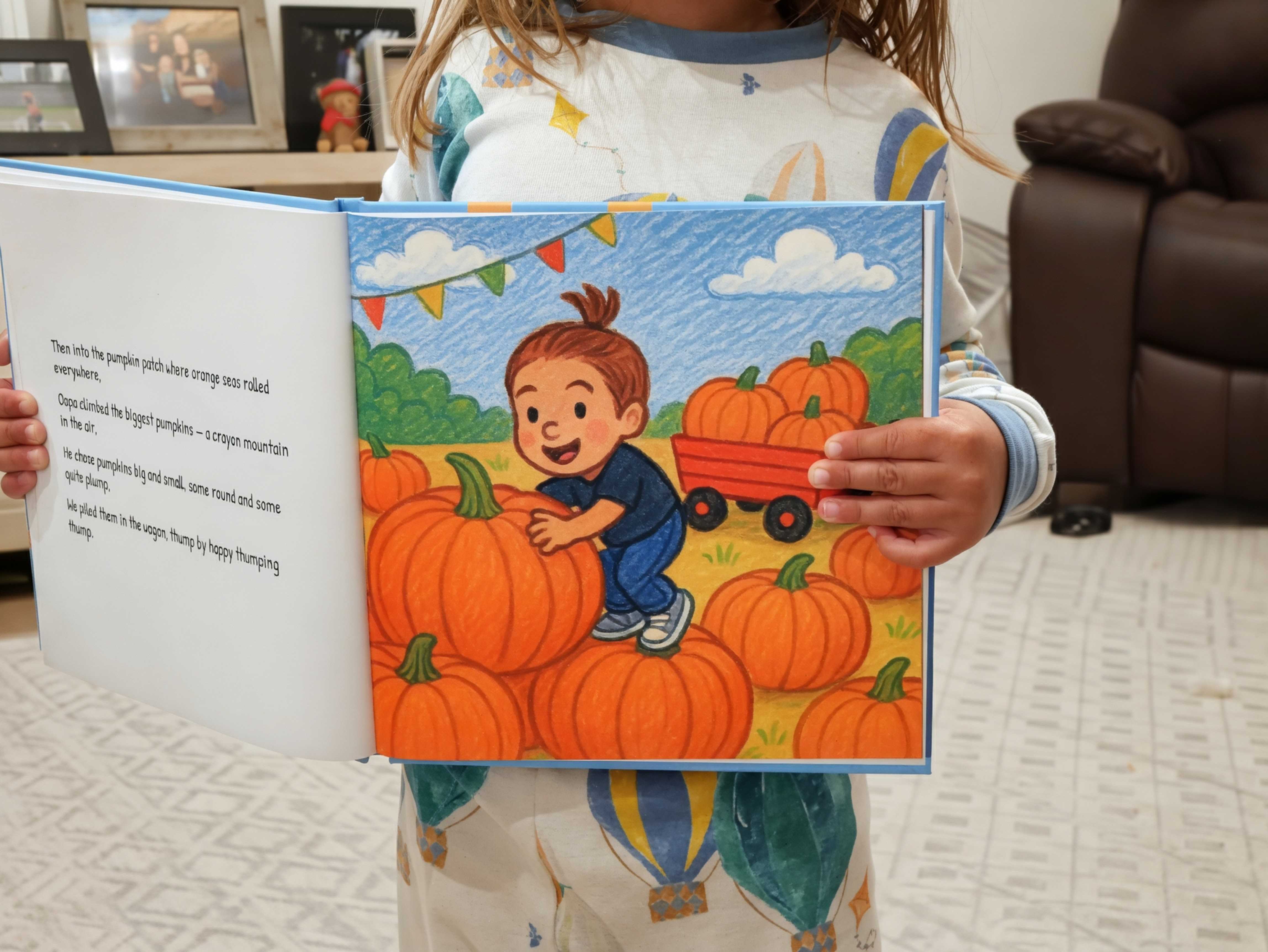
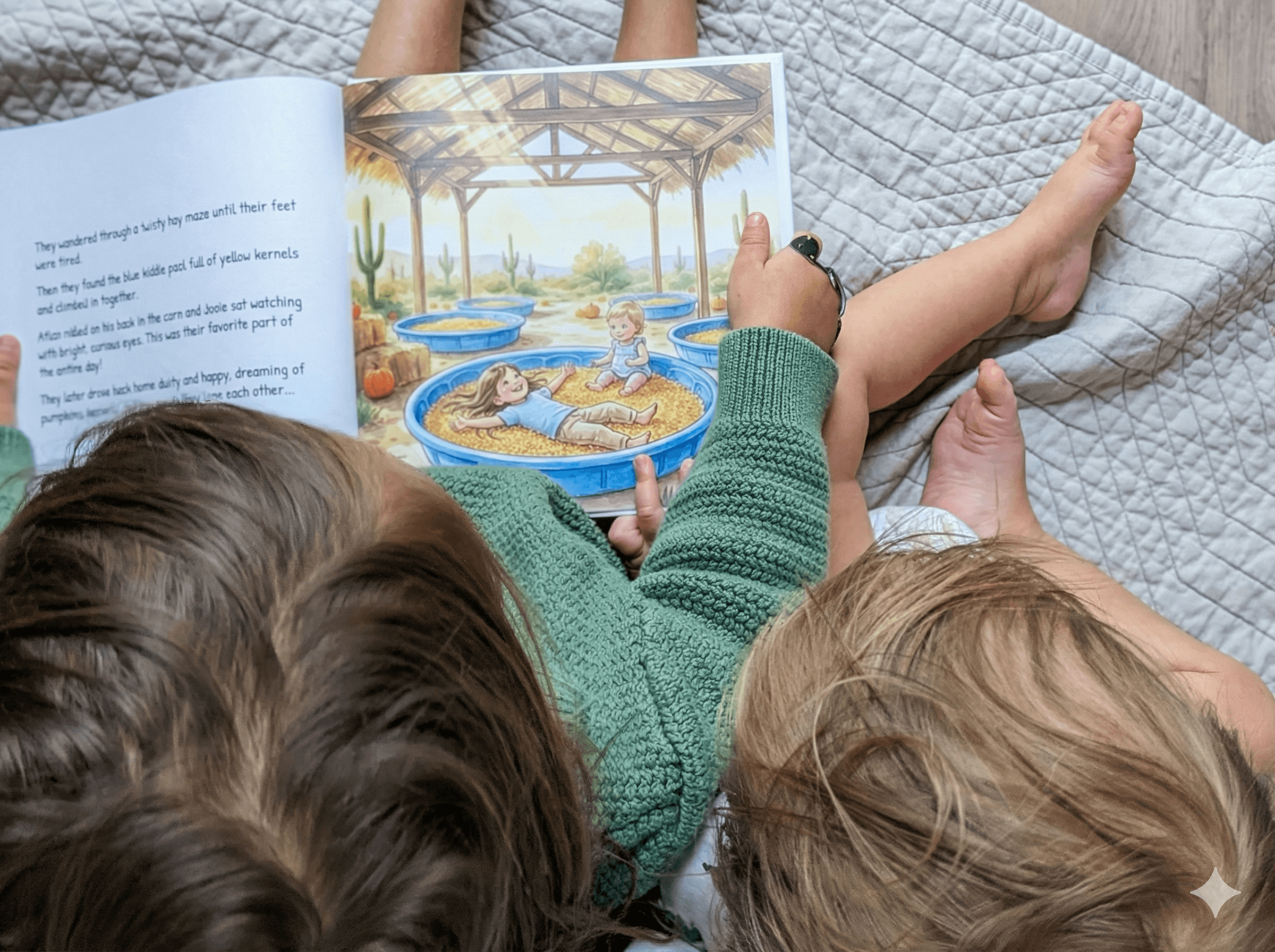
Think of a personalized book as a little "memory time capsule." It takes a specific, cherished moment—a family trip to the beach, the day the puppy came home, or a quiet afternoon with Grandpa—and freezes it in time. These aren't just photos in an album; they're moments woven into an actual narrative.
This is how everyday memories become legendary. That sandy, sun-soaked day at the coast is now an epic quest for seashells. The bond with a beloved pet is retold as a story of inseparable best friends.
Personalized books bridge the gap between a child's real world and the magical world of stories, showing them that their own life is filled with adventure and importance.
By capturing these moments, you're creating a tangible piece of your family's history. It’s a book your child will ask for again and again because it confirms their experiences are important and strengthens their sense of belonging in the family story.
The Emotional 'Why' Behind Personalization
The real power of a custom storybook isn't just the novelty; it's the emotional connection it sparks. Seeing their own name in print validates a child’s identity, making them feel seen and important. That simple act can do wonders for their confidence and excitement for reading.
This desire for engaging, personal stories is huge. While picture books made up only 14% of children's books published in 2015, they accounted for a whopping 40% of the top 100 bestsellers. This shows a massive demand for visually driven stories, and personalized books fit that need perfectly.
That high engagement leads directly to a deeper love for reading. When a story is about them, kids pay closer attention, ask more questions, and soak up the narrative on a deeper level. This active participation is a key ingredient for building strong literacy skills.
Ultimately, creating personalized story books for kids is less about the technology and more about the love. It’s about crafting a one-of-a-kind treasure that tells your child, "You are the hero of our family's story," creating a keepsake that will be cherished for years to come.
A Simple Guide to Creating Your Custom Story Book
Turning your family’s photos into a beautiful, illustrated storybook probably sounds like a huge project. But it's surprisingly simple and honestly, a lot of fun. We've laid out the whole journey in just a few steps, so you can create a one-of-a-kind keepsake without needing any design skills.
Think of yourself as the storyteller. The process is designed to be completely intuitive, guiding you from that first spark of an idea all the way to a professionally printed book arriving on your doorstep. It’s less about tech and more about bringing your favorite memories to life on the page.
Step 1: Gather Your Memories and Choose a Theme
This is the fun, heartfelt part. What story do you want to tell? Maybe it’s about that chaotic and wonderful family vacation last summer, a special birthday, or the sweet, everyday moments between your child and the family dog. Once you land on a theme, start pulling together the photos that capture that feeling.
Don't forget the little details that make a memory shine. Did your toddler have a hilarious catchphrase on your trip? Did the dog do something goofy at the park? Those small, personal touches are what will fill your story with so much warmth. Having these photos and notes ready makes the next part a total breeze.
Your photos and personal information are treated with the highest level of care. We use secure systems to ensure your family's memories are protected and used only for creating your unique book. Your privacy and trust are our top priorities.
Step 2: Customize Your Story with Ease
Now it’s time to watch your book take shape. Modern platforms make this part incredibly straightforward. You’ll upload your photos and plug in the key details—names, dates, and those special inside jokes you gathered earlier.
Our user-friendly editor lets you see your story come together in real-time. You can tweak the text, swap out a photo, or adjust an illustration until it feels just right. It's a creative partnership where you're in the driver's seat, making sure the final storybook feels authentically yours. To see just how simple it is, check out our guide on how to create your own customizable book.
Step 3: Receive Your Professionally Printed Keepsake
Once you give the final nod of approval, your work is done! We take it from there, handling all the professional printing and binding to transform your digital creation into a durable, high-quality hardcover book. Each page is printed with rich, vibrant colors designed to make your photos and illustrations pop.
In just a short time, your personalized book will arrive at your home, ready to become a fixture in your family’s reading routine. There’s nothing quite like seeing your child's face light up as they become the hero of their own story. It turns a simple book into a treasured family heirloom.
A Few Common Questions About Picture Storybooks
Even with the best intentions, jumping into the world of children's books can bring up a few questions. Whether you're grabbing a classic from the bookstore or creating a personalized keepsake for your little one, clarity is everything. Here are some of the most common questions we hear, with answers to help you feel confident and excited.
We'll cover everything from the right age to start reading to the safety of your family photos, making sure you have all the info you need.
At What Age Should I Introduce My Child to Story Books with Pictures?
Honestly, you can start from day one!
For infants (0-12 months), the world is a wonderful blur of shapes and sounds. High-contrast, black-and-white board books or soft cloth books are perfect for their developing vision. It’s less about a "story" and more about introducing them to the idea of a book as a gentle, shared experience.
As they become toddlers (1-3 years), their curiosity just explodes. This is the perfect time for sturdy board books with bright, simple pictures and just a few words per page. Pointing to a dog or a car helps them connect words to the world around them, building that all-important vocabulary.
Preschoolers (3-5 years) are ready for more. They can follow stories with a real beginning, middle, and end. The detailed illustrations in story books with picture for this age group spark conversations, teach them about feelings like empathy, and get their imaginations humming.
No matter the age, the most important thing is making reading a fun, cozy, and positive routine. That consistent connection is what truly builds a lifelong love of stories.
How Do Personalized Storybooks Boost a Child's Development?
Personalized books do something truly special: they make your child the hero of their own story. This simple shift has a huge impact on their self-esteem, showing them that their life and their feelings are important enough to be in a book.
When the main character has their name and looks just like them, their engagement goes through the roof.
This focus helps with reading comprehension and gives them a safe way to process real-life events, like starting school, getting a new sibling, or celebrating a big milestone. By seeing themselves succeed in a story, these books reinforce their sense of self and make reading a deeply personal, meaningful activity.
Are My Photos and Details Safe When I Create a Custom Book?
Absolutely. We know your family memories are precious, and protecting them is our number one priority. As parents ourselves, we built our platform with the safety we’d demand for our own kids.
Reputable personalization services use secure, encrypted systems for every photo upload and any personal information you share. Your data is only ever used to create your book—that’s it.
We believe creating a family keepsake should be a completely worry-free experience. That means your details are never shared with third parties, and we stick to the highest standards of data protection. You should always be able to easily find a company's privacy policy.
What Occasions Are Best for Creating a Personalized Story Book?
Personalized books make incredible gifts for almost any moment you can think of. They’re especially perfect for:
Birthdays and Holidays: A truly unique gift that will be cherished long after the toys are forgotten.
Major Milestones: Commemorate a first day of school, losing a tooth, or moving to a new house in a way they'll never forget.
Special Events: Turn a memorable family trip or a visit with Grandma and Grandpa into a story they can relive over and over.
Celebrating Bonds: Create a book that honors the special relationship with a beloved pet, a best friend, or a new sibling.
But honestly, many families create them "just because." Capturing the simple, everyday magic of childhood in a custom story book with picture turns those small moments into a treasured part of your bedtime routine.
Ready to turn your family’s favorite memories into a story your child will treasure forever? At Once Upon A Memory Books LLC, we make it easy to create a beautiful, high-quality personalized book that puts your child at the center of the adventure. Start creating your one-of-a-kind storybook today!