Blog
Discover fun reading activities for 2nd grade engaging ideas
Discover fun reading activities for 2nd grade: 10 engaging ideas to boost fluency, comprehension, and a lifelong love of reading.
Second grade marks a pivotal moment in a child's reading journey. As students move from simply decoding words to truly understanding stories, their capacity for imagination and critical thinking blossoms. The challenge for parents and educators is to nurture this growth, ensuring that reading remains an exciting discovery rather than becoming a tedious requirement. The right approach can transform this foundational year into the bedrock of a lifelong passion for literature.
This guide is designed to provide you with a comprehensive collection of fun reading activities for 2nd grade that go far beyond rote memorization. We are ditching the monotonous drills for dynamic, hands-on experiences that build critical literacy skills in an engaging way. Each activity is structured to boost fluency, expand vocabulary, and deepen reading comprehension, all while celebrating the joy of storytelling.
Inside, you will find a curated list of over 25 actionable ideas, from launching a mini book club to staging a reader's theater. We provide step-by-step instructions, material lists, and practical tips to adapt each activity for different learners. Our goal is to equip you with creative tools to make reading a shared adventure, helping your second grader not only to read well but to love reading for years to come.
1. Book Clubs for Young Readers
Transform reading from a solo activity into a shared, social experience with a book club. This approach brings small groups of students together to discuss a book they have all read, turning comprehension into a lively conversation. Guided by an adult, children explore characters, plot twists, and their personal feelings about the story.
This is one of the most effective fun reading activities for 2nd grade because it nurtures both social skills and deep comprehension.
How It Works
Select a book appropriate for the group's reading level. Students read a designated section before each meeting. During the club, a facilitator uses open-ended questions to spark discussion. For example, after reading a chapter about a character facing a dilemma, you might ask, "What would you have done if you were in the main character's shoes?"
Implementation Tips
Keep Groups Small: Aim for 3 to 5 students per group to ensure everyone has a chance to speak.
Provide Talking Points: Offer simple question cards like "Who was your favorite character and why?" to help guide the conversation.
Incorporate Snacks: A simple snack can make the meeting feel special and relaxed, like a real book club.
Rotate Roles: Assign simple jobs like "Discussion Leader" or "Question Asker" to give students ownership.
By fostering a community around books, you help children see reading as a source of connection and enjoyment. This is a foundational step in building a lifelong positive relationship with literature. For more ideas on cultivating this passion, explore these expert tips on how to raise a reader.
2. Reader's Theater
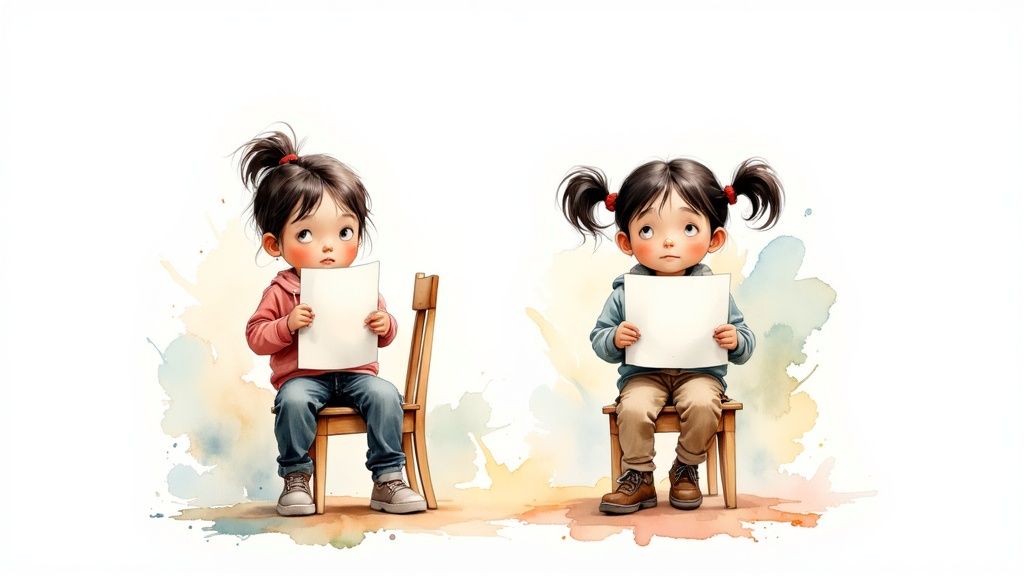
Bring stories to life by turning reading into a performance with Reader's Theater. This activity involves students reading from a script with expression and feeling, much like a play, but without the need for memorization, costumes, or sets. The focus is entirely on using their voices to convey characters and emotions, making it a powerful tool for developing oral fluency.
This is one of the most dynamic fun reading activities for 2nd grade because it builds reading confidence, expression, and comprehension in a collaborative, low-pressure setting.
How It Works
Students are assigned roles from a script, often adapted from familiar stories like fairy tales or picture books. They practice reading their lines, focusing on intonation, pacing, and emotion to match the character and scene. The final performance is a group reading where students stand or sit in a line, using their voices to tell the story.
Implementation Tips
Start with Familiar Stories: Choose scripts based on books the students already know and love, such as The Three Little Pigs or Goldilocks. This allows them to focus on expressive reading rather than decoding new text.
Highlight Parts: Provide each child with their own copy of the script and use a highlighter to mark their specific lines. This helps them track their part and know when it is their turn to speak.
Model Expressive Reading: Read a few lines from the script yourself, demonstrating different tones for different characters (e.g., a high, squeaky voice for a mouse or a deep, booming voice for a giant).
Encourage Practice: Give students time to rehearse in small groups before performing for others. This builds confidence and teamwork.
By transforming reading into a shared performance, Reader's Theater helps children see the connection between written words and spoken language. It provides a fun, engaging way to practice fluency and discover the joy of storytelling.
3. Personalized Reading Journals
Encourage students to engage deeply with what they read by creating a personal space to record their thoughts and feelings. A reading journal transforms reading from a passive activity into an active, reflective dialogue between the reader and the text, capturing drawings, questions, and personal connections.
This is one of the most personal fun reading activities for 2nd grade because it validates each child's unique interpretation and strengthens their written expression skills.
How It Works
After reading a book or chapter, students respond in their journal. The format can be flexible, from free-form art and writing to more structured entries with specific prompts. For example, a prompt could be, "Draw your favorite scene and write one sentence explaining why you chose it," or "What question would you ask the main character?"
Implementation Tips
Provide Sentence Starters: Help hesitant writers get started with phrases like "I was surprised when..." or "This story reminds me of..."
Accept All Responses: Emphasize that drawings and illustrations are just as valuable as written entries. This validates different forms of expression.
Make It Low-Stakes: Keep journals non-graded to encourage honest and creative responses without the pressure of being "correct."
Share Entries: Allow students to voluntarily share a journal entry with a partner or the class to celebrate their thinking and build community.
By creating a private space for reflection, journals help second graders develop metacognitive awareness and build a meaningful, personal connection to literature. This practice pairs wonderfully with stories that are already personal to them, such as personalized storybooks for kids.
4. Interactive Read-Aloud Sessions with Movement
Elevate the traditional read-aloud by incorporating physical actions and sounds, turning passive listening into an active, multisensory experience. Students don't just hear the story; they act it out, repeat key phrases, and respond with gestures, which deeply embeds the narrative and vocabulary into their memory.
This is one of the most engaging fun reading activities for 2nd grade because it caters to kinesthetic learners and channels youthful energy into a productive, comprehension-building exercise.
How It Works
Choose a book with repetitive text or clear action sequences, like Click, Clack, Moo by Doreen Cronin. As you read, guide students to perform specific actions. For example, every time you read "Click, clack, moo," students can make a typing motion with their fingers and then say "moo!" in a chorus.
Implementation Tips
Choose Books with Action: Select stories with plenty of movement, sound effects, or repeated phrases. Books like Brown Bear, Brown Bear, What Do You See? are perfect for this.
Practice Beforehand: Briefly practice the motions and sounds with students before starting the story to ensure smooth participation.
Use Expressive Voices: Exaggerate your tone and facial expressions to model engagement and make the story more exciting.
Invite Student Ideas: Ask students to suggest their own movements or sounds for different parts of the story, giving them ownership of the activity.
By linking words to movement, you help students build stronger neural connections, improving both recall and understanding. This dynamic approach, championed by literacy advocates like Jim Trelease, shows children that reading can be a full-body, joyful event.
5. Book Tasting Events
Introduce young readers to a smorgasbord of literary options with a book tasting event. This activity sets up the classroom or library like a restaurant, where students "taste" different books by sampling the first few pages, examining the cover, and reading the summary. It's a creative way to expose them to new genres and authors they might not choose on their own.

This is one of the most engaging fun reading activities for 2nd grade because it empowers students to make their own reading choices in a low-pressure, exciting environment, building anticipation and curiosity.
How It Works
Set up tables with books organized by a theme, such as genre (Adventure, Mystery, Funny) or author. Give each student a "menu" or checklist to jot down their thoughts on each book they sample. They spend a few minutes at each station, perusing the books before a signal prompts them to move to the next table. At the end, they select one book they'd like to read completely.
Implementation Tips
Create Ambiance: Play soft background music and use tablecloths to make the space feel special, like a real café.
Provide a Menu: Use a simple worksheet where students can rate books and note titles they found interesting.
Teach Sampling Skills: Show students how to "taste" a book: read the back cover, look at the illustrations, and read the first page.
Organize by Category: Clearly label each table with genres like "Fantasy Forest" or "Silly Stories" to guide exploration.
By turning book discovery into an event, you transform the selection process from a chore into a memorable adventure. This method helps children develop their own reading tastes and builds excitement for diving into a new story.
6. Character Dress-Up and Role-Playing
Bring stories off the page and into the classroom with an imaginative character dress-up day. This activity encourages students to step into the shoes of their favorite characters, using costumes and role-playing to explore personalities, motivations, and plot points from a new perspective.
This is one of the most engaging fun reading activities for 2nd grade because it merges creative expression with deep character analysis, making comprehension a hands-on, memorable event.

How It Works
Students choose a character from a book they have recently read and create a simple costume or bring a prop that represents them. Activities can range from a simple parade where each child introduces their character to more interactive scenarios like "hot seat" interviews, where classmates ask the character questions about their decisions and feelings in the story.
Implementation Tips
Keep Costumes Simple: Encourage creativity with accessible materials. A character name tag, a homemade prop, or a specific colored shirt is often enough.
Offer Different Roles: For students who may be shy, provide options like being an "interviewer" or part of the audience who asks questions.
Use an Interview Format: Guide discussion by asking characters questions like, "Why did you make that choice in chapter three?" or "How did you feel when that happened?"
Document the Fun: Take photos of the students in costume to create a class book or display that celebrates their participation and learning.
By allowing children to physically embody the characters they read about, you build a powerful connection between the reader and the story. This immersive experience solidifies their understanding and makes literature feel personal and exciting.
7. Buddy Reading and Cross-Grade Mentoring
Pairing students to read together transforms reading into a collaborative and confidence-building exercise. This activity involves partnering a 2nd grader with a peer or a student from another grade, where they take turns reading to each other. It fosters a supportive learning environment where students can practice fluency and expression in a low-pressure setting.
This is one of the most powerful fun reading activities for 2nd grade because it simultaneously builds reading skills, mentorship abilities, and positive social connections.
How It Works
Students are paired up, either within the same classroom or with an older or younger grade. For example, a 2nd grader might read with a 4th-grade mentor, or two 2nd-grade peers might partner up. They sit together and take turns reading from a selected text, offering gentle support and encouragement to one another. The goal is shared reading and mutual improvement.
Implementation Tips
Establish Clear Roles: Define the roles of the "reader" and the "listener." Teach listeners how to offer positive feedback and help with tricky words.
Rotate Partnerships: Change the pairings periodically to expose students to different reading styles and personalities, which helps them adapt and learn.
Provide Appropriate Books: Curate a selection of books that are accessible to the less confident reader in the pair but still engaging for both.
Incorporate Reflection: After a session, set aside a few minutes for partners to discuss what they enjoyed about the story or what they learned from reading together.
By creating a structured partnership, you give children a sense of responsibility and purpose in their reading journey. This shared experience reinforces that reading is not just a skill to master, but a way to connect with and help others.
8. Themed Literature Rotations and Reading Challenges
Boost reading motivation by organizing monthly or seasonal themes like "Animal Adventures" or "Winter Wonders." This approach creates a focused and exciting environment where students can explore different genres and topics while working toward clear, attainable reading goals. Students select books from a curated list, making reading a mission to be accomplished.
This is one of the most engaging fun reading activities for 2nd grade because it adds a layer of gamification to reading, encouraging students to explore new subjects and track their progress in a rewarding way.
How It Works
Select a broad theme and curate a list of related books at various reading levels. Students choose books from the list and work to meet a specific goal, such as reading a certain number of books or pages. Progress can be tracked visually in the classroom, and completion is often celebrated with small rewards or recognition. For example, during a "Silly Stories" month, a student might aim to read three funny books.
Implementation Tips
Create Visual Displays: Decorate a corner of the classroom to match the current theme, showcasing the featured books.
Offer Choice: Include a wide variety of books within each theme to give students a sense of autonomy and control.
Use Visual Trackers: A reading thermometer or a "reading caterpillar" where each segment represents a book read can make progress tangible.
Celebrate Success: Acknowledge milestones with certificates, special privileges like extra free-reading time, or a themed party.
By turning reading into a challenge with exciting themes, you motivate children to read more widely and consistently. This structured approach helps build reading stamina and a sense of accomplishment, reinforcing the idea that reading is both fun and fulfilling.
9. Story Mapping and Graphic Organizers
Help students visualize a story’s structure by using graphic organizers to map out its key components. This method transforms abstract concepts like plot, character, and setting into concrete visual diagrams, making it easier for young readers to follow along and understand how a narrative is built. It breaks down complex information into manageable parts.
This is one of the most powerful fun reading activities for 2nd grade because it provides a clear, visual framework for organizing thoughts and boosting reading comprehension.
How It Works
After reading a story, students use a worksheet or template to identify and record essential story elements. For instance, a "Beginning-Middle-End" organizer has three boxes where students can write or draw the main events from each part of the narrative. Similarly, a "Problem-Solution" chart helps them pinpoint the central conflict and its resolution.
Implementation Tips
Model First: Complete a story map together as a class using a familiar book, thinking aloud as you fill in each section.
Offer Variety: Use different organizers, like character trait maps, story mountains, or cause-and-effect charts, to keep the activity fresh.
Encourage Drawing: Allow students to draw their answers instead of writing, which is especially helpful for visual learners or those still developing writing skills.
Start Simple: Begin with basic organizers focusing on just two or three elements, then introduce more complex ones as students grow more confident.
By visually deconstructing stories, children learn to think critically about narrative structure, a key skill for deeper understanding. Discover more ways to build these skills by exploring these strategies to improve reading comprehension.
10. Author Study and Illustrator Exploration
Take a deep dive into the world of a favorite author or illustrator by exploring their collection of work. An author study encourages children to read multiple books by the same creator, allowing them to recognize unique styles, recurring themes, and the creator's distinct voice. It transforms reading into a literary investigation.
This is one of the most enriching fun reading activities for 2nd grade because it builds a deeper appreciation for the craft of storytelling and illustration, helping students see books as creations made by real people.
How It Works
Select a prolific author or illustrator with a consistent and recognizable style, like Mo Willems or Eric Carle. Over a few weeks, read several of their books. As you read, discuss similarities in characters, art style, or writing patterns. You might ask, "What is something you notice in this book that reminds you of the last one we read by this author?"
Implementation Tips
Choose Wisely: Select creators with a large body of work suitable for 2nd graders, such as Dr. Seuss or Bill Martin Jr.
Go Beyond the Books: Watch video interviews with the author, visit their official website, and read any available biographies to learn about their life and inspiration.
Create Inspired Art: Encourage students to draw a character or write a short story in the signature style of the author or illustrator being studied.
Write Fan Mail: Have children write and send letters or emails to the author. Many authors have contact information on their websites for fan correspondence.
By focusing on a single creator, you show children that books are thoughtfully crafted. This perspective can inspire them to think more critically about the stories they read and even motivate them to become storytellers themselves.
10-Item Comparison: Fun Reading Activities for 2nd Grade
Program | Implementation Complexity 🔄 | Resource Requirements ⚡ | Expected Outcomes 📊 | Ideal Use Cases 💡 | Key Advantages ⭐ |
|---|---|---|---|---|---|
Book Clubs for Young Readers | 🔄 Moderate — group formation & planning | ⚡ Low–Medium — books, discussion guides, teacher time | 📊 Improved comprehension, oral language, social skills | 💡 Small-group readers who enjoy collaboration | ⭐ Builds confidence, empathy, deeper discussion |
Reader's Theater | 🔄 Moderate — script selection & rehearsals | ⚡ Low — scripts, minimal props, rehearsal time | 📊 Increased fluency, expression, engagement | 💡 Students needing fluency practice and confidence | ⭐ Rapid fluency gains; inclusive role choices |
Personalized Reading Journals | 🔄 Low — routine setup and prompts | ⚡ Low — journals, periodic teacher feedback | 📊 Stronger metacognition, writing and comprehension | 💡 Reflective readers and writers; differentiation | ⭐ Tracks growth; fosters written expression |
Interactive Read-Aloud with Movement | 🔄 Low–Moderate — choreography + management | ⚡ Low — chosen books, teacher energy, prep | 📊 Higher engagement, retention for kinesthetic learners | 💡 Whole-class engagement, younger attention spans | ⭐ Multisensory comprehension boost; fun |
Book Tasting Events | 🔄 Moderate — event planning and flow control | ⚡ Medium — many books, space, setup time | 📊 Increased interest in genres; wider exposure | 💡 Introducing choices and building reading culture | ⭐ Promotes autonomy; exciting, social experience |
Character Dress-Up & Role-Playing | 🔄 Moderate — costume logistics and roles | ⚡ Medium — props/costumes, prep time | 📊 Deeper character understanding, creativity | 💡 Dramatic learners and creative classrooms | ⭐ Memorable engagement; strong character analysis |
Buddy Reading & Cross-Grade Mentoring | 🔄 Moderate — pairing and scheduling | ⚡ Low–Medium — trained buddies, books, time | 📊 Improved fluency, confidence, relationships | 💡 Peer mentoring; mixed-grade programs | ⭐ Builds mentorship, social skills, practice time |
Themed Literature Rotations & Challenges | 🔄 Low — planning themes and trackers | ⚡ Medium — diverse book pool, tracking tools | 📊 Increased reading volume and topic exploration | 💡 Motivating routine readers and goal-setters | ⭐ Scalable, easy to monitor progress |
Story Mapping & Graphic Organizers | 🔄 Low — templates and modeling needed | ⚡ Low — printables or digitale tools | 📊 Clearer comprehension, organization for writing | 💡 Visual learners and students needing structure | ⭐ Makes structure explicit; aids recall |
Author Study & Illustrator Exploration | 🔄 High — unit planning and materials | ⚡ Medium–High — multiple books, research resources | 📊 Deeper appreciation of craft and repeated reading | 💡 Units focused on craft, writers' voice, art | ⭐ Teaches craft, builds sustained engagement |
Turning Activities into Lasting Memories
The journey through second-grade literacy is a pivotal time, a moment where a child's relationship with reading truly solidifies. The collection of fun reading activities for 2nd grade we've explored moves far beyond simple word recognition. From the collaborative energy of a young reader's book club to the creative expression of a reader's theater performance, these strategies are designed to weave reading into the very fabric of a child's world, making it a source of joy, connection, and discovery.
By embracing activities like themed literature rotations, interactive read-alouds with movement, and detailed author studies, you provide a rich, multi-sensory learning environment. This variety is crucial. It ensures that every type of learner, whether they thrive on social interaction, artistic expression, or analytical thinking, finds a pathway to connect with stories. The goal is to dismantle the idea of reading as a solitary, static task and rebuild it as a dynamic, engaging, and deeply personal adventure.
Key Takeaways for Fostering a Lifelong Reader
As you move forward, keep these core principles at the forefront of your efforts:
Empowerment Through Choice: Giving a second grader agency over what they read is one of the most powerful motivators. Book tasting events and personalized reading journals are excellent tools for facilitating this, allowing children to develop their own unique tastes and interests.
Connection Over Correction: The primary goal is to foster a positive association with books. Focus on the excitement of the story and the fun of the activity first. Gentle guidance on fluency and comprehension will be more effective when a child feels safe and encouraged.
Make It Social and Active: Activities like buddy reading and character dress-up days transform reading from a quiet, independent task into a shared, vibrant experience. This social reinforcement builds confidence and shows children that reading is a way to connect with others.
Your Next Steps: From Activity to Habit
The true success of these initiatives lies in their consistency. The most impactful approach is not to try everything at once but to choose one or two activities that genuinely excite your child and integrate them into your regular routine. Start a simple story mapping tradition after finishing a book, or schedule a monthly family "reader's theater" night.
The ultimate aim is to show a child that stories are not just things they read in a book; they are things they live. By celebrating their unique experiences and perspectives, you validate their voice and their place in the world. When a child sees themselves reflected in the stories they engage with, reading becomes more than a skill; it becomes a part of their identity. This is the foundation upon which a lifelong love for learning is built, turning simple reading practice into cherished, lasting memories.
Ready to make your second grader the hero of their own story? A personalized book from Once Upon A Memory Books LLC can capture a special family vacation, a beloved pet's antics, or a memorable dress-up day, turning real-life fun into a treasured keepsake that boosts reading motivation. Explore how to create a unique story that will be read again and again at Once Upon A Memory Books LLC.