Blog
10 Actionable Early Literacy Tips for Parents That Work in 2026
Discover practical early literacy tips for parents to boost your child's reading skills. Build a strong foundation with fun, easy, and effective routines.
Every parent wants to give their child the best start in life, and fostering a love for reading is one of the most powerful gifts you can offer. Early literacy isn't about rigid drills or formal lessons; it's about weaving language, stories, and print into the fabric of your daily life in joyful, meaningful ways. These foundational skills, from recognizing letters on a cereal box to retelling a favorite story, are the essential building blocks for academic success, critical thinking, and a lifelong passion for learning.
This guide moves beyond generic advice to provide a collection of practical and impactful early literacy tips for parents. We will explore ten specific, actionable strategies designed to fit seamlessly into your existing routines. You will discover how to transform everyday moments, like a trip to the grocery store or a simple conversation during bath time, into powerful learning opportunities.
Forget overwhelming theories. These tips are straightforward and designed for immediate implementation. You'll learn how to create a print-rich environment, ask questions that spark curiosity, and use play to develop crucial pre-reading skills. This list is your go-to resource for creating a nurturing, literate home where your child can thrive as a confident, budding reader.
1. Read Aloud Daily and Model Reading
One of the most powerful early literacy tips for parents is establishing a consistent read-aloud routine. Reading together for just 15–20 minutes daily builds your child's vocabulary, listening comprehension, and foundational narrative skills. This shared activity also creates a cherished bonding experience, associating books with warmth and connection from the very beginning.
in our detailed guide.
But reading to your child is only half of the equation. It's equally important to model reading as a valuable and enjoyable adult activity. When children see you reading for pleasure or information, they absorb a powerful unspoken lesson: reading is a lifelong tool for learning and entertainment. This combination of direct engagement and passive observation reinforces the importance of literacy in a way that instruction alone cannot.
How to Implement This Tip
Establish a Routine: Choose a consistent time, like bedtime or after a meal, to read together. This predictability helps children look forward to story time.
Be Expressive: Use different voices for characters and vary your tone to match the story's mood. This makes the experience more engaging and helps your child understand emotional context.
Model Your Own Reading: Let your child see you reading your own books, magazines, or newspapers. Occasionally, narrate what you're doing: "I'm excited to read this recipe to figure out how to make lasagna tonight."
Make Books Accessible: Keep a variety of books in visible, easy-to-reach places around your home, not just in the bedroom. This encourages spontaneous reading and exploration.
2. Point Out Print and Letters in Everyday Life
Developing "print awareness" is a crucial early literacy tip for parents that transforms the world into a living classroom. This is the understanding that written text is all around us and that it carries meaning. By pointing out letters and words on everyday objects like cereal boxes, street signs, and clothing, you help your child make the vital connection between spoken language and the symbols that represent it.
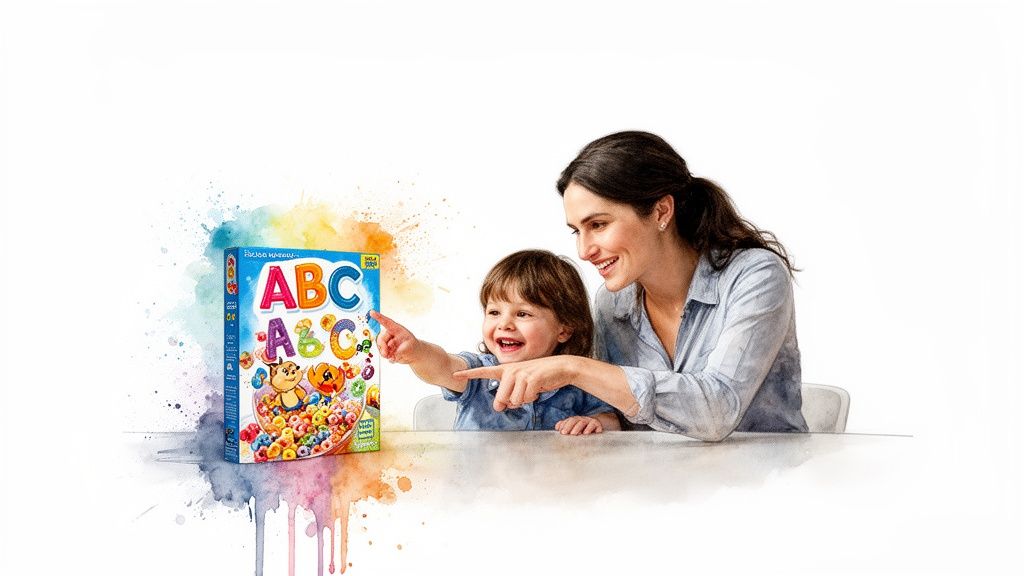
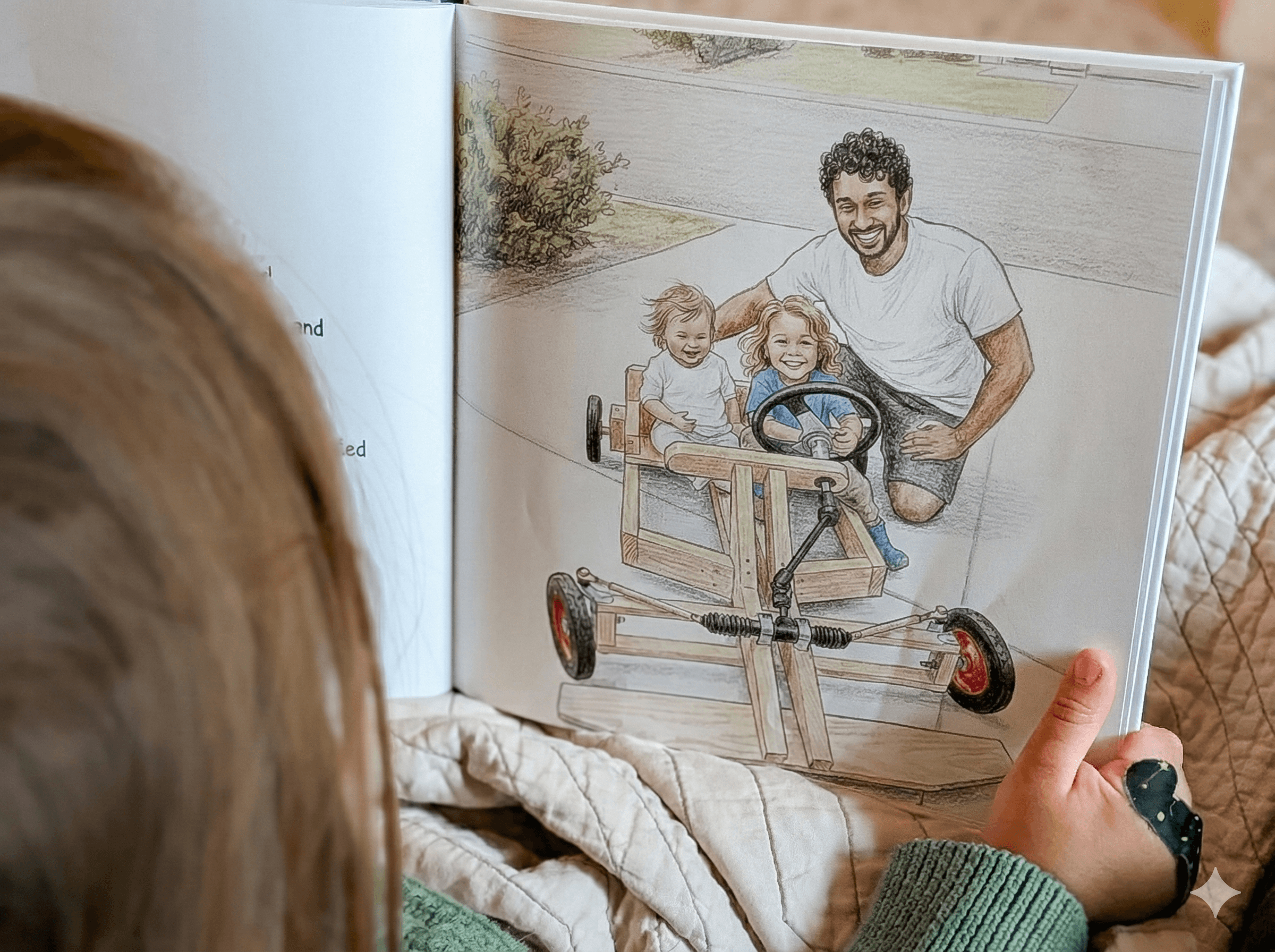
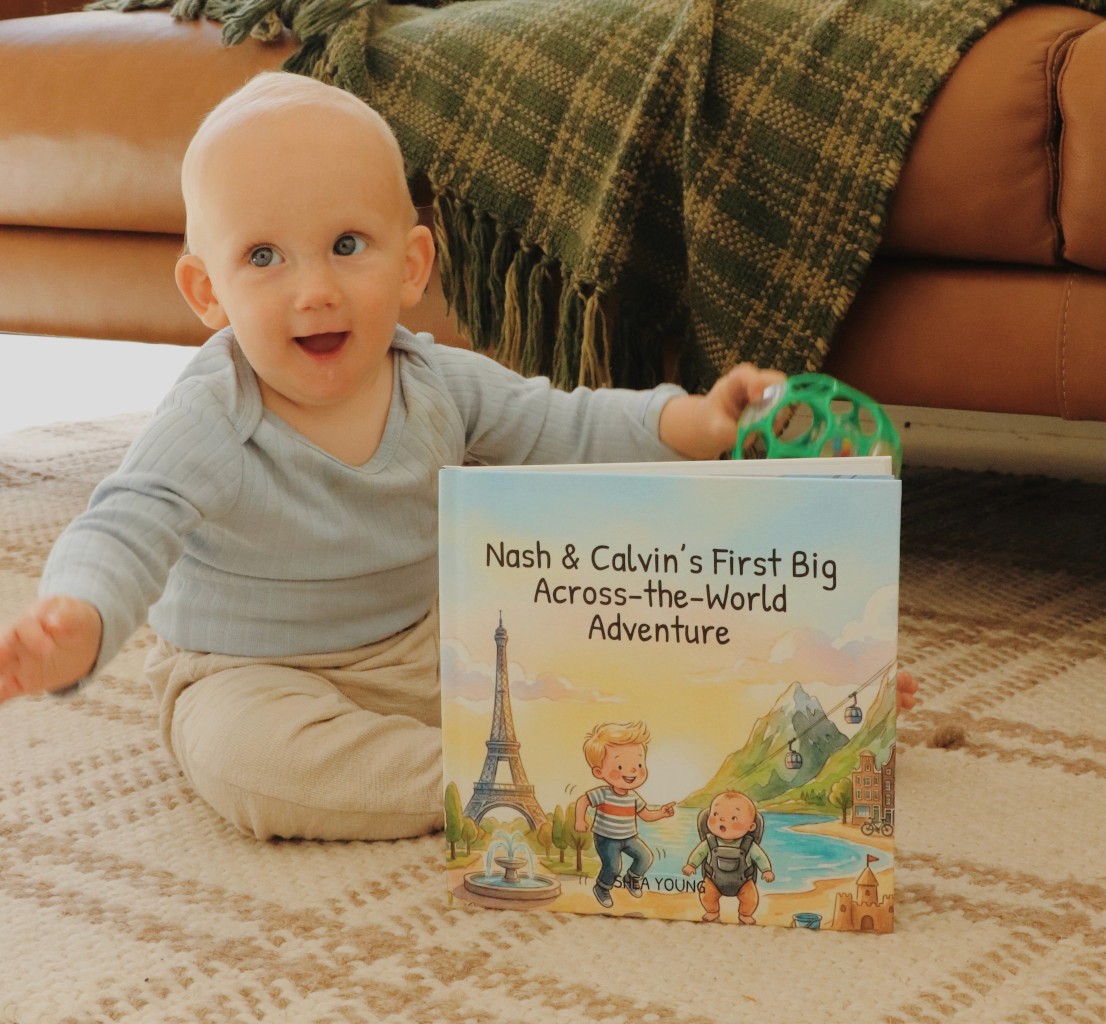
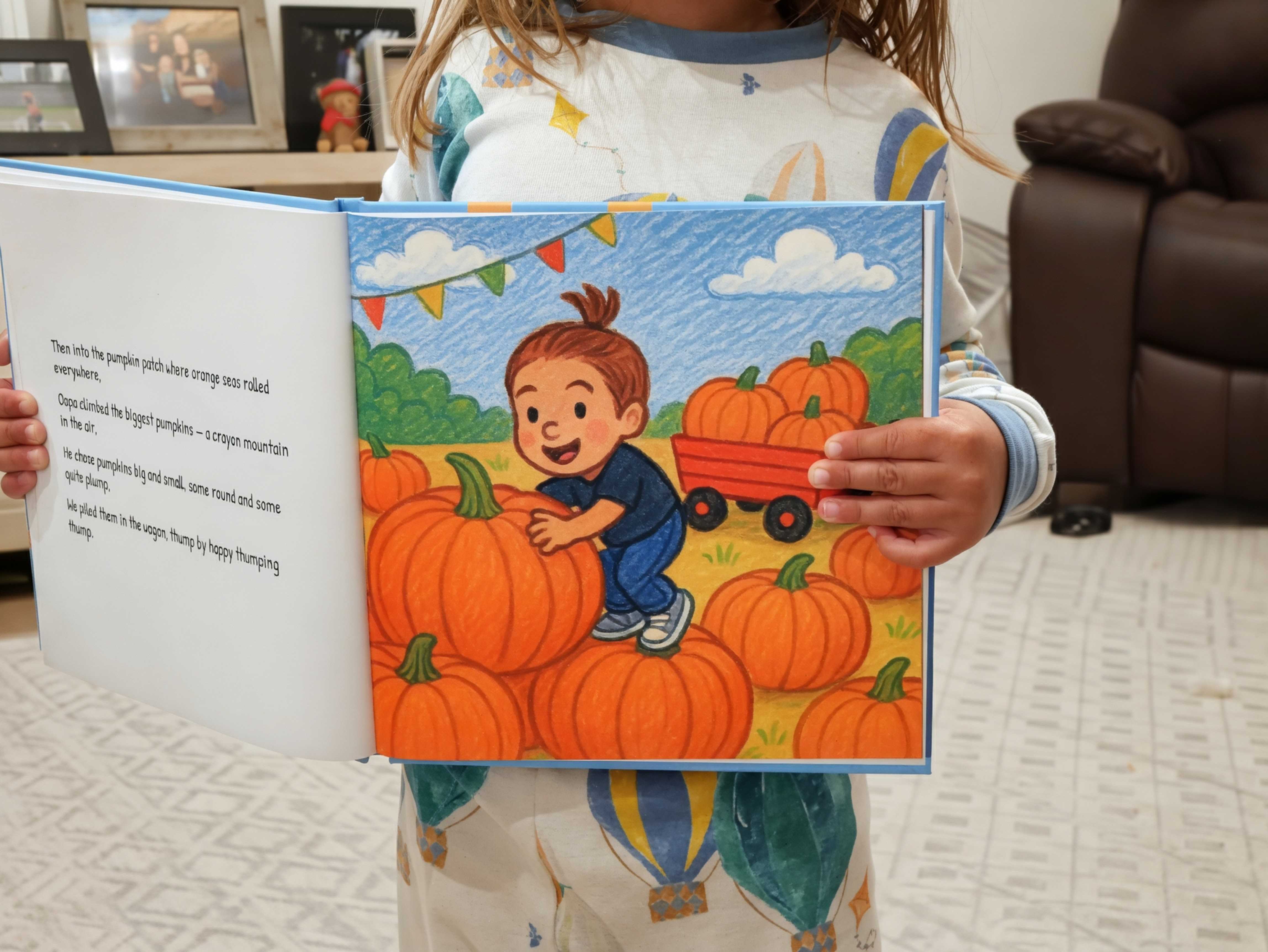
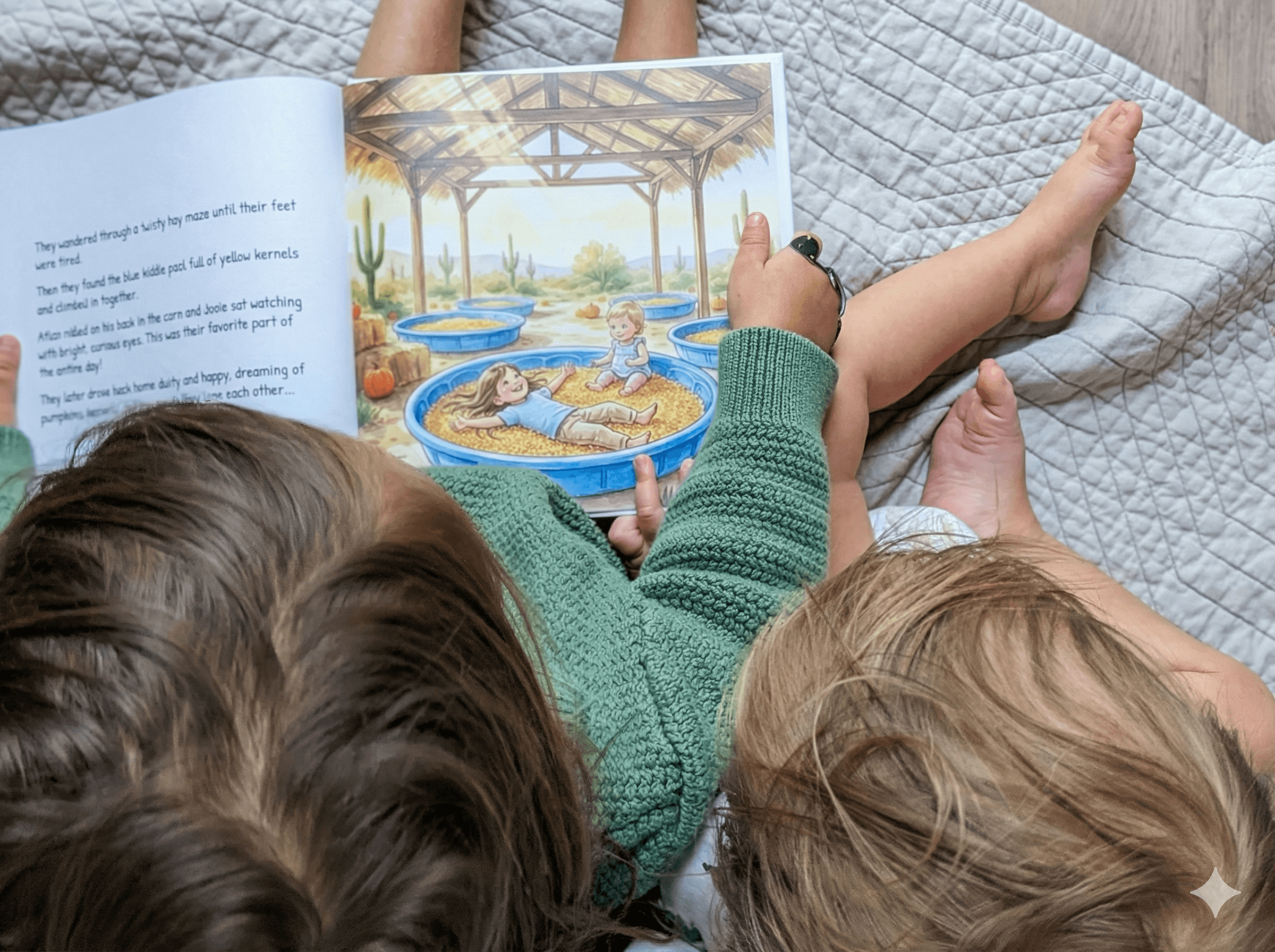
This constant, low-pressure exposure builds a strong foundation for formal reading instruction later on. It shows children that print is functional and part of their daily lives, not just something found in books. When they see their own name in a personalized storybook or spot a familiar letter on a toy, they begin to see themselves as future readers, which boosts their motivation and confidence.
How to Implement This Tip
Make it a Game: Keep it fun and spontaneous. Turn it into an "I Spy" game in the grocery store: "I spy the letter S on the soup can!"
Narrate Your World: As you go about your day, simply talk about the print you see. "That big red sign says S-T-O-P. That means we have to stop the car."
Use Personalized Items: Point out your child’s name on their belongings or in a personalized storybook. This makes the concept of print highly relevant and exciting for them.
Focus on Familiar Letters: Start by pointing out the letters in your child's name or simple, recognizable logos. This builds on what they already know and makes the task less intimidating.
3. Build Vocabulary Through Conversation and Narration
A child’s world is a classroom, and your voice is the primary teacher. One of the most impactful early literacy tips for parents is to intentionally build vocabulary through everyday conversation. By narrating your actions, describing the environment, and engaging in back-and-forth dialogue, you are directly wiring your child's brain for language and, eventually, for reading. Research shows a strong link between a child's vocabulary size by age three and their future reading comprehension skills.
This constant stream of language, often called "serve and return," does more than just teach new words; it builds conversational skills and strengthens the neural connections responsible for language processing. When you turn daily routines into language-rich interactions, you create a natural, pressure-free learning environment. This method transforms simple moments into powerful opportunities for cognitive growth, laying a robust foundation for literacy long before your child can read a single word.
How to Implement This Tip
Narrate Your Day: Talk through simple activities as you do them. During a diaper change, say, "Let's get a clean diaper. This one is wet. Now you feel much better!" This provides context for new words.
Expand and Extend: Build on what your child says. If they point and say, "Car!" you can respond, "Yes, that's a big, red car! The car is driving fast down the street."
Ask Open-Ended Questions: Instead of questions with a "yes" or "no" answer, encourage more thought. Ask, "What do you think will happen next in the story?" instead of "Did you like that page?"
Use Descriptive Language: Be specific with your words. Talk about textures ("The teddy bear is so soft and fluffy"), sounds ("Listen to the bird chirping so loudly!"), and actions ("You are stacking the blocks up, up, up!").
4. Let Children Choose Books and Stories
Empowering your child with choice is a powerful tool for building a positive relationship with reading. When children have a say in what they read, their motivation and engagement skyrocket. This sense of ownership transforms reading from a passive activity into an exciting, self-directed exploration. Giving them this agency helps them develop their own reading identity and preferences, which is a key step in becoming a lifelong reader.
Choice doesn’t just boost interest; it also encourages re-reading, a critical practice for developing fluency, vocabulary, and deep comprehension. When a child picks a book themselves, they are more invested in the story and more likely to ask for it again and again. This process allows them to internalize story structures and new words, building a solid foundation for future literacy skills.
How to Implement This Tip
Offer Limited Options: To prevent overwhelm, present a curated selection. Ask, “Would you like to read the book about the dinosaur or the one about the train tonight?”
Create an Accessible Library: Designate a low shelf or a “book bin” where your child can independently browse and select their favorite stories.
Guide Choices by Interest: Ask about their preferences to help them narrow down options. You could say, “Are you in the mood for a funny story or an adventure story?”
Embrace Repetition: When your child wants to read the same book for the tenth time, celebrate it. This is a sign of learning and connection.
Involve Them in Personalization: When creating a personalized book, let them choose the theme. Ask, “Should we make a story about your first day of school or our trip to Grandma’s house?” This gives them ultimate control over their narrative.
5. Create a Print-Rich Home Environment
A print-rich environment intentionally surrounds children with written language in their everyday spaces. This strategy normalizes print and demonstrates that words are a fundamental part of life, not just something found in books. By making letters, words, and text a visible and interactive part of your home, you constantly expose your child to literacy in a meaningful context, building letter recognition and print awareness naturally.
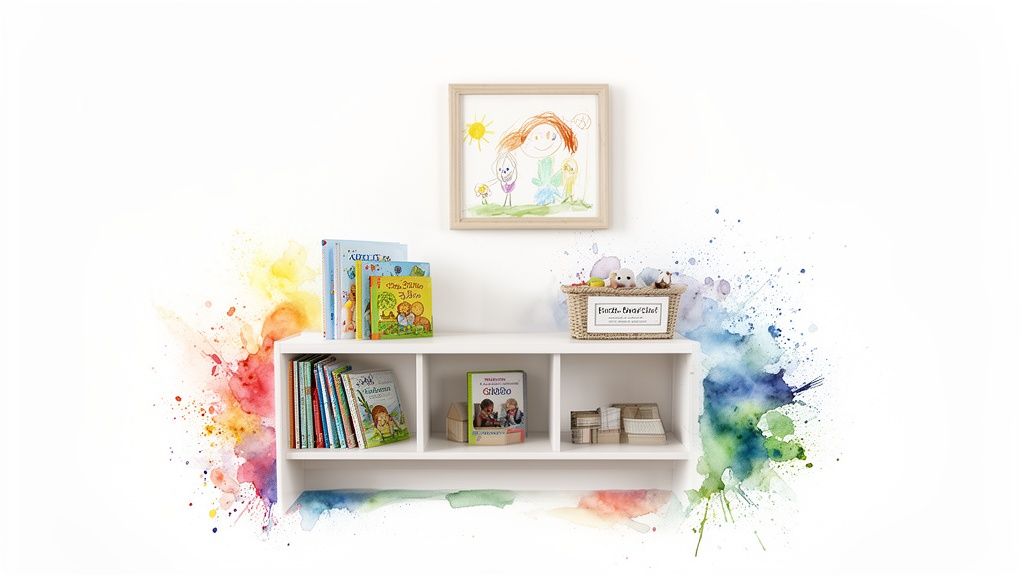
This approach transforms your home into a passive learning tool, making literacy accessible and functional. When a child sees the word "DOOR" on the actual door, they connect the abstract symbols to a concrete object, a key step in pre-reading development. This constant, low-pressure exposure helps demystify reading and makes your child feel more comfortable and confident as they begin their formal literacy journey.
How to Implement This Tip
Label Everything: Use simple, bold labels on common household items at your child's eye level. Think "chair," "window," and "toys." This builds direct word-object association.
Diversify Print Materials: Go beyond books. Have alphabet posters, calendars, magazines, and recipe cards visible. Display family photos with name labels underneath to connect print to loved ones.
Make Books Accessible and Appealing: Place low bookshelves or baskets of books in multiple rooms. Face the covers outward to visually entice your child to pick one up.
Incorporate Words into Routines: Use a labeled chore chart or a visual schedule with words and pictures. This shows your child that print helps organize their day and provides important information.
6. Use Songs, Rhymes, and Movement to Develop Phonological Awareness
Long before a child can decode letters on a page, they must first learn to hear and play with the sounds in spoken language. Using songs, nursery rhymes, and movement activities is a joyful and highly effective way to build this foundational skill, known as phonological awareness. Clapping syllables, identifying rhyming words, and singing alliterative phrases train your child's ear to recognize the smaller parts of words, a critical precursor to linking sounds with letters later on.

This musical approach transforms learning into play, making it one of the most natural early literacy tips for parents to incorporate into daily life. When you sing "The Wheels on the Bus" with accompanying hand motions or clap out the syllables in your child’s name ("Jo-seph has two claps!"), you are actively wiring their brain for reading. These activities are not just fun distractions; they are powerful, multi-sensory lessons in language structure.
How to Implement This Tip
Sing Classic Rhymes: Incorporate fingerplays like "Itsy Bitsy Spider" and nursery rhymes like "Twinkle, Twinkle, Little Star" into your daily routines. The repetition and rhythm are key.
Clap the Syllables: Make a game out of clapping the syllables in names, objects, and words you encounter. "Let's clap the word 'ba-na-na'!"
Play with Rhymes: When you read a rhyming book, pause and ask your child what other words sound like "cat" (hat, bat, mat). Don't worry if they make up silly words; it’s all part of the fun. You can find more practical exercises in our guide to teaching phonemic awareness.
Add Movement: Connect physical actions to songs, like in "Head, Shoulders, Knees, and Toes." This multi-modal learning helps cement sound patterns and vocabulary.
7. Ask Questions and Encourage Retelling
Transforming story time from passive listening into an interactive conversation is one of the most effective early literacy tips for parents. Asking questions during and after reading encourages your child to think critically about the plot, characters, and themes. This dialogue builds crucial comprehension and analytical skills, teaching them to look beyond the words on the page.
Similarly, prompting your child to retell a story in their own words strengthens their narrative skills, memory, and understanding of sequence (beginning, middle, and end). This practice moves them from simply receiving information to actively organizing and expressing it. This combination of questioning and retelling builds a strong foundation for future academic success by developing both receptive and expressive language.
How to Implement This Tip
Ask Open-Ended Questions: Move beyond simple "yes" or "no" questions. Instead of "Did the bear find his hat?", try asking, "How do you think the bear felt when he couldn't find his hat?" or "What do you think will happen next?"
Encourage Retelling: After a story, use simple prompts like, "Tell me what happened in that book," or make it a game: "Can you tell the story to your teddy bear?" Don't worry about perfect accuracy; the goal is to practice sequencing and recall.
Connect to Their World: Ask questions that link the story to your child's own life. For example, "The character was brave. Can you think of a time you were brave?" This makes the story more meaningful and memorable.
Be Patient: After asking a question, pause for several seconds to give your child time to process their thoughts and formulate a response. Rushing them can discourage participation.
8. Support Emergent Writing Through Scribbling, Drawing, and Mark-Making
Long before children can form recognizable letters, they begin their journey as writers through scribbling, drawing, and making marks. This process, known as emergent writing, is a critical step in literacy development. These early explorations teach a profound concept: that marks on a page can carry meaning. Encouraging these first attempts builds the fine motor skills, hand-eye coordination, and confidence necessary for future writing and reading success.
Treating every scribble and drawing as a valid form of communication tells your child that their ideas have value. When a child makes a series of loops and tells you it's a "grocery list," they are practicing the fundamental purpose of writing. This playful practice is one of the most effective early literacy tips for parents because it connects the physical act of writing with the joy of self-expression, laying a strong, positive foundation for their entire academic journey.
How to Implement This Tip
Provide a Variety of Tools and Surfaces: Offer chunky crayons, washable markers, colored pencils, and chalk. Let them write on paper, chalkboards, whiteboards, or even large cardboard boxes to keep the activity fresh and exciting.
Focus on Process, Not Perfection: Praise your child's effort and creativity rather than correcting their marks. Ask open-ended questions like, "Tell me about what you created," instead of "What is it?" This encourages them to assign meaning to their work.
Create Purposeful Writing Opportunities: Invite your child to "write" a shopping list, sign a birthday card with their special mark, or draw a picture to go with a letter to a grandparent.
Become Their Scribe: When your child tells you a story about their drawing, write their words down on the page. Reading it back to them shows a direct link between spoken words and written text.
Proudly Display Their Work: Hang their "writing" on the refrigerator or a bulletin board. This validates their efforts and reinforces their identity as a writer.
9. Connect Reading to Real Life and Personal Experiences
Children's comprehension and engagement skyrocket when stories reflect their own world. Making explicit connections between a book's narrative and your child's personal experiences transforms reading from a passive activity into a meaningful, interactive one. This practice validates their feelings, experiences, and identity, making literacy feel relevant and personal.
This concept, often described using Dr. Rudine Sims Bishop's "mirrors, windows, and sliding glass doors" metaphor, emphasizes the importance of books as mirrors that reflect a child's own life. When children see their families, cultures, and experiences represented in stories, it affirms their place in the world. This is one of the most powerful early literacy tips for parents because it builds not just a reader, but a child who feels seen and understood.
How to Implement This Tip
Make Explicit Connections: As you read, pause and link the story to your child's life. Say things like, "This character feels sad about her broken toy. Remember when your favorite truck broke? You felt sad, too."
Seek Out "Mirror" Books: Actively look for books that feature characters, family structures, and cultural backgrounds similar to your own. Ask a librarian for recommendations on specific topics, like starting school or welcoming a new sibling.
Follow Their Passions: If your child is obsessed with dinosaurs, trains, or ballet, find stories that center on those interests. Tapping into their existing passions makes reading an exciting and natural extension of play.
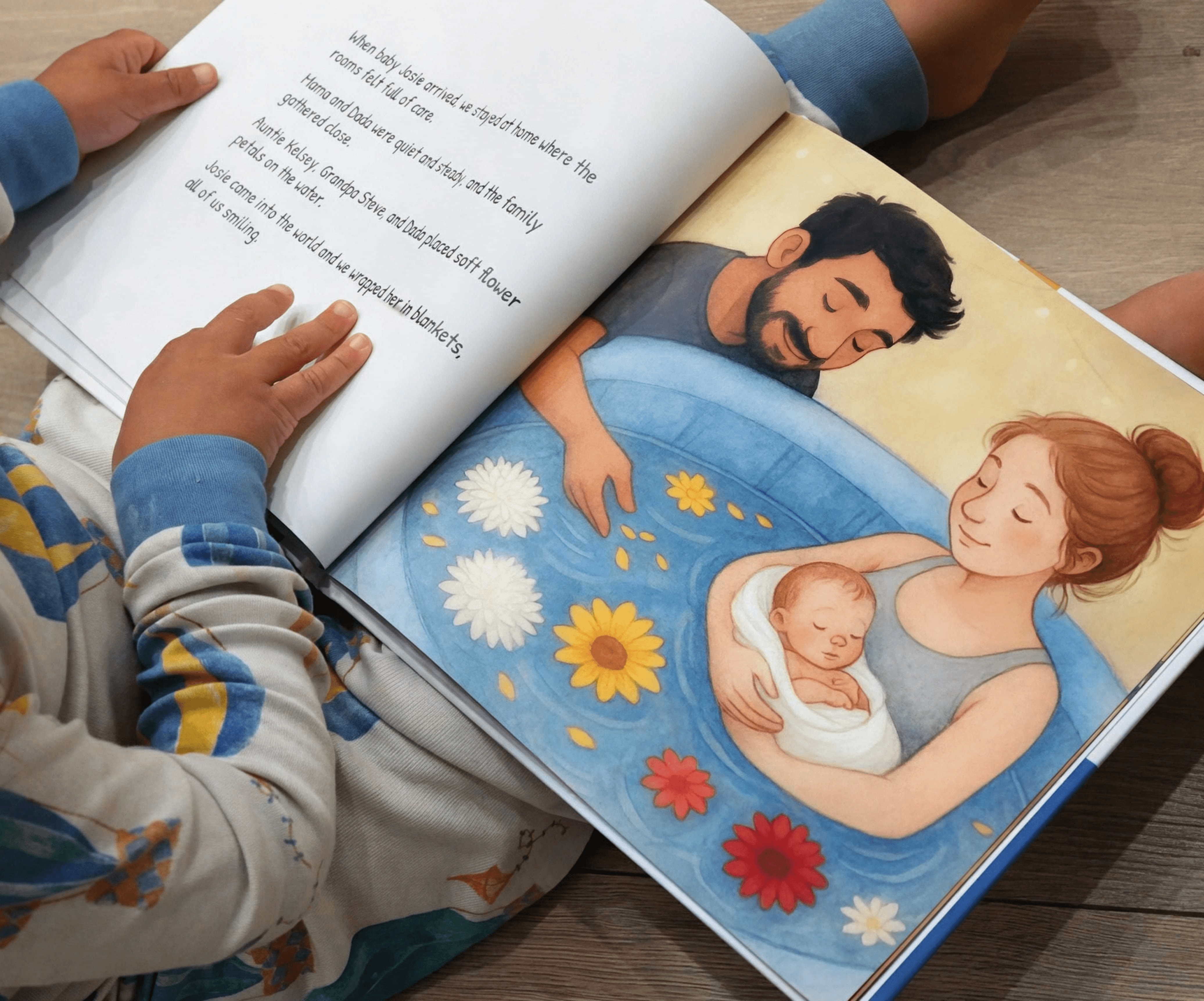
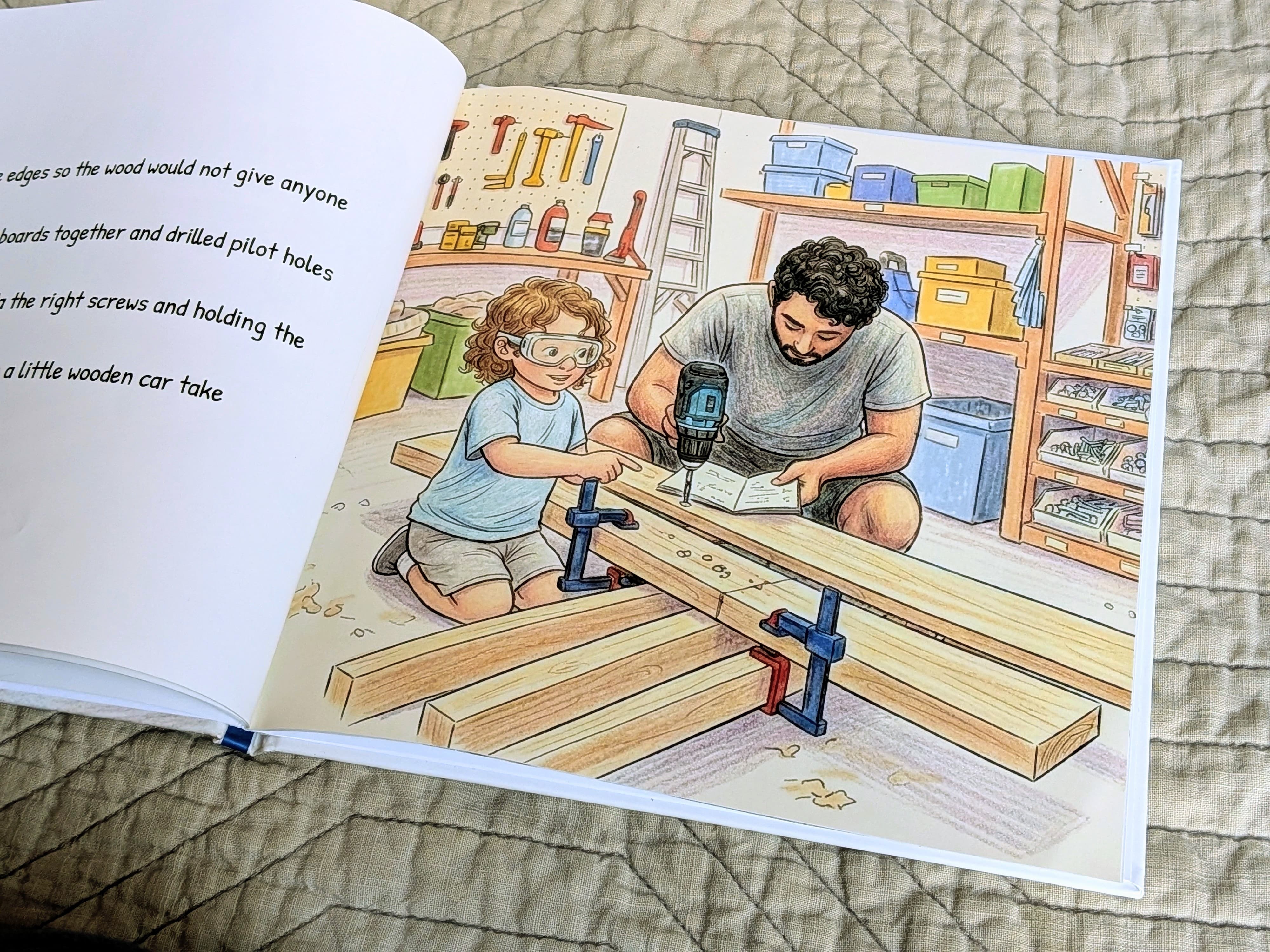
Document Your Own Stories: Create a simple photo album or a personalized storybook about a family trip, a birthday party, or a visit to the grandparents. Reading your family's own real-life stories repeatedly reinforces the connection between life and narrative.
10. Limit Screen Time and Create Tech-Free Reading Zones
In our increasingly digital world, one of the most impactful early literacy tips for parents involves managing screen exposure. Excessive screen time directly competes with opportunities for reading and can delay language development by reducing vital face-to-face interactions. Establishing dedicated tech-free zones and times prioritizes sustained reading engagement and the conversational turns essential for building a strong vocabulary.
This intentional approach carves out protected space for books to thrive. When a child's environment consistently signals that reading is a valued, screen-free activity, they are more likely to seek out books for comfort and entertainment. Creating this balance is crucial for healthy cognitive and social development, ensuring technology serves as a tool, not a replacement for human connection and imagination. Learn more about finding a healthy balance between screen time and story time in our comprehensive guide.
How to Implement This Tip
Establish Tech-Free Times: Start with specific periods, like no screens during mealtimes or for the hour leading up to bedtime. This creates predictable reading-focused routines.
Create Reading Nooks: Designate a cozy, comfortable corner of your home as a screen-free reading zone. Fill it with pillows, good lighting, and a basket of inviting books.
Model Mindful Tech Use: Let your child see you put your phone away during family time. Announce it by saying, "I'm putting my phone down so we can focus on our story together."
Offer Engaging Alternatives: When a child asks for a screen, have alternatives ready. Suggesting, "Let's build a fort and read our personalized adventure book inside!" makes the screen-free choice more appealing.
Comparison of 10 Early Literacy Tips for Parents
Strategy | 🔄 Implementation complexity | ⚡ Resource requirements | 📊 Expected outcomes | ⭐ Key advantages | 💡 Quick tip |
|---|---|---|---|---|---|
Read Aloud Daily and Model Reading | Low–Medium (requires daily routine) | Low (books + 15–20 min/day) | Strong vocabulary, listening comprehension, reading motivation | High effectiveness ⭐⭐⭐ — models fluent, expressive reading and builds bonding | Set consistent times; use expressive voices |
Point Out Print and Letters in Everyday Life | Low (opportunistic, informal) | Minimal (everyday print) | Improved print awareness and letter recognition | Natural integration ⭐⭐ — teaches print is functional and everywhere | Make it a light game; label common items |
Build Vocabulary Through Conversation and Narration | Low–Medium (intentional talk required) | No materials; caregiver time and attention | Expanded receptive/expressive vocabulary and conversational skills | Very effective for language growth ⭐⭐⭐ | Narrate routines; expand child utterances |
Let Children Choose Books and Stories | Low (requires choice structure) | Low–Medium (multiple books or library access) | Increased motivation, repeated reading, stronger reader identity | Boosts engagement and autonomy ⭐⭐ | Offer limited choices; keep books within reach |
Create a Print-Rich Home Environment | Medium (organizing & maintaining displays) | Low–Medium (books, labels, displays, space) | Greater incidental exposure to words; normalized reading habits | Sustained, passive exposure ⭐⭐ — supports varied learning styles | Display covers outward; rotate books regularly |
Use Songs, Rhymes, and Movement to Develop Phonological Awareness | Low (routine-friendly but energetic) | Minimal (songs, movement) | Improved phonological and auditory processing; rhythm skills | Highly effective for early sound skills ⭐⭐⭐ | Add movement and clap syllables; reuse familiar rhymes |
Ask Questions and Encourage Retelling | Medium (skillful questioning and timing) | Minimal (time and attentiveness) | Better comprehension, sequencing, critical thinking | Strong for comprehension and metacognition ⭐⭐⭐ | Ask open-ended questions; wait 3–5 seconds for responses |
Support Emergent Writing Through Scribbling, Drawing, and Mark‑Making | Low–Medium (space and supplies; mess management) | Low (paper, crayons, varied surfaces) | Builds fine motor control and understanding that marks carry meaning | Encourages writing confidence and creativity ⭐⭐ | Provide varied tools; display child-created work |
Connect Reading to Real Life and Personal Experiences | Medium (finding or creating relevant books) | Low–Medium (diverse or personalized books) | Higher engagement, deeper comprehension, identity validation | Very effective for motivation and relevance ⭐⭐⭐ | Choose books that mirror the child’s experiences; personalize when possible |
Limit Screen Time and Create Tech‑Free Reading Zones | Medium–High (consistency and family buy-in needed) | Low (rules + alternatives such as books/activities) | Increased focused reading time, improved attention and sleep | Effective for protecting reading time and attention ⭐⭐ | Start with one tech-free zone; model screen-free behavior |
Your Family's Story Starts Now
Navigating the world of early literacy can feel like a monumental task, but as we've explored, the journey is built from small, joyful, and consistent moments. The most effective early literacy tips for parents aren't about formal lessons or rigid schedules. Instead, they are about weaving a rich tapestry of language, stories, and connection into the fabric of your daily life. The goal is not to create a genius overnight, but to cultivate a curious, confident child who sees reading as a source of comfort, wonder, and discovery.
By embracing these strategies, you are giving your child an incredible advantage. You are laying the neurological groundwork for reading comprehension, expanding their understanding of the world, and building a powerful bond between you. Each time you point out a letter on a cereal box, sing a rhyming song in the car, or ask "What do you think happens next?" during a story, you are actively wiring their brain for literacy success.
Key Takeaways for Building a Lifelong Reader
Let's recap the core principles that will transform your approach from a checklist of tasks into a meaningful family practice:
Connection Over Correction: The primary goal is to foster a love for stories. Focus on the joy of sharing a book together rather than correcting every mispronounced word or misidentified letter. Positive associations are the fuel for a lifelong reading habit.
Consistency is Your Superpower: A few minutes of intentional, language-rich interaction every day is far more impactful than a long, sporadic session. Making reading a predictable part of your routine, like bedtime, creates a sense of security and anticipation.
Your Child is the Protagonist: Literacy becomes most meaningful when it reflects your child's own world. By connecting stories to their experiences, encouraging them to tell their own tales, and letting them choose the books, you empower them to see themselves as active participants in the world of words.
Your Actionable Next Steps
Feeling inspired? Don't try to implement everything at once. Choose one or two tips that feel most natural for your family this week. Perhaps you'll focus on narrating your trip to the grocery store or commit to a nightly rhyming game before bed. Notice the small moments of engagement and celebrate them.
The beautiful truth is that you are already your child's first and most important teacher. The love, attention, and interaction you provide are the most powerful literacy tools you possess. You are not just teaching them to read words on a page; you are teaching them how to read the world, how to understand their own story, and how to connect with the stories of others. This foundation is a gift that will support them long after they've read their first chapter book, unlocking a future filled with imagination, empathy, and limitless potential.
Ready to make your child the hero of their very own story? At Once Upon A Memory Books LLC, we transform your family's cherished moments and milestones into beautifully crafted, personalized books that make reading irresistible. Visit Once Upon A Memory Books LLC to create a unique keepsake that not only celebrates your child but also reinforces the powerful literacy connections you're building every day.