Blog
Books About Becoming a Big Brother: A Practical Guide for Parents
Explore books about becoming a big brother and how they prepare kids for a new sibling. Get tips on choosing stories and sparking conversations.
The right books about becoming a big brother aren't just stories; they're practice runs for one of life's biggest changes. These simple narratives give your son a safe space to explore all the big, complicated feelings—from pure excitement to a twinge of jealousy—through characters he can relate to. It’s a gentle way to turn a huge, uncertain transition into his exciting new role.
Why Stories Are Your Best Tool for a New Sibling
Welcoming a new baby is a monumental shift, especially for the little one who’s been the center of your universe. Navigating this delicate time calls for a gentle touch, and I’ve found that storybooks are one of the most powerful tools in your kit.
Think of these stories as a shared language that helps you and your son open up a conversation about the new baby.
They work like a "dress rehearsal" for what’s to come, letting him see what might happen when the baby finally comes home. He can watch a character feel a little jealous but then learn how to be a helpful, loving big brother. That character arc is everything; it validates his potential worries while showing him a positive path forward.
Stories give children a vocabulary for their feelings. When a child can't quite articulate their fear or excitement about a new sibling, a book can provide the words and scenarios, making the unknown feel manageable and even exciting.
Building a Foundation of Confidence
The whole goal here is to frame this change as an adventure, not a disruption. By reading together, you’re reinforcing your bond and reassuring him of his permanent, important place in the family, no matter what.
This consistent, positive time together helps turn potential anxiety into a real celebration of his new status. The benefits of reading aloud to children are huge, especially during moments of big emotional growth. For a deeper dive, you can also explore these strategies for nurturing sibling harmony when welcoming a new addition.
We’ve all seen how much families value reading during these milestones. In fact, the children's book market is projected to reach $13.45 billion by 2029, which just shows how much we all lean on stories to navigate big moments.
When you choose the right story, you’re not just reading words on a page. You're building a foundation of love and security that will help your son embrace his new role with confidence and joy.
Here’s a quick look at what these special books can help your child work through.
What Big Brother Books Help Your Child Achieve
Goal | How It Helps Your Child |
|---|---|
Validate Feelings | Shows characters feeling jealous, left out, or confused, making your child's own feelings feel normal and okay. |
Build Empathy | Helps him understand the baby's needs (crying, sleeping, eating) and see the world from a different perspective. |
Create a Positive Identity | Frames the "big brother" role as important, helpful, and special, giving him a sense of pride and purpose. |
Manage Expectations | Gently introduces the reality that a new baby sleeps a lot, can't play right away, and needs a lot of attention. |
Strengthen Your Bond | Reading together provides dedicated one-on-one time, reassuring him of his secure place in the family. |
Ultimately, these books are conversation starters. They create a bridge between what your child is feeling inside and what you can talk about together, turning a potentially stressful time into a shared adventure.
How to Pick the Right Book for Your Child
Walking into the kids' section of a bookstore can feel a little overwhelming, especially when you're looking for just the right story. But trust me, finding the right "big brother" book makes all the difference.
Think of it like picking out a pair of shoes for a long walk. The right fit gives them the comfort and support they need for the journey ahead, but a poor fit just leads to frustration. Your goal is to find a story that speaks directly to where your child is right now, both in their understanding and in their heart.
For a toddler, the idea of a new baby is completely abstract. They get their world through simple, hands-on experiences. A book with bright, clean pictures and just a few words per page is perfect. These stories should stick to the basics, like showing "gentle hands" or a mommy with a growing belly. The whole point at this age is just to introduce the word "baby" in a happy, non-threatening way.
Match the Message to Their Age
Preschoolers, on the other hand, are starting to figure out more complex social ideas. They often love being a "helper" and are proud to understand the rules. A book for a four-year-old can dig into the specific jobs a big brother gets to do, like fetching a diaper or singing a song to the baby.
These stories should really play up their new, important status. Look for books that answer their questions directly and frame their new role as something to be proud of. It helps them see themselves as a key player in the family's next chapter.
This is exactly how a simple story can help turn a child’s anxiety into a feeling of excitement and readiness.
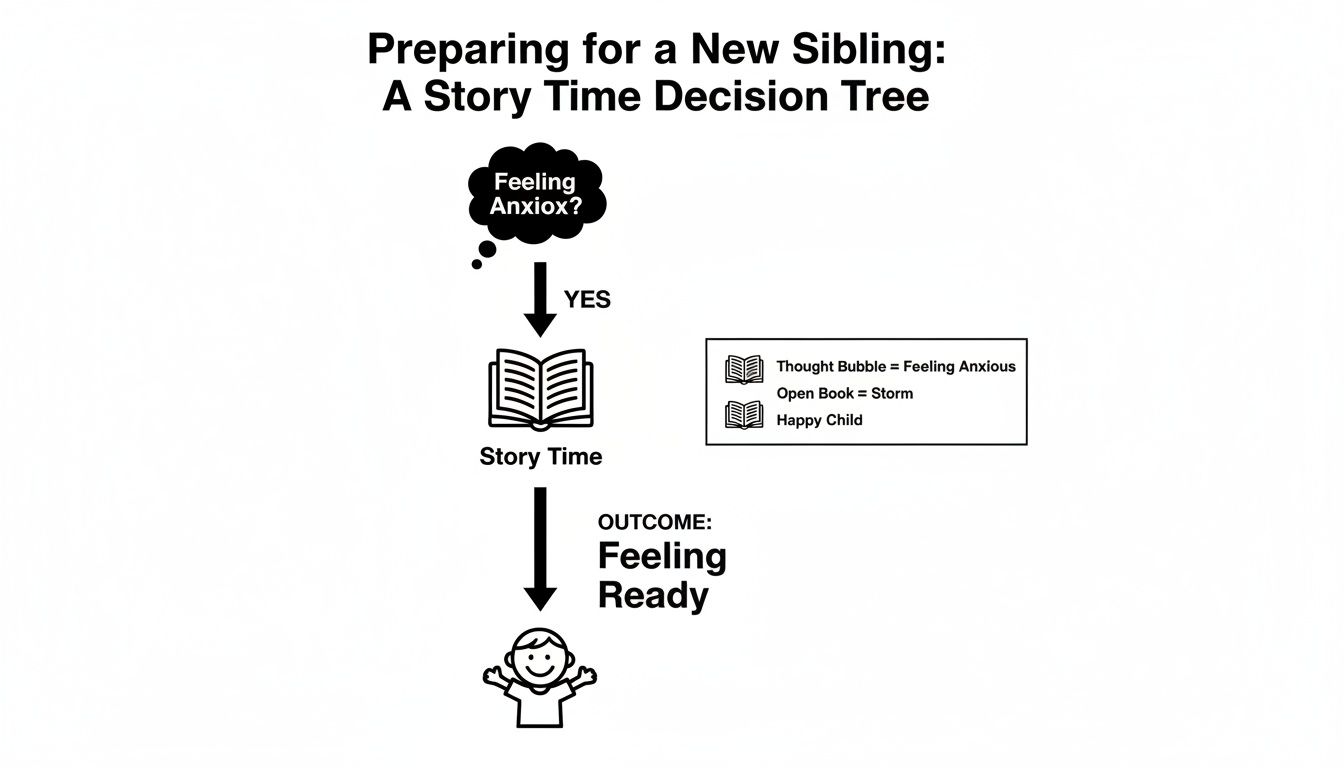
As the visual shows, simply acknowledging their worries and using story time as a direct response is a powerful way to help them feel prepared for what’s coming.
Look for Emotionally Honest Stories
Here's one of the most important things to look for: a book that is honest about all the feelings. So many kids secretly worry they're being replaced or will be forgotten. The very best books about becoming a big brother aren't afraid to show moments of jealousy or frustration.
A story that shows a character feeling left out—and then shows the parents reassuring him—is incredibly powerful. It tells your child, "Your feelings are normal, they are valid, and you are still loved and important."
That kind of honesty opens the door for you to talk about his own fears. It makes what he’s feeling seem normal and shows him a healthy way to work through it. When you're looking for a book to help a little one through this change, resources like this guide on books about feelings for toddlers can be really helpful.
To help you narrow things down, I like to think of these books in three main categories:
The Practical Helper: These books are all about the tangible things a big brother can do. They're fantastic for action-oriented kids who want a "job."
The Emotional Navigator: These stories get right into the older sibling's feelings, validating jealousy and showing how love grows to include everyone. Perfect for more sensitive kids.
The Simple Introduction: Ideal for toddlers, these books use basic words and pictures to gently introduce the idea of a new baby in a sweet, positive light.
At the end of the day, you know your child best. Trust your gut to find a story that feels like him. When you pick a book that clicks with his age and personality, you're not just telling him he’s going to be a big brother—you're giving him the confidence to embrace it.
Turn Story Time into a Meaningful Conversation
The real magic of books about becoming a big brother happens after you’ve read the last page. Just reading the story is a great start, but turning that quiet moment into a real conversation is where the preparation truly begins. This is your chance to transform story time into a gentle, open-hearted chat.
Think of the book's characters as your little conversation helpers. They offer a safe, indirect way to explore your son's own hopes and worries without putting him on the spot. Instead of asking directly, "Are you nervous about the baby?" you can use the story as a bridge straight to his feelings.
Sparking a Deeper Dialogue
The goal is to ask simple, open-ended questions that don’t have a right or wrong answer. You’re here to listen, not to lecture. The story has already done the heavy lifting; your job is just to create a cozy space for him to share his thoughts.
Here are a few gentle prompts to get the ball rolling:
"What do you think the big brother in the story is feeling on this page?"
"Hmm, I wonder why he looks a little sad here. What do you think happened?"
"That was a really nice thing the big brother did. What's one helpful thing you want to do for our baby?"
"What's the very first thing you want to show the new baby when we bring them home?"
These kinds of questions give him the words for feelings he might not know how to name yet. When he talks about the character, he’s often really talking about himself.
This process does more than just get him ready for a sibling; it builds his emotional intelligence. By connecting a character's actions to their feelings, you're teaching him empathy and self-awareness in a way that feels completely natural and safe.
Making Reading an Interactive Experience
Don't let the conversation stop with questions. Make the entire reading experience more engaging. You could act out parts of the story, use silly voices for the different characters, or pause dramatically to let him guess what happens next. This approach keeps him invested and helps the book’s lessons really stick.
For a few more ideas on this, check out our guide to interactive storytelling ideas for toddlers.
By turning reading into a shared exploration, you’re strengthening your bond during a time of huge family change. You're not just telling him he'll be a great big brother; you're actively listening and helping him feel seen, heard, and deeply loved—which is the best preparation of all.
The Power of Seeing Himself in the Story
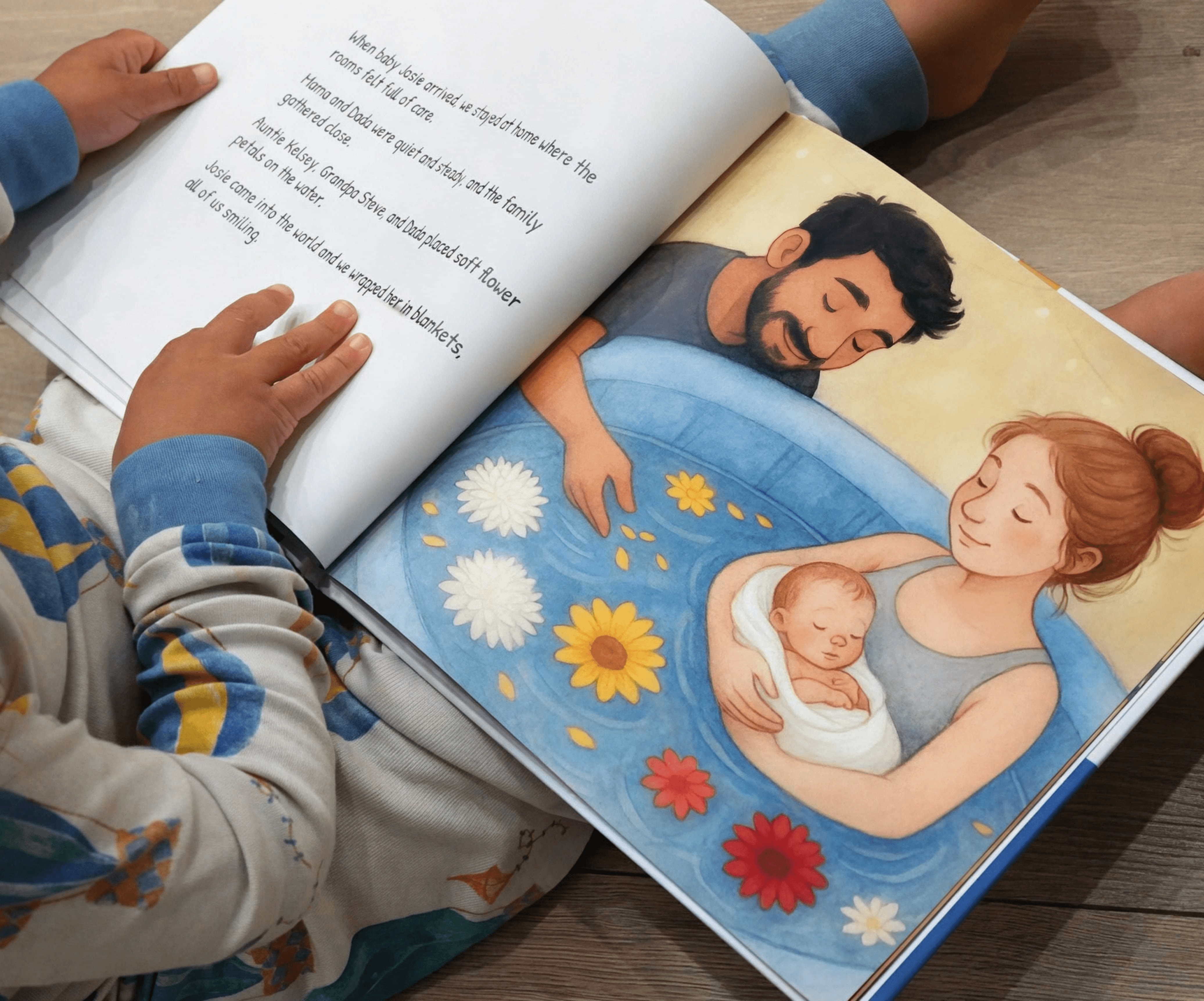
A good story helps, but a personalized story truly connects. While standard books about becoming a big brother offer a great blueprint, making your child the actual hero of the story has a much deeper, more lasting impact. It closes the gap between some character on a page and his own, real-life experience.
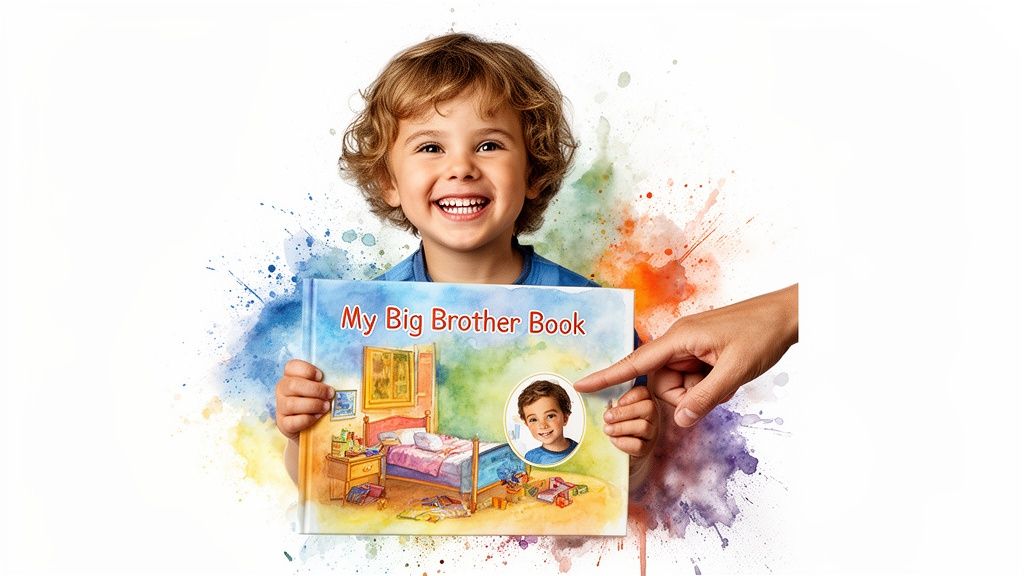
There’s some simple but powerful psychology at play here. When a child sees his own name, his photo, and familiar family details woven into the pages, he doesn't just hear the message—he lives it. The story becomes his own, cementing the idea that this exciting new role belongs to him and him alone.
This simple shift transforms a helpful tool into a treasured keepsake. It solidifies his proud new identity long after the baby arrives, turning abstract ideas like “love” and “patience” into concrete, personal feelings.
Making the Story Uniquely His
Real personalization goes way beyond just swapping out a name. The most impactful stories are the ones that weave in the small, specific details that make up your child's world. This is where a book truly comes alive for him, reflecting his reality back in a way that feels special and affirming.
Think about adding little touches like:
Familiar Places: Mentioning his own bedroom, the local park you always go to, or Grandma's house makes the story’s setting instantly recognizable and real.
Beloved People and Pets: Including the family dog by name or adding a picture of his favorite cousin connects the new baby to his existing circle of love.
Special Routines: A line about the silly song you sing at bedtime or his favorite breakfast makes the story feel deeply personal and true.
When a child sees details from his own life in a book, it sends a powerful message: "Your world is important, your experiences matter, and you are the main character in this exciting family adventure." This validation is absolutely crucial during a time of big changes.
This level of detail makes the book a powerful tool for connection. For more ideas, you can learn about crafting a personalized sibling book that really speaks to your child.
Why Personalization Works So Well
A personalized book isn't just a novelty; it’s a smart tool for emotional preparation. It helps your son truly absorb the positive messages about being a big brother because the story is undeniably about him. The character’s confidence becomes his confidence. The character’s love for the new baby models his own.
The table below breaks down how a few simple customizations can have a big emotional impact on a soon-to-be big brother.
Personalization Ideas and Their Impact
Element to Personalize | Potential Impact on Your Child |
|---|---|
Child's Name & Photo | Instantly makes him the hero; builds a direct, personal connection to the story. |
Family Members' Names | Shows that the new baby is joining his existing, loving family circle. |
Name of a Pet | Reinforces the idea of caring for someone smaller; connects the new baby to a familiar, beloved friend. |
Hometown or Street | Grounds the story in his reality, making the adventure feel like it's happening right here, right now. |
A Favorite Toy or Hobby | Validates his personal interests and shows that his identity won't be lost with the new arrival. |
Each little detail you add strengthens the story's message, helping him feel seen, valued, and excited for what’s to come.
This move toward custom content is part of a bigger shift. The global books market was valued at around $144-156 billion in 2024, and with North America holding a 33.19% revenue share, there's a growing space for personalized stories that feel more meaningful. You can see more insights on the evolving book market over at fortunebusinessinsights.com.
By choosing a story that stars your son, you’re not just preparing him for a new sibling. You’re giving him a beautiful, tangible reminder of his unique and cherished place in your growing family.
Create a Reading Routine Before Baby Arrives
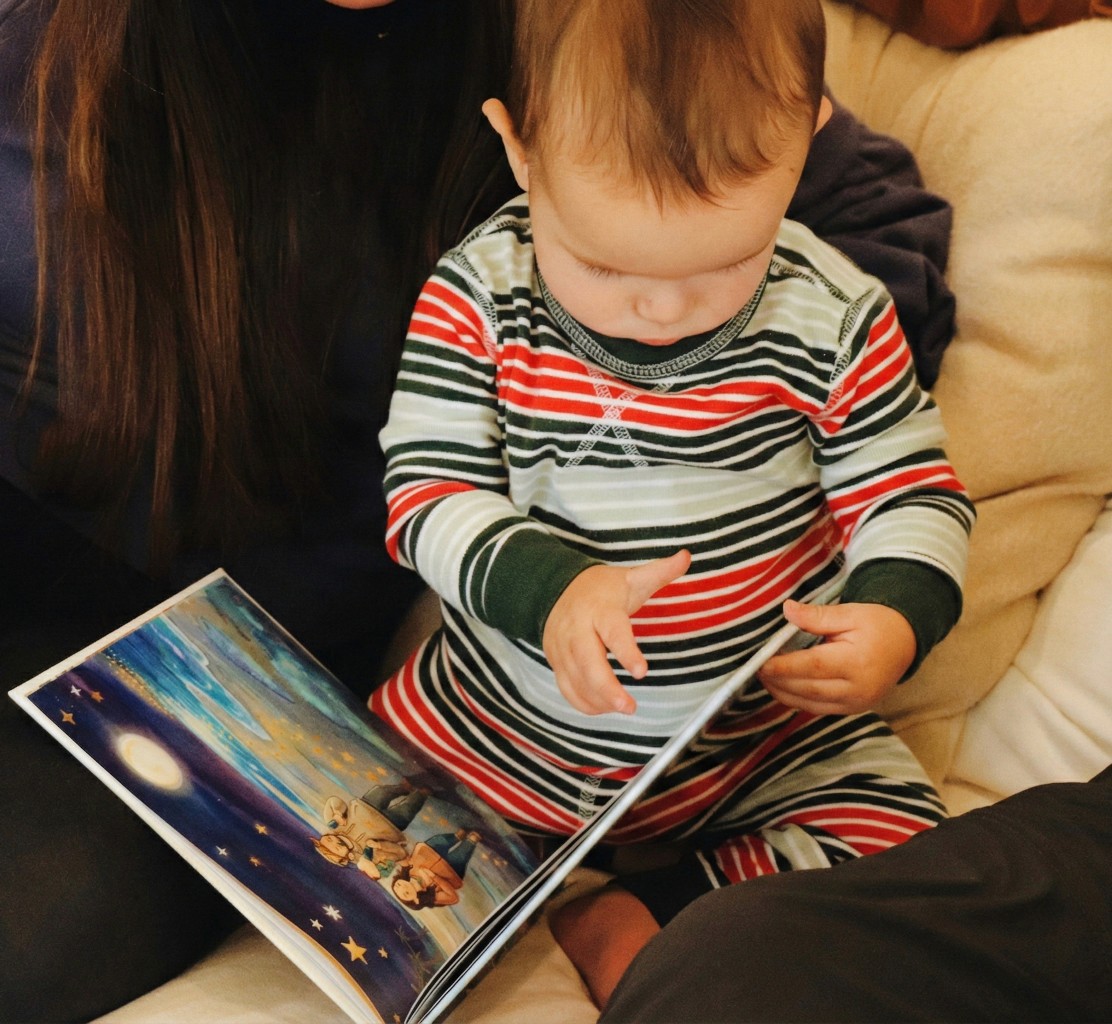
For little kids, routines are like a warm, weighted blanket—they’re calming, predictable, and make everything feel safe, especially when big changes are on the horizon. By building a consistent reading ritual with your chosen books about becoming a big brother, you’re giving your child a sense of security long before the baby makes their grand entrance.
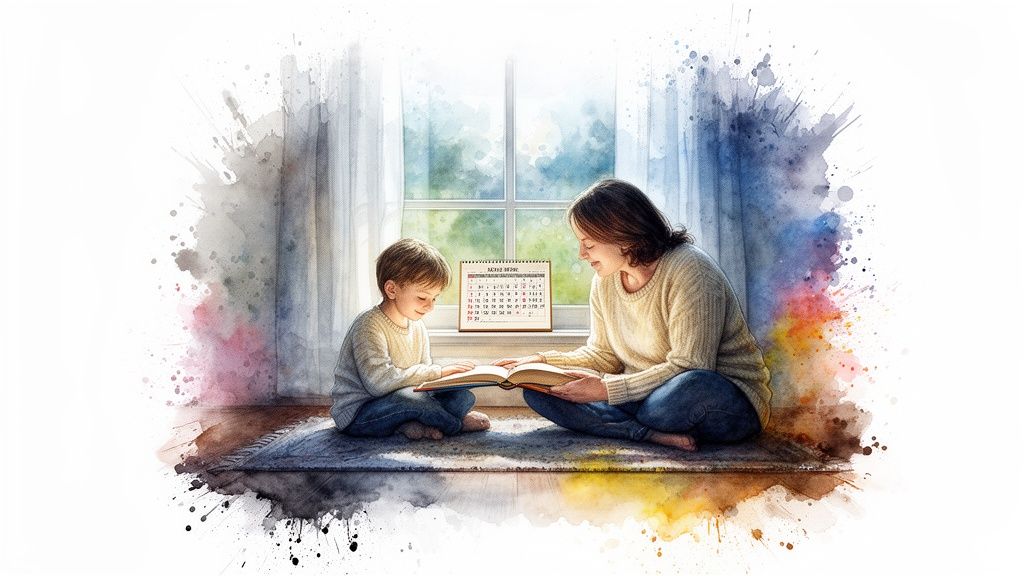
Think of it as building an emotional anchor. When everything else feels like it’s shifting, this special one-on-one time becomes a predictable and comforting moment he can count on. It reinforces his bond with you right when he needs that reassurance the most, filling his emotional cup before the baby’s needs start demanding more of your attention.
When to Start Your Reading Ritual
Timing is everything. Bring up the new baby concept too early, and it can feel way too abstract for a toddler or preschooler. Wait too long, and the change can feel sudden and jarring.
A great time to begin is during the second trimester. By then, your pregnancy is usually more visible, which helps make the idea of a baby feel more real. This gives you several months to let the story's gentle lessons sink in through repetition, making the title of "big brother" feel familiar and exciting, not scary.
By creating a special, recurring story time, you are communicating a powerful, unspoken message: "Even with a new baby coming, you and I will always have our time together." This dedicated attention is one of the most effective ways to ease his anxieties.
Make it a cherished part of the day. Maybe it becomes your go-to bedtime story or a cozy snuggle session after his nap. The key is consistency, turning the book into a familiar friend.
Continuing the Routine After Baby Arrives
The real power of this routine clicks into place after you bring the newborn home. Whatever you do, don't let this special reading time fade away. In fact, it becomes more important than ever.
Continuing to read his favorite big brother book helps him connect the dots between the story and his new reality. The character in the book who gently touches the baby's toes is now him. The story becomes a living script for his new role, giving him positive examples he can actually follow.
Here’s why keeping the routine going is so crucial:
It provides stability during a time that can feel chaotic and unpredictable.
It bridges the gap between the storybook fantasy and his new, real-life role.
It offers a quiet activity you can do together while the baby sleeps nearby.
That familiar book becomes a touchstone, helping him process all his big feelings and proudly step into his new, wonderful job as a big brother.
Common Questions About Big Brother Books
Even with the perfect book in your hands, you probably have a few lingering questions. Using books about becoming a big brother is a fantastic way to prepare your little guy, but knowing the small details—like when to start or what to do if he gets upset—makes all the difference.
Let's walk through some of the most common questions parents ask. These are the things I wondered about, too, and getting clear on them will help you feel confident as you guide your son through this big change.
When Is the Best Time to Start Reading?
Timing this conversation is a bit of a balancing act. You don’t want to start so early that the baby feels like a far-off, abstract idea, but you also don't want to wait until the last minute and make it feel like a sudden shock.
I’ve found the sweet spot is early in the second trimester. This gives your child months to get used to the idea, ask questions, and let the concept sink in slowly. Your growing belly becomes a real-life visual aid, making the change feel gradual and natural instead of like a surprise announcement. Repetition over these months is your best friend—it helps the idea settle in a warm, positive way.
What If My Child Gets Upset?
It's completely normal—and honestly, expected—if your child seems sad, jealous, or even a little angry after reading a story about a new baby. If this happens, take a deep breath. The book is doing its job by bringing those big, complicated feelings to the surface where you can talk about them together.
When those feelings pop up, your first move is just to validate them.
Acknowledge what you see: "It looks like that story made you feel a little sad. Is that right?"
Connect it to the story: "I wonder if the big brother in the book felt that way because he was worried his mommy would be too busy to play."
Offer simple reassurance: "No matter what, you and I will always have our special time together. That will never change."
The goal isn't to erase jealousy; it's to help him name it and navigate it. Making him feel seen and heard is far more powerful than pretending the tough feelings don't exist.
Should We Stop Reading After the Baby Is Born?
Definitely not! This is when the magic really happens. Continuing to read the book after the baby arrives is one of the most important parts of the whole process. It’s the moment the story clicks with his new reality.
Keeping that reading routine going is a game-changer for a few reasons:
It Reinforces His New Role: He’ll see himself in the character who helps get a diaper or uses gentle hands, making him feel proud and important.
It Offers Stability: Amid the beautiful chaos of a newborn, this familiar routine is a little anchor of calm and predictability for him.
It Gives Him a Script: The book becomes a positive guide for how to interact with this tiny new person in his life.
This ongoing ritual helps him see his role as a big brother not as a one-time event, but as an exciting adventure that’s just getting started.
How Many Different Books Do We Need?
When it comes to books about becoming a big brother, think quality over quantity. It's often much more effective to have just one or two well-loved books that you read over and over again.
Repetition is how young children learn best. It builds comfort and allows the messages of love, patience, and being a helper to really sink in. A single, personalized book often becomes the most powerful tool of all because it’s his story. He’s the hero. So resist the urge to build a huge library and instead, focus on making one or two stories a cherished part of your routine.
We get a lot of questions about making this transition as smooth as possible, so we've put together a few more of the most common ones here.
Question | Answer |
|---|---|
What if my child isn't interested in the book at first? | Don't force it. Leave the book in a visible spot where he can pick it up on his own. You can also try reading it to a stuffed animal while he's nearby to pique his curiosity without pressure. |
Should I read the book to my toddler and newborn together? | Absolutely! In the early weeks, you can read while you're feeding the baby. It models a positive sibling dynamic from day one and shows your older son that storytime is still his special time, even with a baby in your arms. |
My son is pointing at the baby in the book and saying "no." What should I do? | Acknowledge the feeling without judgment. "You're saying 'no' to the baby. It's okay to feel unsure." Then, gently shift the focus. "Look, the big brother is showing the baby his favorite truck. What's your favorite truck?" |
How can a personalized book help more than a regular one? | When a child sees their own name and photo in the story, it's not just about a character—it's about them. It makes the positive messages feel personal and real, boosting their confidence and sense of importance in their new role. |
Hopefully, these answers help you feel more prepared and excited to use storytime to welcome your new little one.
At Once Upon A Memory Books LLC, we specialize in turning your child's unique story into a beautiful, personalized book that helps them feel seen and celebrated during life's biggest milestones. Create a one-of-a-kind keepsake today and make your son the proud hero of his big brother journey.